Taoism is deliberately slippery. Its founding text opens by warning that the Tao you can name is not the real Tao, which is a wonderful joke and a genuine obstacle for anyone trying to learn it from books. Come at the classics without preparation and you get either mystical fog or a self-help gloss that flattens everything interesting.
That is exactly why order helps. A gentle on-ramp lets you relax into the sensibility; the classics reward slow, repeated reading; and good scholarship keeps you honest about what Taoism actually was, as opposed to the Western fantasy of it.
Ease in
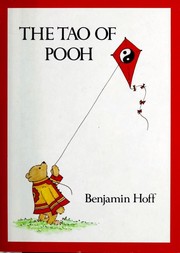
Start with The Tao of Pooh by Benjamin Hoff, which uses Winnie-the-Pooh to illustrate effortless action and simplicity — corny to some, but a genuinely disarming introduction to the mood. Then read Taoism by Eva Wong, a clear survey that distinguishes philosophical Taoism from the religious tradition with its rituals and alchemy, so you know the size of the thing you are studying.
Sit with the classics
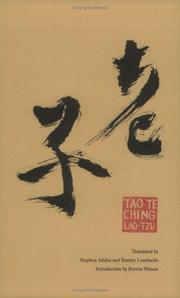
Now the two great texts. Read the Tao te Ching in translation, ideally more than one, since every version is an interpretation; Stephen Mitchell's Tao Te Ching is a fluid, popular rendering worth reading beside a more literal one. Then move to Zhuangzi, the tradition's wittiest voice. The Complete works of Zhuangzi gives you the whole, wild text, while Brook Ziporyn's Zhuangzi: The Essential Writings is the best-annotated selection for a first serious read.
Interpret and go deeper
With the sources in hand, let interpreters open them up. Trying not to try by Edward Slingerland explains wu-wei — effortless action — through modern cognitive science, a bracingly concrete take. The way of Chuang Tzu by Thomas Merton offers a Christian contemplative's loving free renderings, and Tao by Alan Watts channels the playful, paradoxical spirit for a Western audience. For the scholarly deep end, The Taoist body by Kristofer Schipper reveals the living religious tradition — its priests, rituals, and cosmology — that the philosophy books usually leave out.
Read in this arc, Taoism stops being vague and becomes precise about a genuinely different way of seeing action, nature, and the self. Follow the full reading path for the staged version with a study plan, or browse the subject hub for adjacent routes.
Ready to learn something deeply?
Build a reading path — free