Confucius is one of the most quoted and least understood thinkers alive in our culture. Pick up the Analects cold and you meet a wall of terse sayings, ritual terms, and unnamed disciples — a book that assumes you already know the man, his era, and the questions he was answering. Most people bounce off it and settle for fortune-cookie Confucius instead.
The fix is sequence. Get the historical world and the biography first, then read the sayings, then watch how later thinkers extended them. In that order the terseness becomes richness rather than fog.
Start with the man and the world
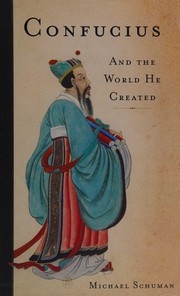
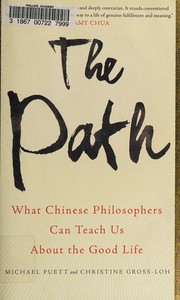
Begin with Confucius by Michael Schuman, a readable modern biography that places him in the chaos of the Warring States and traces his afterlife across two millennia of Chinese life. Pair it with The path by Michael Puett, the book behind Harvard's famous course, which argues that these old ideas are practical instructions for living, not museum pieces. Together they give you the stakes and the vocabulary you need before opening the primary text.
Read the Analects, twice over
Now the source. Read The Analects in Edward Slingerland's translation, which keeps the classical commentary alongside the text so you understand how Chinese readers themselves have argued over each line. Then read Confucius: The Analects in D.C. Lau's translation — a leaner, differently weighted rendering that shows how much interpretation lives in the act of translating. Reading two versions of the same sayings is the single best way to feel where the real questions are.
Deepen and extend
With the core in hand, widen out. Confucian thought by Tu Weiming reframes the tradition as a living philosophy of self-cultivation rather than a rigid code. Ritual and its consequences examines why ritual and sincerity matter — the Confucian intuition that how we do things shapes who we become. Then read Mencius in D.C. Lau's translation, the great successor who systematized the claim that human nature tends toward good.
For breadth and scholarship, Sources of Chinese Tradition anthologizes the wider stream Confucius flows through, while Ethics in the Confucian Tradition by Philip Ivanhoe compares Mencius and Wang Yangming as rival readings of the master. Close with Confucian Perfectionism by Joseph Chan, which asks what Confucian ideas mean for a modern political order — proof that this is a tradition still being argued, not a closed book.
Read in this arc, Confucius stops being a source of tidy quotations and becomes what he was: a teacher wrestling with how to be good in a broken time. Follow the full reading path to move through it stage by stage with a study plan, or browse the subject hub for related routes.
Ready to learn something deeply?
Build a reading path — free