The actuarial path is one of the most structured careers there is: a sequence of professional exams that gate every promotion, each assuming mastery of the last. That structure is a gift, because it tells you exactly what to learn and in what order — but it is unforgiving of gaps. Weak probability sinks the first exam; weak interest theory sinks the second.
So follow the sequence the profession itself defines. Build the calculus and probability foundation, then interest theory, then attack the first two exams (P and FM) with dedicated manuals, and finally move into the risk and loss models that follow. These books support the official syllabi of the SOA and CAS, which govern the actual exams.
Build the mathematical foundation
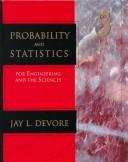
Start with Multivariable Calculus, Hybrid to secure the calculus that probability and financial math depend on. Then Probability and statistics for engineering and the sciences gives you the broad probability and statistics grounding, and Probability for risk management narrows it toward the actuarial applications you will actually be tested on.
Prepare for Exam P
Now target the first exam. Actex Study Manual for the SOA Exam P and CAS Exam 1 is the dedicated preparation for the probability exam — problem-driven, syllabus-aligned, and the standard tool candidates use to pass. Work it after the probability foundation is solid, not before.
Learn interest theory and Exam FM
Move to financial mathematics. The theory of interest is Kellison's classic text on the time value of money, annuities, and bonds that Exam FM covers, and ACTEX Study Manual for SOA Exam FM is the exam-shaped companion that turns that theory into a passing score.
Advance into risk models
Finally, the models that define the profession. Actuarial mathematics covers life-contingency mathematics, Models for Quantifying Risk builds the modeling framework, Loss Models : From Data to Decisions, 3rd Edition is the standard on severity and frequency modeling, and Introduction to ratemaking and loss reserving for property and casualty insurance grounds it in the P&C practice where many actuaries work.
Work the path in order and the exam ladder becomes climbable one secure rung at a time. The related cybersecurity, software-engineering, and air-traffic-control paths show how other high-stakes technical careers reward the same disciplined, sequential preparation.
Follow the full reading path →
Ready to learn something deeply?
Build a reading path — free