Kubrick is a hard director to read about because he gave so few interviews and controlled so much of what was said about him. The result is a literature that swings between myth-making and forensic archive work, and the two do not mix well on a first pass. Start with criticism and you will be arguing about intentions nobody has established; start with the documents and you will have the raw material to judge the criticism by.
There is also a practical problem: several essential titles share a name or a subject. Two books in this path are simply called Stanley Kubrick, and there are three separate volumes here that circle 2001 and The Shining. Knowing which is which saves you buying the same argument twice.
Get the life first
John Baxter's Stanley Kubrick is the accessible entry point — an unauthorised biography that traces the Bronx photographer through the chess halls, the early features, and the move to England. It is readable and skeptical, and it is not the last word; Baxter worked without family cooperation and some of the anecdotes have been disputed since. Read it for the shape of the career, not as settled fact.
The second Stanley Kubrick in this path collects material under his own name and is the useful corrective: closer to the source, lighter on interpretation. Together they give you the two things a first reader needs — a chronology and some unfiltered Kubrick.
Then the documents
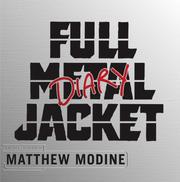
Full Metal Jacket Diary is the outlier and one of the best books here. Matthew Modine kept a journal and shot photographs through the entire production, so you get Kubrick from an actor's eye level over a punishing shoot: the repetitions, the silences, the shifting script. It is the most honest account of what working for him actually felt like.
The Stanley Kubrick Archives is the reference object — an enormous compilation of production stills, script pages, correspondence, and notes drawn from his own files. It is expensive and unwieldy and worth finding in a library, because it is where most of the credible claims in later criticism come from. Read the biography first so the documents have something to attach to.
The criticism, film by film
On Kubrick is the best single critical study to start with: James Naremore reads the films as a body of work with recurring formal and moral preoccupations rather than as a set of genre exercises. The cinema of Stanley Kubrick, Norman Kagan's much older survey, is a period piece by comparison — useful for seeing how the films were received as they arrived, before the reputation calcified.
For the individual films, Stanley Kubrick's 2001 collects criticism on the film that most rewards close reading, and Eyes Wide Shut, from the same editor, does the same for the last and most argued-over feature. Studies in the Horror Film is the Shining volume, a collection of essays on a film that has generated more interpretive excess than any other in the filmography — read it after Naremore so you have a baseline for what counts as a supported reading.
If your interest is one film rather than the career, skip the survey and take the biography plus the relevant single-film volume. Otherwise follow the full path in order and the criticism will land with the documents behind it.
Follow the full ordered path here: Stanley Kubrick: A Reading Order for the Films and the Man.
Ready to learn something deeply?
Build a reading path — free