Best Books on Stanley Kubrick, in Reading Order
This curriculum moves from accessible biographical overviews into deep archival and analytical territory, ending with specialist film-by-film studies and making-of accounts. Each stage builds the vocabulary — biographical, thematic, and technical — needed to fully absorb the more demanding works that follow.
Foundations: The Man and the Myth
BeginnerGain a confident biographical grounding in Kubrick's life, personality, working methods, and career arc before diving into individual films or archives.
▸ Study plan for this stage
Pace: 4–5 weeks, ~40–50 pages/day (approximately 280–350 pages total)
- Kubrick's early life in New York and formative influences (photography, chess, music) that shaped his artistic sensibility
- His unconventional entry into filmmaking through documentaries and low-budget features, and how these taught him technical mastery
- Kubrick's obsessive working methods, perfectionism, and control over every aspect of production—from cinematography to sound design
- The relationship between Kubrick's personality (reclusive, paranoid, intellectually demanding) and his artistic vision
- His career arc from struggling independent filmmaker to studio-backed auteur, and the tensions this created
- Kubrick's collaborative relationships with key figures (producers, cinematographers, actors) and how he managed creative partnerships
- The myth-making around Kubrick: separating biographical fact from legend and industry reputation
- What were the key formative experiences in Kubrick's childhood and young adulthood that influenced his later filmmaking?
- How did Kubrick transition from photography and documentary work into narrative filmmaking, and what did he learn from each stage?
- What are the defining characteristics of Kubrick's working methods, and how did they evolve over his career?
- How did Kubrick's personality traits—perfectionism, control, isolation—manifest in his creative process and relationships with collaborators?
- What major turning points or crises defined Kubrick's career trajectory, and how did he navigate them?
- How much of the 'Kubrick myth' (genius, recluse, perfectionist) is supported by biographical fact versus industry legend?
- Create a detailed timeline of Kubrick's life and career, marking key films, personal events, and shifts in his working methods
- Write a character sketch of Kubrick based on Baxter's portrayal, identifying 3–4 core personality traits and providing specific examples from the text
- Analyze one early Kubrick film (e.g., *Fear and Desire*, *Killer's Kiss*, or *The Killing*) mentioned in Baxter, noting how his emerging technical interests and obsessions appear in it
- Compile a list of Kubrick's stated artistic influences and philosophies from interviews/anecdotes in Baxter, organized by theme (e.g., visual composition, narrative structure, actor direction)
- Create a 'myth vs. fact' document: identify 3–4 popular claims about Kubrick and evaluate them against Baxter's biographical evidence
- Write a reflective essay (500–750 words) on how Kubrick's personality and life circumstances shaped his approach to filmmaking, using specific examples from the biography
Next up: This biographical foundation establishes Kubrick as a complex, driven individual whose obsessions and methods were inseparable from his art, preparing you to analyze his films not as abstract works but as expressions of a particular creative mind operating under specific historical and personal constraints.

The most accessible full-length biography; it reads like a narrative and introduces every major film, collaborator, and obsession without assuming prior knowledge — the ideal first book.
Inside the Room: Collaborators Speak
BeginnerUnderstand Kubrick's working method, his obsessive perfectionism, and his relationships with actors and crew through first-hand accounts.
▸ Study plan for this stage
Pace: 4–5 weeks, ~40–50 pages/day (approximately 280–350 pages total across both books)
- Kubrick's obsessive attention to detail and multiple takes as a method for achieving perfection
- The director-actor relationship: how Kubrick communicated vision, gave direction, and pushed performers beyond conventional boundaries
- The role of improvisation and spontaneity within Kubrick's highly controlled production environment
- Kubrick's use of the set and physical space as a tool for actor performance and psychological immersion
- The collaborative tension between Kubrick's technical demands and actors' emotional/creative needs
- How Kubrick's working methods shaped the final film and its cultural impact
- The personal toll and rewards of working with a perfectionist director
- How did Kubrick's approach to multiple takes and technical precision affect the actors' performances and psychological state on set?
- What specific examples from Modine's diary reveal the tension between Kubrick's vision and the actors' interpretations?
- How did Kubrick use the physical environment and production design to influence actor behavior and emotional authenticity?
- What does Modine's account reveal about Kubrick's communication style and how he motivated or challenged his collaborators?
- How did Kubrick balance control with allowing space for actor creativity and spontaneity?
- What were the lasting effects—both positive and challenging—of Kubrick's working method on the cast and crew?
- Create a detailed timeline of a single day on the Full Metal Jacket set based on Modine's diary entries, noting Kubrick's directorial decisions and their impact
- Write a comparative character sketch of Kubrick as a director based on both texts: what patterns emerge in how he worked with collaborators?
- Select one scene from Full Metal Jacket and analyze how Modine's diary account illuminates the gap between the final film and the production process
- Conduct a close reading of Modine's descriptions of a specific take or sequence, then watch that scene in the film and note what you now understand about the choices made
- Create an interview-style document: write 5–7 questions you would ask Kubrick about his methods, then find answers in the texts and note what remains unanswered
- Develop a 'production notebook' entry from the perspective of either Kubrick or Modine, synthesizing insights from both books about a key moment or conflict
Next up: This stage establishes Kubrick as a meticulous craftsman whose methods shaped every aspect of his films; the next stage will likely examine how these working principles manifested across his entire body of work and evolved over his career.

A curated collection of Kubrick's own words across decades; reading his interviews early lets you hear his thinking directly and calibrates everything you'll read about him afterward.
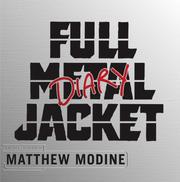
A vivid, photo-rich on-set diary by a lead actor that makes Kubrick's methods viscerally real — a perfect bridge between biography and the making-of accounts ahead.
The Archive: Visual and Production Records
IntermediateEngage with primary source material — photographs, storyboards, correspondence, and production documents — to understand how Kubrick built his films from the ground up.
▸ Study plan for this stage
Pace: 4–5 weeks, ~40–50 pages/day (Castle first, 2–3 weeks; Olson second, 2 weeks)
- Kubrick's meticulous pre-production process: storyboards, location scouting, and visual planning as foundational to his filmmaking
- The role of production design and cinematography in translating conceptual vision into visual language
- How correspondence and notes reveal Kubrick's creative decision-making, collaboration with crew, and problem-solving
- The evolution of Kubrick's horror aesthetic across *The Shining* and *A Clockwork Orange*: visual motifs, symmetry, and psychological tension
- Archive methodology: reading photographs and documents as primary texts that illuminate directorial intent
- The relationship between constraint (budget, technology, location) and innovation in Kubrick's visual solutions
- Narrative structure in horror through visual composition: how Kubrick uses space, color, and framing to create dread
- What specific pre-production documents and visual materials does Castle's Archive reveal about Kubrick's planning process, and how do they differ across his films?
- How does Kubrick use storyboards and production photography to control and communicate his visual vision to crew members?
- What are the key visual and thematic elements that define Kubrick's approach to horror in *The Shining* and *A Clockwork Orange*, according to Olson?
- How do Kubrick's production constraints (location, budget, technology) lead to innovative visual solutions documented in the Archive?
- What does the correspondence in the Archive reveal about Kubrick's working relationships and creative conflicts during production?
- How does understanding Kubrick's pre-production materials change your interpretation of the finished films?
- Create a visual timeline: select 5–10 key photographs or storyboard images from Castle's Archive for one Kubrick film and annotate them with production notes, explaining what each reveals about his directorial choices
- Comparative storyboard analysis: find storyboards for the same scene from two different Kubrick films in Castle and analyze how his visual language evolved
- Correspondence close-read: select one letter or memo from the Archive materials and write a 500-word analysis of what it reveals about Kubrick's creative process or a specific production challenge
- Horror visual motif tracker: using Olson's analysis and Castle's photographs, create a visual essay (6–8 images) documenting one recurring visual motif in *The Shining* or *A Clockwork Orange* and explain its psychological effect
- Production constraint case study: identify one documented constraint (location, technology, budget) from the Archive and trace how Kubrick solved it visually—write up your findings with supporting images
- Archival reconstruction: choose one scene from a Kubrick film and reconstruct its pre-production journey using Castle's materials (storyboards → location photos → production stills), then compare to the final film
Next up: This stage grounds you in Kubrick's concrete creative process and visual grammar, preparing you to analyze his thematic and narrative strategies in greater depth in subsequent stages.

The authoritative Taschen archive volume, produced with the Kubrick Estate; packed with contact sheets, annotated scripts, and production photos that reveal his visual and organizational intelligence.

A rigorous multi-essay collection on a single film that models how to read Kubrick's production choices closely — essential preparation for the advanced film-by-film studies to come.
Film by Film: Deep Critical Studies
IntermediateAnalyse individual masterworks in detail, understanding Kubrick's formal strategies, literary adaptations, and thematic systems on a film-by-film basis.
▸ Study plan for this stage
Pace: 8–10 weeks, ~40–50 pages/day, with 2–3 days per week dedicated to film viewing and note-taking
- Kubrick's formal strategies: composition, camera movement, editing, and sound design as narrative and thematic tools
- Literary adaptation as a process: how Kubrick transforms source material (novels, plays, stories) into visual cinema
- Thematic systems across films: obsession, control, violence, technology, and human limitation as recurring preoccupations
- Mise-en-scène and production design as expressions of Kubrick's perfectionism and worldview
- The evolution of Kubrick's style across different genres and periods (from early work through 2001)
- Philosophical and existential dimensions in Kubrick's work: meaning, mortality, and the human condition
- Spectator engagement: how Kubrick's formal choices create distance, complicity, or emotional investment
- Intertextuality and cultural references: how Kubrick dialogues with literature, art, and cinema history
- How does Kubrick use composition and camera placement to establish power dynamics and psychological states within individual scenes?
- What are the key differences between Kubrick's approach to adapting literary sources compared to original screenplays, and what does this reveal about his artistic priorities?
- How do recurring thematic concerns (obsession, control, technology, violence) manifest differently across his major films, and what does this consistency suggest about his worldview?
- What role does production design and mise-en-scène play in creating meaning in Kubrick's films, and how does it reflect his directorial philosophy?
- How does 2001: A Space Odyssey represent both a culmination of Kubrick's earlier techniques and a radical departure into new formal territory?
- What strategies does Kubrick employ to create emotional distance or alienation in his audience, and to what thematic effect?
- Close-watch exercise: Select one scene from each of Naremore's analyzed films and document every compositional choice (framing, depth, symmetry, color, lighting) in a detailed visual analysis notebook.
- Adaptation comparison: Read an excerpt from a source text (e.g., Nabokov's Lolita, Thackeray's Barry Lyndon, Clarke's 2001 novel) alongside Naremore's analysis of how Kubrick adapted it; write a 2–3 page essay on what was gained and lost in translation.
- Thematic tracking: Create a matrix tracking obsession, control, and technology across Kubrick's films discussed in Kagan and Naremore; identify patterns and note how these themes evolve chronologically.
- Mise-en-scène breakdown: Watch a 5–10 minute sequence from one Kubrick film and create a shot-by-shot breakdown documenting production design, costume, color palette, and spatial relationships; connect your observations to Kagan's and Naremore's interpretations.
- Formal strategies comparison: Select two Kubrick films from different periods and compare their use of editing rhythm, sound design, and camera movement; write a comparative analysis explaining how formal choices reinforce thematic content.
- Kolker deep-dive: After reading Kolker's monograph on 2001, rewatch the film with specific attention to the formal elements he identifies; pause frequently to sketch or annotate how visual language communicates meaning without dialogue.
Next up: This stage equips you with the critical vocabulary and analytical frameworks to understand Kubrick's artistic vision in concrete, film-specific terms—preparing you to engage with broader contextual studies (production history, biographical influences, cultural impact) and to develop your own sustained critical arguments about his legacy.

The finest single-volume critical study of the whole filmography; Naremore's rigorous but lucid analysis of form, performance, and meaning is the cornerstone of serious Kubrick scholarship.
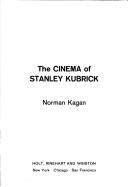
One of the earliest and most thorough film-by-film breakdowns, covering narrative structure and visual style in each work — a useful complement to Naremore's more theoretical approach.
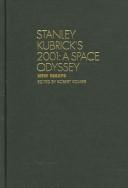
A focused scholarly anthology on Kubrick's most ambitious film, deepening your ability to read a single work through multiple critical lenses — the ideal capstone for this stage.
Advanced: Making-Of Accounts and Specialist Scholarship
ExpertMaster the granular production history of key films and engage with the most demanding biographical and scholarly reassessments of Kubrick's legacy.
▸ Study plan for this stage
Pace: 4–5 weeks, ~40–50 pages/day, with 2–3 days per week dedicated to note-taking, scene analysis, and synthesis
- Kolker's analytical framework for understanding Kubrick's directorial method through the lens of Eyes Wide Shut's production and narrative structure
- The relationship between Kubrick's obsessive revision process and the film's thematic exploration of desire, surveillance, and marital anxiety
- How Eyes Wide Shut functions as a culmination of Kubrick's career-long investigation into subjective consciousness and visual language
- The role of literary adaptation (Schnitzler's Traumnovelle) in shaping Kubrick's formal and thematic choices
- Kolker's reassessment of the film's critical reception and its place within late-20th-century cinema
- The technical and narrative strategies Kubrick employed to render psychological interiority on screen
- How production history—casting, location work, post-production—directly informed the film's meaning and reception
- What is Kolker's central argument about Eyes Wide Shut as a culminating work in Kubrick's oeuvre, and how does he support it through production history?
- How does Kolker analyze the relationship between Kubrick's obsessive directorial control and the film's thematic preoccupations with desire and surveillance?
- What specific production decisions (casting, set design, cinematography) does Kolker identify as crucial to the film's meaning, and why?
- How does Kolker position Eyes Wide Shut in relation to Schnitzler's source material, and what does this reveal about Kubrick's approach to adaptation?
- What does Kolker argue about the film's critical reception at the time, and how does he reframe its significance in retrospect?
- How does Kolker trace the visual and narrative strategies Kubrick uses to represent the protagonist's psychological journey and subjective experience?
- Create a detailed timeline of Eyes Wide Shut's production (pre-production through post-production), cross-referencing Kolker's account with the film itself to identify how specific production choices manifest in the final cut
- Analyze 3–4 key scenes from Eyes Wide Shut using Kolker's framework: document how cinematography, production design, and performance choices work together to convey psychological states and thematic concerns
- Write a comparative close reading of a passage from Schnitzler's Traumnovelle and the corresponding sequence in Eyes Wide Shut, using Kolker's insights to explain Kubrick's adaptation choices
- Construct a visual argument (mood board, annotated screenshots, or diagram) showing how the film's production design and color palette reinforce Kolker's interpretation of the narrative's psychological and thematic dimensions
- Synthesize Kolker's reassessment of the film's reception: write a 2,000-word essay arguing for a specific reinterpretation of Eyes Wide Shut based on production-historical evidence Kolker provides
- Conduct a scene-by-scene analysis of one major sequence (e.g., the masked ball, the bedroom confrontation), documenting Kolker's observations about directorial intent, technical execution, and meaning-making
Next up: This stage establishes mastery of Kubrick's production methodology and the critical frameworks needed to evaluate his legacy, preparing you to engage with broader scholarly debates about his influence on cinema and his place in film history.

The most detailed scholarly account of Kubrick's last and most debated film, drawing on production records and critical theory — the perfect advanced capstone that ties biography, archive, and analysis together.
Discussion
Keep reading
Paths that share books, cover the same subject, or open a related topic.