Bad sleep gets treated with gadgets, supplements, and dread — when the actual machinery is two understandable systems: circadian rhythm (when your body expects sleep) and sleep pressure (how much it needs). Align your habits with both and sleep largely fixes itself. The books teach the alignment.
One rail before the reading list: persistent insomnia, loud snoring with daytime exhaustion, and sleep that does not improve with good habits are all reasons to see a doctor. Sleep apnea in particular is common, dangerous and invisible from the inside, and no book on this path can diagnose it.
Start with why it matters
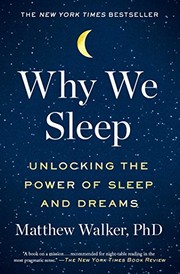
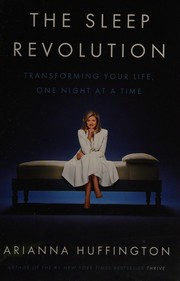
Why We Sleep by Matthew P. Walker is the wake-up call, and it should be read the way the field itself reads it — persuasive, important, and overreaching in places, as several published critiques have documented in detail. Take the message that sleep is worth engineering; hold the individual statistics loosely. The sleep revolution by Arianna Huffington makes an adjacent case from the culture side: why we came to treat sleeplessness as a badge of seriousness, and what that has cost. It is advocacy rather than science, and it is the better book for convincing someone else.
Then the mechanisms
The circadian code by Satchin Panda and Internal time by Till Roenneberg are the two books that actually change behaviour. Panda covers the body clock and the timing of light, food and exercise; Roenneberg covers chronotype and social jetlag, and is the humane corrective for anyone who has been told they are lazy for waking at nine. Night owls: you are not broken, you are mistimed.
Then the fixes that have evidence
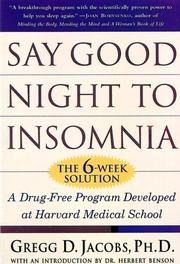
Say good night to insomnia by Gregg D. Jacobs is the self-guided version of the Harvard CBT-I program — cognitive behavioural therapy for insomnia, the intervention with the strongest evidence base in the field, and the one that outperforms sleeping pills in trials with durable results. The sleep solution by W. Chris Winter is a working sleep doctor's practical playbook, and it is the friendliest place to start if the CBT-I program feels clinical.
Four adjacent books, and what they add
The path also carries three books that are not sleep manuals, and it is worth knowing that going in. Why Zebras Don't Get Ulcers by Robert M. Sapolsky is the classic on the stress response, and it is here because a racing mind at 2 a.m. is a stress physiology problem more often than a sleep-hygiene one. Breath by James Nestor covers nasal breathing and airway health, which genuinely touches on snoring and sleep quality — read the airway material and treat the more sweeping claims with the same scepticism you brought to Walker. Outlive by Peter Attia is a longevity book with a substantial sleep chapter; take that chapter and leave the rest unless the wider subject interests you.
The habit: anchor the wake time
Every book converges on one high-leverage move: a fixed wake time, seven days a week, with morning light. It anchors the circadian clock, builds honest sleep pressure by evening, and outperforms any bedtime rule. Boring, free, and more effective than anything you can buy.
About 90 hours of reading — ideally not at 2 a.m. Follow the path, and if a racing mind is the culprit, pair it with meditation or the calmer-aging reads.
Ready to learn something deeply?
Build a reading path — free