Let us be blunt at the start: you cannot learn to skydive from reading, and no responsible book claims otherwise. Skydiving is taught by rated instructors at a drop zone under a national body's training programme — AFF or static line, ground school, supervised jumps, and progressive licensing. Books are supplementary, and the ones on this path are best read alongside training rather than instead of it.
What books do well is the part that ground school compresses. Equipment theory, canopy behaviour, malfunction taxonomy, and the reasoning behind procedures get maybe an hour of instruction and then a lot of drilling. Reading them properly is how you become someone who understands their gear rather than someone who follows a checklist.
The reference works
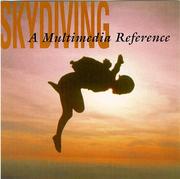
Skydiving, A Multimedia Reference by Dan Poynter is a broad orientation to the sport — training progressions, disciplines, equipment, and terminology — assembled by an author who wrote about the field for decades. It is the right first read for someone deciding whether to start, and it gives you the vocabulary so that ground school is not a wall of unfamiliar words.
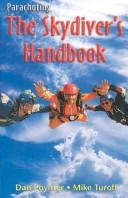
Then Parachuting, Poynter's larger and more technical work, is the equipment-focused volume: canopy design, harness and container systems, reserve procedures, packing, and rigging fundamentals. This is the useful one for a licensed jumper. Be clear-eyed about the dating, though — canopy design, automatic activation devices, and rigging standards have all moved substantially, so anything that touches current equipment specifications or regulation must be checked against your national body's current manual and a rated rigger. Use the book for the physics and the reasoning; use current documentation for the numbers.
Why anyone does this
Falling by Garrett Soden is a cultural history of the human relationship with height and free fall — barnstormers, parachute jumps at fairs, bridge jumpers, the invention of bungee, and the long line of people who have thrown themselves off things deliberately. It is genuinely good social history and it puts the modern sport into a lineage that runs back well over a century.
It also, indirectly, does something useful: it shows how much of the current safety culture was bought by people dying without it. Reading it makes standard operating procedures feel less like bureaucracy.
The other end of the parachute question
No parachute by Arthur Gould Lee is a First World War pilot's memoir, assembled from letters written at the time, and its title is the point. British aircrew were not issued parachutes for most of the war, on reasoning that ranged from technical constraints to a stated fear that pilots would abandon aircraft too readily. Lee's letters describe flying under those conditions without hindsight or literary polish.
It is not a skydiving book in any direct sense, and it belongs at the end of this path for exactly that reason. It is the clearest possible account of what the equipment above is for.
What to do instead of reading more
After these four, additional reading has diminishing returns. The material that actually improves a jumper is the current Skydiver's Information Manual or its national equivalent, your canopy manufacturer's flight characteristics documentation, incident reports published by your national association, and canopy-piloting coaching. Read incident reports regularly — they are unglamorous and they are the most effective safety reading in the sport.
Browse more paths for adjacent outdoor and aviation subjects. Follow the full path to read these in order.
Follow the full ordered path here: Skydiving Books Worth Reading, in Order.