Best Books on Skydiving, in Reading Order
This curriculum takes you from your very first exposure to skydiving all the way through advanced canopy piloting, freefall skills, formation work, and the sport's rich history. Each stage builds on the last — starting with the mindset and mechanics of early jumps, then sharpening your air skills, then mastering the canopy, and finally situating yourself within the broader culture and legacy of the sport.
First Steps: Understanding the Sport & Your First Jumps
BeginnerUnderstand what skydiving is, how AFF training works, what to expect on your first jumps, and build the foundational vocabulary and safety mindset every new skydiver needs.
▸ Study plan for this stage
Pace: 4–5 weeks, ~25–30 pages/day (with 2–3 rest days per week for reflection and practice)
- The history and evolution of skydiving as a sport and discipline
- How the Accelerated Freefall (AFF) training progression works and what each level demands
- The physics of freefall: gravity, terminal velocity, body position, and air resistance
- Essential equipment: parachute systems, harnesses, altimeters, and how each component functions
- Pre-jump procedures: aircraft operations, exit techniques, and emergency protocols
- The psychological and physical demands of your first jumps and how to manage fear and focus
- Safety culture and risk management: why procedures exist and how to follow them rigorously
- What is the AFF progression system, and what are the key milestones a student must achieve before jumping solo?
- Explain the concept of terminal velocity and how body position affects your fall rate during freefall.
- What are the main components of a modern skydiving rig, and what is the function of each?
- Describe the typical sequence of events during a tandem or AFF jump, from aircraft boarding to landing.
- What are the most common mistakes beginners make, and how does proper training prevent them?
- How do you recognize and respond to emergency situations like a main parachute malfunction?
- Why is mental preparation as important as physical training for your first jumps?
- Create a labeled diagram of a complete skydiving rig (main parachute, reserve, harness, altimeter, AAD) and explain each component's role
- Write a step-by-step checklist for pre-jump procedures based on Poynter's descriptions, then practice reciting it until it becomes automatic
- Watch video footage of AFF jumps (from official training sources) while reading the corresponding sections to connect theory with real motion
- Practice the body positions described in the book (arch, tracking, turns) on the ground—lie on a yoga ball or bench to simulate freefall posture
- Interview or survey a local skydiver about their first jumps and compare their experience to what Poynter describes; note differences and similarities
- Create a glossary of 30+ skydiving terms from the book with definitions and context, organized by category (equipment, procedures, physics, safety)
Next up: This stage builds the conceptual foundation and safety mindset needed to understand advanced techniques; the next stage will deepen your knowledge of specialized skills, equipment choices, and the decision-making required as you progress beyond your first jumps.
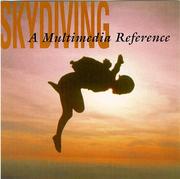
Dan Poynter's classic beginner's guide covers the AFF progression, gear basics, and the culture of drop zones in plain language, making it the ideal companion for students working through their first jumps.
Canopy Control & Safety
BeginnerDevelop a thorough, practical understanding of canopy flight, landing patterns, emergency procedures, and the decision-making skills that keep skydivers alive.
▸ Study plan for this stage
Pace: 4–5 weeks, ~25–30 pages/day, focusing on chapters 6–10 (canopy systems, flight dynamics, landing procedures, and emergency protocols)
- Canopy anatomy and components: lines, cells, suspension systems, and how each part affects flight behavior
- Canopy flight physics: lift, drag, glide ratio, and how weight, wing loading, and air density influence descent and forward speed
- Approach and landing patterns: standard procedures, wind assessment, altitude management, and flare timing for safe touchdowns
- Emergency procedures: line twists, off-heading openings, canopy malfunctions, and decision trees for when to cut away
- Situational awareness and decision-making: reading weather, assessing landing zones, managing altitude, and recognizing hazards in real time
- Canopy control inputs: steering, slip maneuvers, and precision flying techniques that prevent injury and extend landing options
- What are the main components of a modern parachute canopy, and how does each contribute to flight control and safety?
- How do wing loading and air density affect your descent rate and glide ratio, and why does this matter for landing zone selection?
- Describe a standard approach and landing pattern, including altitude checkpoints and the purpose of each phase
- What are the primary emergency procedures for line twists, off-heading openings, and total canopy malfunctions, and when should you cut away?
- How do you assess wind speed and direction during descent, and what landing zone characteristics make a spot safe or unsafe?
- What are the most common mistakes skydivers make during canopy flight, and how does deliberate practice prevent them?
- Create a detailed diagram of a parachute canopy labeling all major components (cells, lines, risers, toggles) and annotate how each affects flight behavior
- Calculate glide ratios and descent rates for different wing loadings using the formulas in Poynter, then predict how these change with altitude and temperature
- Sketch three landing patterns (standard, tight, and go-around) with altitude callouts, turn points, and flare zones marked at each stage
- Write out the decision tree for responding to line twists, off-heading openings, and canopy tears—include altitude thresholds and cutaway criteria
- Analyze a real or hypothetical landing scenario (crosswind, small zone, obstacles) and document your wind assessment, approach plan, and contingencies
- Practice verbal callouts and hand signals for canopy control inputs (turns, slips, flares) as if coaching a fellow jumper through a landing
Next up: Mastery of canopy control and emergency decision-making forms the foundation for advanced skydiving disciplines—formation flying, tracking, and BASE jumping all depend on precise canopy handling and the judgment to abort or adapt when conditions change.
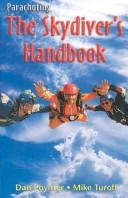
The most widely used reference in the sport, this book goes deeper into canopy systems, malfunctions, and safety protocols — a natural next step after the introductory overview.
The History & Culture of Skydiving
IntermediateSituate yourself within the long arc of the sport's history — from early parachute pioneers to BASE jumping, wingsuit flight, and the competitive skydiving community — and understand how the culture shaped modern practice.
▸ Study plan for this stage
Pace: 4–5 weeks, ~40–50 pages/day. "Falling" (approx. 300 pages) over 2 weeks, then "No Parachute" (approx. 200 pages) over 2–3 weeks, with 3–4 days for review and synthesis.
- The evolution of parachute technology from military necessity to sport innovation, as traced through Soden's narrative of pioneers and their breakthroughs
- How early parachutists like André-Jacques Garnerin and Leo Valentin pushed the boundaries of what was possible, establishing the culture of calculated risk-taking
- The transition from military/stunt jumping to recreational skydiving as a competitive sport with its own rules, ethics, and community
- Arthur Stanley Gould Lee's firsthand experience as a WWI pilot and his perspective on parachute development during wartime, illustrating the human stakes behind technological progress
- The relationship between fear, courage, and technical mastery in skydiving culture—how the sport's identity formed around confronting mortality
- The role of experimentation and failure in advancing the sport: understanding which innovations stuck and why
- How BASE jumping and wingsuit flight emerged as natural extensions of skydiving culture, pushing the sport into new environments and disciplines
- The competitive skydiving community's values: precision, discipline, camaraderie, and the pursuit of human limits
- How did parachute technology evolve from Garnerin's early designs to the modern sport parachutes discussed in 'Falling,' and what key innovations made recreational skydiving possible?
- What role did military necessity play in advancing parachute development, and how does Gould Lee's account in 'No Parachute' illustrate the dangers pilots faced?
- How did the culture of skydiving shift from a dangerous stunt to an organized sport with competitive disciplines, and what values define the modern skydiving community?
- Who were the key pioneers (Garnerin, Valentin, and others in Soden's account) and what made their contributions transformative to the sport?
- How do BASE jumping and wingsuit flight represent a natural evolution of skydiving culture, and what does this tell us about the sport's relationship with risk and innovation?
- What does Gould Lee's personal narrative reveal about the psychological and technical challenges of early parachute use, and how does this context deepen your understanding of modern skydiving?
- Create a timeline of parachute innovations from Soden's 'Falling,' marking key breakthroughs (e.g., Garnerin's first jump, the development of the ripcord, freefall techniques) and note which innovations came from military vs. civilian contexts.
- Write a 500-word character study of one pioneer from 'Falling' (Garnerin, Valentin, or another featured figure), analyzing what drove them to take risks and how their personality shaped the sport's culture.
- Read Gould Lee's account of parachute use in 'No Parachute' and annotate passages that reveal the psychological toll and technical challenges of early parachuting; compare these to Soden's discussion of how the sport evolved to manage these risks.
- Map the progression from military parachuting (Gould Lee's era) to recreational skydiving to BASE jumping/wingsuit flight; create a visual diagram showing how each stage built on the previous one and what cultural values emerged at each transition.
- Interview a local skydiver or BASE jumper (or watch a recorded interview online) and ask them which historical figures or innovations they credit with shaping modern practice; compare their answers to what you learned from Soden and Gould Lee.
- Write a reflective essay (800–1000 words) on how understanding the history of parachute failure and innovation changes your perspective on the relationship between risk and progress in skydiving culture.
Next up: This stage grounds you in the historical and cultural foundations of skydiving—the pioneers, the technology, and the values—preparing you to move into the next stage where you'll likely explore the technical skills, safety protocols, and modern competitive disciplines that this history made possible.

A narrative history of humanity's relationship with falling and parachuting, from the earliest experiments to modern extreme sports — gives the sport its full cultural and historical context.

A vivid first-person account from the earliest era of aerial daring, this book anchors the historical thread and shows how far the sport has evolved, giving experienced readers a deep appreciation for the journey.
Discussion
Keep reading
Paths that share books, cover the same subject, or open a related topic.