Nietzsche is one of the most exhilarating and most misunderstood thinkers in history. His aphoristic, explosive style makes him easy to quote and easy to distort, which is exactly why reading order matters so much here. Approach him without context and you risk the cartoon Nietzsche of internet slogans; approach him in sequence and you meet a subtle, self-questioning philosopher of extraordinary depth.
The strategy is simple: build a scaffold of biography and interpretation before and around the primary texts, so that when you read Nietzsche's own words you can hear what he actually meant rather than what he has been made to mean.
Build the scaffold first
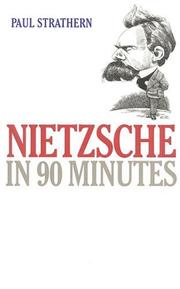
Start with Nietzsche by Rudiger Safranski, a superb intellectual biography that ties his ideas to his life and shows how his thought developed. For a quick orientation, Nietzsche in 90 Minutes by Paul Strathern gives a painless first map of the terrain.
Read the man himself
Now go to the source, in a sensible order. Begin with The birth of tragedy. The genealogy of morals by Friedrich Nietzsche, pairing his first book with one of his most important later ones. Then read his strange, poetic centerpiece, Thus Spoke Zarathustra, where the famous ideas of the overman and eternal recurrence take literary form.
Move into his mature philosophy with Twilight of the Idols and The Antichrist, his blazing late attacks on conventional morality and Christianity, and Beyond Good and Evil, perhaps the best single entry into his positive philosophy. Then read On the genealogy of morals. Ecce Homo, which combines his most systematic argument, on the origins of morality, with his provocative intellectual autobiography.
Read the interpreters
Great secondary work turns Nietzsche from thrilling to comprehensible. Nietzsche's the Gay Science by Michael Ure is a careful guide to one of his richest books, and Nietzsche, life as literature by Alexander Nehamas is a landmark interpretation that reads his life and work as a unified aesthetic project. For the influential Continental reading, Nietzsche and Philosophy by Gilles Deleuze reshaped how a generation understood him.
Read this path in order, context first, then the texts, then the interpreters, and Nietzsche becomes what he deserves to be: not a source of slogans but a genuine philosophical companion who keeps rewarding rereading. Follow the full sequence to meet him properly.
Follow the full reading path →
Ready to learn something deeply?
Build a reading path — free