The literature on autonomous vehicles divides sharply into two halves that barely acknowledge each other. One half is business and social narrative — the DARPA challenges, the Google project, what happens to cities. The other is graduate robotics: projective geometry, Bayes filters, sampling-based planning. Readers who start in the technical half without the context give up; readers who stay in the narrative half come away believing they understand a technology they could not describe.
Take them in that order, narrative first, and one more thing is worth knowing up front. The technical books here are stable and the narrative ones are not: deployment status, regulation and company fortunes move faster than publishing. Treat the first stage as history rather than as a report on the present.
The race and the stakes
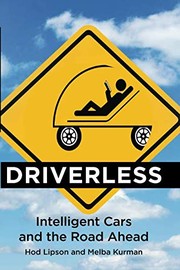
Driverless is the best general introduction — a roboticist explaining what the technology genuinely requires, why perception is the hard part, and what changes when cars drive themselves. Read it first for a clear-eyed baseline before anyone tells you a story.
Autonomy is that story, and a good one: the DARPA Grand Challenge, Google's self-driving project and the industry's collision with Detroit, told by GM's former head of research and development. It is an insider account and reads like one. No one at the wheel is the counterweight, written by a traffic engineer on what autonomy would actually do to streets, parking, transit and sprawl — including the induced-demand outcomes nobody selling the technology mentions. If your interest runs toward the labour side of this, the related path on a truck driving career covers the industry from the cab.
The robot underneath
Introduction to autonomous mobile robots is the gateway from popular reading into the technical literature: locomotion, sensors, perception, localization and navigation, at exactly the right level. Robotics, Vision and Control comes second as the hands-on complement, tying robotics and vision together through executable examples so that coordinate frames and camera geometry become concrete rather than symbolic. Autonomous Driving is the road-vehicle reference volume from the German automotive research community — architectures, functional safety, validation, legal and social aspects — and it maps the whole problem before you commit to any one part of it.
Perception and state estimation
This is where the mathematics starts, and it is a real step. Assume linear algebra, probability and some comfort with programming.
Computer Vision is the standard modern vision text and should come before the geometry, which assumes you know what a feature detector is for. Multiple view geometry in computer vision is the definitive treatment of projective geometry, calibration, epipolar geometry and structure from motion — the mathematics beneath every visual odometry pipeline. Probabilistic robotics is the central book of the path, written by the leader of the winning DARPA team: Bayes filters, Kalman and particle filters, localization, SLAM. Everything a self-driving stack does about uncertainty is in there. State Estimation for Robotics is the rigorous modern follow-up, particularly on estimation over Lie groups and continuous-time trajectories, which is what current sensor-fusion systems are actually built on.
One honest gap: with the partial exception of Szeliski, these texts predate or under-weight the deep-learning methods that now do most production perception. They teach the geometry and probability that learned systems are wrapped around, which is why they remain worth the effort, but they are not a survey of current practice and no book on this path is.
Planning and control
Planning Algorithms is the comprehensive reference on motion planning — configuration spaces, sampling-based planners, planning under uncertainty and differential constraints — and answers the question of what the car should do next. Vehicle dynamics and control closes the loop with the physical car: tyre models, lateral and longitudinal control, adaptive cruise, lane keeping, stability control. A planned trajectory is only ever as good as the controller that can follow it.
Follow the full path below to read the twelve in sequence.
Follow the full ordered path here: Best Books on Self-Driving Cars and Autonomous Vehicles, in Reading Order.