Best Books on Self-Driving Cars and Autonomous Vehicles, in Reading Order
A self-driving car is a mobile robot with a very unforgiving operating environment, and the literature splits cleanly between the story of the industry and the mathematics that makes the machine work. This path starts with the race to build them and what full autonomy would do to cities, then rebuilds the vehicle from the robotics side — perception, probabilistic state estimation, planning and control — reaching Thrun's Probabilistic Robotics, which remains the field's central text.
The race and the stakes
BeginnerUnderstand how autonomous driving went from a DARPA challenge to a multi-billion-dollar industry, what the levels of autonomy actually mean, and what the honest state of the technology is.
▸ Study plan for this stage
Pace: Five weeks and no mathematics. Driverless is 328 pages and takes two — read it first for a technically honest baseline before any insider narrative. Autonomy is 179 pages and takes a week. No One at the Wheel is 262 pages and takes a week and a half; read it last, because it is the only book here wr
- The SAE levels of driving automation, and the specific hazard of the level where the human is legally responsible but not actually engaged — the handover problem is a human-factors failure mode, not a software one
- The DARPA challenges as the field's origin: a desert course nobody completed, the same course won the following year, and then an urban course with traffic — three data points that set the industry's expectations, arguably too optimistically
- Why perception rather than control is the hard part: keeping a car on a known trajectory was solved decades ago, and knowing what is in front of it was not
- The long tail of rare events, and the resulting validation problem — the statistical argument that demonstrating a safety improvement over human drivers by road testing alone would require an implausible number of miles
- The operational design domain as the concept that makes 'self-driving' a meaningful claim: a system is autonomous within a specified envelope of road type, weather, speed and geography, and outside it is nothing
- High-definition maps as prior information, and the trade between the accuracy they buy and the maintenance burden they impose
- The sensor argument — lidar versus camera-only — as a genuine engineering disagreement about whether redundancy or scale is the better route to reliability
- Schwartz's second-order effects: empty vehicle miles, induced demand, competition with transit, the collapse of parking revenue and the reallocation of curb space — none of which appear in the technology narratives
- Define each SAE level, and explain why the conditional-automation level is widely considered the most dangerous rather than an intermediate step
- Why is perception harder than control? Give a concrete failure mode that illustrates the asymmetry
- What is an operational design domain, and how does its existence make the phrase 'self-driving car' ambiguous in commercial claims?
- Give the mechanism by which Schwartz thinks autonomy could increase congestion rather than reduce it. What would have to be true for him to be wrong?
- State the honest current status of the technology in five sentences, without using the word revolutionary in any of them
- Write out the SAE levels with a real deployed or tested system as an example of each, and mark the levels where you cannot find a genuine example
- Take one publicly documented autonomous vehicle collision and write the failure analysis: was it sensing, perception, prediction, planning, control, or handover? Most public commentary gets this wrong
- Using the published statistical argument, estimate the number of fleet miles needed to demonstrate a meaningful improvement over the human fatality rate. Then write a paragraph on what that number implies about simulation and scenario-based validation
- Write 500 words on the induced demand argument against autonomy, followed by the strongest counterargument you can construct
- Draw the operational design domain of one commercially available system as precisely as its own documentation allows, and note what the documentation does not specify
Next up: You now know what the machine is supposed to do and why it is hard — the next stage rebuilds it as what it actually is, a mobile robot with a very unforgiving environment.
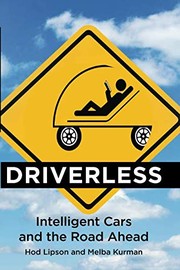
The best general introduction: a roboticist explaining what the technology genuinely requires, why perception is the hard part, and what changes when cars drive themselves. Read first for a clear-eyed baseline before the industry narratives.

The insider history — DARPA Grand Challenge, Google's self-driving project, the industry's collision with Detroit — from GM's former head of R and D. It supplies the people and decisions behind every technical choice.

A traffic engineer's account of what autonomy would do to streets, parking, transit and sprawl, including the outcomes nobody selling the technology mentions. The necessary counterweight to the first two books.
The robot underneath
IntermediateSee the vehicle as a mobile robot — sensors, kinematics, the perception-planning-control loop — and understand how the automotive-specific stack is assembled around it.
▸ Study plan for this stage
Pace: Five to six months. Introduction to Autonomous Mobile Robots is 472 pages and takes two months read with a notebook and simulation. Robotics, Vision and Control is 722 pages built around executable examples and takes two to three months — it should be worked rather than read, and you should be runni
- The kinematic bicycle model — the Ackermann-steered abstraction that nearly every vehicle planner and lateral controller is built on, and the nonholonomic constraint that makes a car unable to move sideways
- Coordinate frames and homogeneous transforms, which sound trivial and are the source of a large fraction of real robotics defects
- The sensor taxonomy and each sensor's actual error characteristics: wheel odometry drifts, inertial measurement drifts faster, satellite positioning is absolute but intermittent and multipath-prone, lidar is precise and weather-sensitive, radar is robust and low-resolution, cameras are rich and scal
- The perceive-plan-act loop with a latency budget, and the fact that a stale correct answer is a wrong answer at highway speed
- Camera modelling: intrinsics, extrinsics, lens distortion, and calibration as a procedure you perform rather than a parameter you look up
- System architecture as a real design decision: a modular perception-prediction-planning-control pipeline versus end-to-end learning, and the fact that modularity exists largely so that failures can be attributed
- Functional safety for systematic and random faults, and the separate standard covering hazards that arise from performance limitations of a correctly functioning system — the second is the one that matters for perception
- Validation and release strategy as an engineering discipline of its own, which is where most of the industry's actual difficulty now sits
- Write down the kinematic bicycle model and explain its nonholonomic constraint physically, in terms of what the tyres can and cannot do
- Name every coordinate frame in a vehicle software stack and say which transforms are fixed by construction and which are continuously estimated
- Compare lidar, radar and camera on range, angular resolution, weather robustness and cost. Which of their failure modes are correlated with each other, and which are independent? The independence is the whole argument for sensor fusion
- What class of hazard does functional safety address, and what class does it miss that the performance-limitation standard was written for?
- Modular versus end-to-end architectures: state the strongest case for each, and say what each makes difficult to verify
- Implement forward and inverse kinematics for the bicycle model, simulate a lane change, and confirm the resulting turn radius respects a realistic steering limit
- Calibrate a real camera — a phone camera is fine — using Corke's procedure, recover the intrinsics and distortion coefficients, and undistort an image. Do not skip this because it looks like housekeeping
- Draw the complete frame tree for a vehicle from earth down to each sensor, and annotate each edge with how that transform is obtained
- Take one function from the architecture chapter of the reference volume and write a hazard analysis in the performance-limitation style: what limitation, what triggering condition, what harm, what mitigation
- Instrument a simple perceive-plan-act loop and measure its end-to-end latency, then compute how far a vehicle travels during that latency at 30 metres per second
Next up: With the vehicle understood as a robot and the architecture mapped, the next stage supplies the mathematics of the two things it must do continuously — know where it is and know what is around it.
The clearest survey of mobile robotics: locomotion, sensors, perception, localization and navigation, at exactly the level needed before the specialist texts. The gateway from popular reading into the technical literature.

Ties robotics and computer vision together through executable examples, which makes coordinate frames, camera geometry and control loops concrete rather than symbolic. Read second, as the hands-on complement to Siegwart.
The reference volume specific to road vehicles — architectures, functional safety, validation, legal and social aspects — written by the German automotive research community. It maps the whole problem before you dive into any one part.
Perception and state estimation
IntermediateWork with the mathematics of seeing and knowing where you are — camera geometry, sensor fusion, Bayesian filtering, SLAM — well enough to implement and debug a localization stack.
▸ Study plan for this stage
Pace: Nine to twelve months, the heaviest stage on the path. Computer Vision is 833 pages and takes two to three months. Multiple View Geometry is 649 pages of dense projective geometry and takes three; work the derivations. Probabilistic Robotics is 672 pages and is the centre of the whole path — three m
- Image formation, feature detection and description, optical flow, stereo disparity, and the modern learned detectors and segmenters — enough to know what each stage of a vision pipeline is producing
- Projective geometry in homogeneous coordinates, the pinhole camera matrix, epipolar geometry and the essential and fundamental matrices, triangulation and bundle adjustment
- RANSAC as the workhorse that makes any of the geometry usable on real images, and the general principle that outlier rejection is not an implementation detail but part of the estimator
- The Bayes filter as the single frame that unifies everything: predict with a motion model, correct with a measurement model, and everything else is an approximation to that
- The Kalman filter and the exact assumptions it requires, the extended and unscented variants, and what specifically degrades when the linearity or Gaussian assumptions fail
- The particle filter and Monte Carlo localization, including sample impoverishment and the kidnapped-robot problem that exposes it
- SLAM in its successive forms — filter-based, then factor graph and nonlinear least squares — and the recognition that the hard part is data association and loop closure rather than the optimisation
- Barfoot's treatment of estimation on the rigid-body motion group: why naively parameterising rotation in a vector space breaks an estimator, and what the exponential map and Lie-group formulation fix
- Derive the Kalman filter measurement update and state precisely which assumptions it needs. What breaks first in the extended version, and how would you detect it in a running system?
- What does a particle filter give you that an extended Kalman filter cannot, and what does it cost in computation and in tuning?
- Explain the epipolar constraint geometrically before writing any algebra. Then say why RANSAC is unavoidable when applying it to real correspondences
- Why is SLAM hard? Separate the estimation problem from the data association problem and say which one actually fails in practice
- What goes wrong when rotations are parameterised as three angles inside an estimator, and how does the Lie-group treatment repair it?
- Implement Monte Carlo localization on a known two-dimensional map with simulated range measurements, then break it with a kidnapped-robot test and implement the fix. The failure teaches more than the success
- Build a visual odometry pipeline on a public driving dataset — features, matching, essential matrix with RANSAC, pose recovery — and plot accumulated drift against ground truth
- Implement a pose-graph SLAM back end on a public benchmark and demonstrate the effect of adding a single loop closure to the trajectory error
- Work Barfoot's derivation of the rigid-body exponential map by hand, then verify it numerically against composed rotations. Do this before trusting any library that hides it
- Take real lidar scans, implement iterative closest point scan matching, and measure how the result degrades as you corrupt the initial guess. The breakdown point is the number that matters operationally
Next up: The vehicle now knows where it is and what is around it — the last stage turns that estimate into a trajectory the car can actually follow with the tyres it has.

The standard modern vision text: image formation, features, motion, stereo and recognition. Read before the geometry book, which assumes you know what a feature detector is for.

The definitive treatment of projective geometry, camera calibration, epipolar geometry and structure from motion — the mathematics beneath every visual odometry and mapping pipeline.

The central book of this path, by the leader of the winning DARPA team: Bayes filters, Kalman and particle filters, localization, SLAM and probabilistic planning. Everything a self-driving stack does about uncertainty is in here.

The rigorous modern follow-up, particularly on estimation over Lie groups and continuous-time trajectories — the machinery current SLAM and sensor-fusion systems are actually built on.
Planning and control
IntermediateTurn a perceived world into motion: generate feasible trajectories under vehicle constraints and track them accurately at speed.
▸ Study plan for this stage
Pace: Five to six months. Planning Algorithms is 842 pages and is the comprehensive reference; three months, implementing the planners as you go rather than reading about them. Vehicle Dynamics and Control is 499 pages and takes two; it is the book that connects everything above to physical tyres, and the
- Configuration space and obstacles in configuration space, which is the abstraction that makes planning tractable and is the first thing most people skip
- Sampling-based planning — probabilistic roadmaps, rapidly exploring random trees and their asymptotically optimal variants — and the precise guarantees they offer, which are probabilistic and asymptotic rather than absolute
- Differential constraints and kinodynamic planning: a path a point robot could take is not a path a car can take, and the difference is where Dubins and Reeds–Shepp curves come in
- What production systems actually run — lattice planners over a road-aligned frame, and trajectory optimisation with cost terms for comfort, progress and safety — rather than a raw sampling planner
- The separation between behaviour planning and motion planning, and where prediction of other road users belongs, which is the least settled part of the architecture
- Tyre modelling: slip angle, cornering stiffness, the linear region and the point where it ends, and the nonlinear model that describes what happens past that point
- Lateral and longitudinal control — lane keeping, adaptive cruise, yaw stability — and the actuator limits that bound what any planner is permitted to request
- String stability in vehicle strings, which is a property of the group and can fail even when every individual controller is stable
- Why do sampling-based planners dominate in high-dimensional configuration spaces? State exactly what they guarantee and what they do not
- What does a nonholonomic constraint do to the planning problem, and how do Dubins and Reeds–Shepp curves address it?
- Distinguish behaviour planning from motion planning, and argue where the prediction of other agents should live. Defend the choice architecturally
- What is the linear region of a tyre model, and what does a controller designed inside it do when the vehicle leaves it? Which real manoeuvres leave it?
- Define string stability and explain why it matters for platooning even when every individual vehicle's controller is stable
- Implement rapidly exploring random trees and their optimal variant in a two-dimensional workspace, then extend to a car-like robot using Dubins curves and compare path quality against computation cost
- Implement a lattice planner in a road-aligned frame and generate a lane-change manoeuvre subject to explicit curvature, acceleration and jerk limits
- Implement two path-tracking controllers — pure pursuit and a geometric front-axle controller — and compare tracking error as speed increases until one of them fails. Record the speed at which it fails
- Simulate the bicycle model with a nonlinear tyre model and find the combination of speed and steering input at which the linear approximation stops holding. That boundary is the operating envelope your planner must respect
- Close the loop as the final exercise of the path: take a trajectory from your planner, run it through your controller and vehicle model, and report the actual tracking error against the plan. The plan is not what the vehicle does; this number is
Next up: This closes the path; the natural continuations are behaviour prediction and multi-agent interaction, scenario-based safety validation, reinforcement learning for driving policy, and the current literature on simulation fidelity and sim-to-real transfer.

The comprehensive reference on motion planning, from configuration spaces and sampling-based planners to planning under uncertainty and differential constraints. The direct answer to what the car should do next.
Closes the loop with the physical car: tire models, lateral and longitudinal control, adaptive cruise, lane keeping and stability control. A planned trajectory is only as good as the controller that can follow it.
Discussion
Keep reading
Paths that share books, cover the same subject, or open a related topic.