Psychedelic research is in a strange moment: promising clinical trials, breathless headlines, billions in investment, and a body of evidence that is still young, small, and contested. Reading about it well means holding two things at once — genuine scientific interest and disciplined skepticism. This path is built to train exactly that double vision.
Two ground rules before the books. First, most psychedelics remain illegal in most jurisdictions, and this path is about understanding a field of science, not a how-to. Second, if any of this touches your own mental health decisions, that conversation belongs with your doctor, not a bestseller.
Stage one: the map and the history
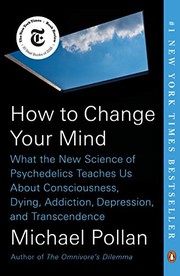
Start with How to Change Your Mind by Michael Pollan — the book that mainstreamed the current renaissance. Pollan is a careful journalist who covers the science, the history, and his own experiences while flagging uncertainty; it is the best single overview in print. His later This Is Your Mind on Plants is the useful widening shot, setting mescaline alongside caffeine and opium and asking why societies license some drugs and criminalise others — a good corrective to treating psychedelics as a category apart.
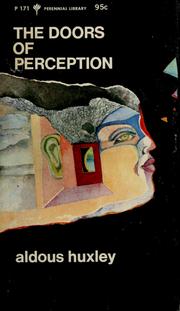
Then go back to the beginning with The doors of perception by Aldous Huxley, the 1954 primary source that framed how the West would talk about these substances for decades. Follow with Acid dreams by Martin A. Lee for the political history — CIA experiments, the sixties counterculture, and the backlash that shut research down — because you cannot understand today's caution without it.
Stage two: the research, first wave and second
Psychedelic psychiatry by Erika Dyck is a historian's account of the forgotten first era of clinical research in the 1950s, when serious psychiatrists studied LSD for alcoholism, and of how that science was conducted and then lost. It is the best inoculation against the myth that this field began in 2006. Then read Dmt The Spirit Molecule by Rick Strassman, an account of the first US government-approved psychedelic study in a generation. Treat it as a document with two layers: rigorous protocol on one, and speculative interpretation that goes well beyond the data on the other. Separating those layers is the skill this path exists to build.
The Psychedelic Explorer's Guide by James Fadiman belongs here as a primary document rather than as instruction. Fadiman was part of the first research wave, and the book is both a memoir of that period and a set of protocols, including the microdosing regimen that later spread far beyond it. Read it for what it shows about how the culture around this research thinks — and read it against the record, because the placebo-controlled microdosing studies published since have generally not found the effects the enthusiasm predicted. It is a guide we are not recommending you follow; the point is to see where a widely repeated claim came from.
Stage three: the live debates
Good Chemistry by Julie Holland, a psychiatrist, situates psychedelics within a broader argument about connection and mental health — clinically informed, but a perspective rather than a consensus. Drug Use for Grown-Ups by Carl L. Hart, a Columbia neuroscientist, makes a deliberately provocative case about drug policy and adult autonomy that much of the field does not accept; it is here because a serious reader should meet the strongest version of that argument and weigh it. Stealing Fire by Steven Kotler and Jamie Wheal is the most enthusiastic book on the path, sweeping psychedelics together with flow states, meditation and extreme sport into one thesis about altered states; it is worth reading precisely as a specimen of the optimism the field attracts, with stage one's habits switched on.
Two books sit at the edges. The Body Keeps the Score by Bessel van der Kolk is not a psychedelics book at all; it is the popular text on trauma, and it appears in this listing because trauma is the condition most of the current trials target. Read it for what PTSD does and why a treatment would matter, not for evidence about psychedelics, and note that some of its claims about traumatic memory are debated among researchers. And The Varieties of Religious Experience by William James is over a century old and still the sharpest framework for thinking about mystical experience without either dismissing or worshipping it.
How to actually study this
For every claim, ask three questions: how many subjects, what control condition, and who funded it. Keep a list of claims by confidence level — established, promising, speculative — and move items between them as you read. The categories will shift book by book, which is the point: this is a field where the honest answer is often not yet known.
The full staged sequence is at the full reading path. Adjacent paths on the mind live at the subject hub, or browse all paths.