Cognitive behavioral therapy occupies a rare position in the self-help aisle: it is one of the few approaches with decades of clinical trials behind it, and — unusually — reading about it has itself been studied, with structured CBT reading showing real benefits for mild to moderate low mood in a number of trials. But the books work best in a particular order: first the ones that convince you the model is true of your own mind, then the workbooks that build the skills, then the science and clinical depth.
One honest note before the list: books are a genuine tool, not a substitute for care. If you are dealing with severe depression, anxiety that limits your life, or any thoughts of self-harm, talk to your doctor or a licensed therapist — these books pair well with treatment, and none of the authors would tell you otherwise.
Stage 1: see the model in your own thinking
Start with Feeling Good by David D. Burns, the classic that brought cognitive therapy to the public. Its catalog of cognitive distortions — all-or-nothing thinking, mind reading, catastrophizing — gives you a vocabulary for noticing your own thought patterns, which is half the therapy.
Stage 2: do the work
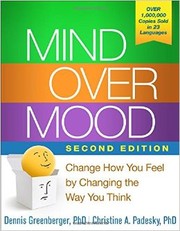
Reading about CBT changes little; the writing exercises are the treatment. Mind Over Mood by Dennis Greenberger is the gold-standard workbook — thought records, behavioral experiments, and worksheets refined over decades of clinical use. For anxiety specifically, The Anxiety and Worry Workbook by David A. Clark applies the same machinery to worry, avoidance, and safety behaviors. If low mood is the main problem, The Cognitive Behavioral Workbook for Depression by William J. Knaus adds a full program, and Behavioral Activation for Depression by Christopher R. Martell teaches the deceptively simple, strongly supported approach of changing what you do before what you think.
Stage 3: understand why it works
Anxious by Joseph E. LeDoux supplies the neuroscience — how threat circuits actually operate, and why the brain's alarm systems and our felt anxiety are not the same thing. Then Cognitive Behavior Therapy by Judith S. Beck, the standard textbook by the daughter of CBT's founder, shows you the full clinical architecture. Reading it last is like seeing the blueprints after living in the house.
How to actually study this
Pace matters more than speed: one chapter and its exercises per week beats a binge. Keep a dedicated notebook for thought records and review it monthly — the patterns you spot across entries are the curriculum no book can print. Expect the exercises to feel awkward for the first few weeks; that is normal and not a sign it is failing.
The staged plan with study notes is the full reading path. Adjacent territory — trauma, psychology, habit change — is on the subject hub.
Ready to learn something deeply?
Build a reading path — free