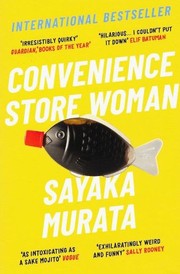
Start with Convenience store woman. Keiko has worked the same Tokyo convenience store for eighteen years, is entirely content, and is under continuous pressure from everyone around her to want something else. It is about a hundred and sixty pages, translated by Ginny Tapley Takemori, and it is the book that made Murata's name in English. There is no case for starting anywhere else — it is the shortest, the most accessible and the clearest statement of her one great subject, which is the violence of ordinary social expectation.
This is a short path, and that is honest rather than incomplete. Murata has published many novels and story collections in Japanese; four have appeared in English. What follows is all of it.
Then decide about Earthlings
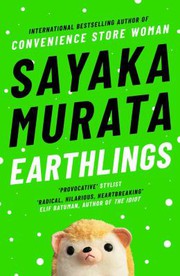
Earthlings is the second book most readers reach for, and it is the one that needs a warning rather than a recommendation. It opens like a slightly eerie childhood story and then goes somewhere else entirely: it contains child sexual abuse, incest, murder and cannibalism, and it does not treat any of them at a distance. Readers who arrived from the charm of the first novel are frequently blindsided, which appears to be intentional — the book takes the earlier novel's premise, that society is a machine for producing conforming bodies, and pushes it until it breaks.
If that is not what you want, skip it without guilt. Nothing else in the list depends on it, and the third book is a better second read for most people.
The stories and the newest novel
Life Ceremony collects short fiction and is the best demonstration of Murata's range. The stories run from the quietly domestic to the frankly repellent, including the title piece in which eating the dead has become an unremarkable social custom. Because they are short, the extreme premises arrive and leave quickly, which many readers find easier to take than a whole novel of the same.
Vanishing World is the most recent to reach English. It imagines a Japan where sex within marriage has become taboo, reproduction is entirely artificial, and affection is directed at fictional characters. It is the most sustained piece of speculative worldbuilding she has done and the least reliant on shock, though the ending is still designed to unsettle.
Reading order, and how to read her
Take them as Convenience store woman, then Life Ceremony, then Vanishing World, and slot Earthlings in only if the content note above does not put you off. That order gives you the charm first, the range second, the argument third, and the most extreme expression of it last, when you can see what it is for.
The thing to attend to throughout is the flatness of the narration. Murata's narrators report atrocities and dinner in the same register, and the deadpan is the whole instrument — it enacts the perspective of someone for whom the surrounding society's rules feel exactly as arbitrary as the taboos she invents. Read as horror it looks gratuitous; read as satire of normality it is precise.
The four books are laid out in order on our reading path. Takemori has translated most of the English editions, which gives the voice a consistency across the four that is unusual for a translated body of work this size.
Follow the full ordered path here: Sayaka Murata Reading Order: Where to Start.
Ready to learn something deeply?
Build a reading path — free