Sayaka Murata Reading Order: Where to Start
Murata writes about people who cannot perform normality convincingly, and about what the rest of us do to them. Her English-translated body of work is deliberately small — four books — so this path is short by design: start with the one that made her famous, then follow the escalation into genuine strangeness, and finish with the novel where the alternative society has already won.
Start Here
BeginnerMeet Murata's flat, unnervingly reasonable narrator and understand the question she keeps asking about who counts as a proper human being.
▸ Study plan for this stage
Pace: 3–4 days for 163 pages. Read it in one or two sittings — it is a single sustained voice and breaking it up dilutes the effect. Then leave a week before starting stage two, because the gap is what makes the next book land.
- Keiko Furukura is thirty-six and has worked the same Tokyo convenience store for eighteen years, and she is content. The novel's tension comes entirely from other people treating that contentment as an emergency
- The narration is flat, literal and reasonable, and that flatness is the whole technique: Keiko reports social rules as an anthropologist would, so the reader sees how arbitrary they are without being told
- The store itself is the book's positive value. The manual, the greetings, the stock rotation and the morning chant give Keiko a script for being a person, which nothing else in her life supplies
- Shiraha is the counterweight — a man with the same alienation and none of Keiko's grace, and Murata refuses to make him sympathetic just because he is also an outsider
- The recurring question is who counts as a proper human being, and who gets to decide. Keiko's family and friends all want her cured, and none of them can say of what
- It won the Akutagawa Prize in 2016 and made her internationally famous; Murata had been working part-time in a convenience store while writing and kept doing so afterwards, which is a fact about the book and not a marketing anecdote
- All four books on this path share one English translator, Ginny Tapley Takemori, so the deadpan voice is consistent across the whole path
- What does Keiko actually want, and does the novel ever suggest she is unhappy before other people intervene?
- Trace how Keiko learns to talk: whose speech patterns does she borrow, and what does that imply about everyone else's?
- Why is Shiraha necessary? What would the novel lose if Keiko simply refused her family alone?
- Is the ending a defeat, a triumph, or neither? Point to the specific paragraph that decides it for you
- The book is very funny. Where is the humour coming from — Keiko, the people around her, or the gap between them?
- Mark every rule Keiko has consciously learned in order to pass as normal. The list is short and unnerving
- Note the sounds of the store — the door chime, the bottles, the announcements. Murata gives them more sensory attention than she gives any person
- Write down what you expect Keiko to do in the final chapter before you read it. Most readers are wrong, and the direction of the error is the point
- Rewrite one paragraph of Keiko's narration with ordinary emotional language added. Then compare — you will have destroyed it, which shows what the flatness is carrying
Next up: You have now met the gentle version of Murata's question, which is the only way to be genuinely unprepared for what she does with it next.
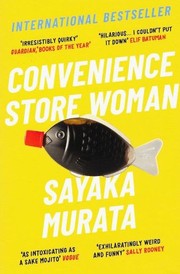
A thirty-six-year-old woman has worked the same Tokyo konbini for eighteen years and is perfectly happy, which everyone around her treats as a crisis. Short, funny and the only sensible starting point — every later book pushes further from this baseline.
The Turn
IntermediateSee how far Murata will actually go once the polite comedy of the first novel is removed.
▸ Study plan for this stage
Pace: 4–5 weeks for about 510 pages. Earthlings (256pp) over 2 weeks, and read the last fifty pages when you have somewhere to put the evening afterwards. Life Ceremony (256pp) over 2–3 weeks, two or three stories a sitting — it is twelve stories and they should not be taken in bulk.
- A specific and unhedged warning: Earthlings contains the sexual abuse of a child by a teacher, incest between cousins, and cannibalism, presented in the same calm register as the convenience store. If that is not something you want, skip to Life Ceremony — the path still works
- Natsuki believes she is from another planet and has a magic wand and a talking soft toy. The novel lets you read this as a child's imaginative defence for a long time before making it something else
- The Factory is Murata's central metaphor and it is stated openly in the book: society as a machine for producing workers and babies, with everyone as a component. Convenience Store Woman implied this; Earthlings says it out loud
- The escalation is deliberate rather than gratuitous. Every taboo broken in the last act is one the earlier chapters set up as a rule of the Factory, so the ending is the logic of the premise carried out
- Life Ceremony works as a decompression chamber and as the best map of her range: twelve stories in which the taboo has simply moved — funerals where the dead are eaten and then partners are chosen, furniture made from human hair, marriage without sex
- The recurring move across the collection is to change one social norm and let everything else stay exactly the same, so the reader watches their own sense of the natural come loose
- The stories vary in ambition, and a few are slight. That is normal for a collection and is not a reason to doubt the strong ones
- At what point in Earthlings does the alien story stop being a metaphor, and does Murata ever confirm the switch?
- What does the Factory demand of Natsuki specifically, and how is that different from what it demands of Keiko?
- Is the ending of Earthlings horror, satire or liberation? The novel supports all three — pick one and defend it
- In the title story of Life Ceremony, what exactly has changed about the society, and what has been left untouched?
- Which story in Life Ceremony did you find hardest, and was it the most transgressive one or a quieter one?
- Murata never lets her narrators moralise. What does the refusal cost her, and what does it buy?
- Before reading Earthlings, decide how much you actually want to be shown. That decision is a legitimate part of reading her and should be made in advance rather than at page 200
- For each Life Ceremony story, write one line in the form: one rule changed, everything else the same. The form fits almost all twelve
- Track the food in both books. Eating is Murata's most consistent instrument for testing what a body is allowed to be
- Compare Natsuki's narration with Keiko's. Both are flat, but they are flat for different reasons — name them
- After Earthlings, reread the first three pages of Convenience Store Woman. It reads as a much darker book
Next up: Having watched two individuals refuse the Factory, the last book shows a society that has already reorganised itself, so the refusal has nothing left to push against.
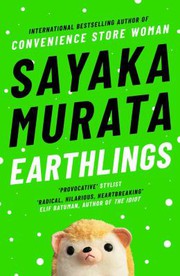
A girl who believes she is an alien, and the cousin she makes a pact with, grow up into something the reader will not be prepared for. Read it second and be warned: it contains abuse, incest and cannibalism, and it is the book that shows Convenience Store Woman was the gentle version.

Twelve stories about societies where the taboo has simply moved — eating the dead, furniture made from human hair, marriage without sex. The best map of her range, and it works as a decompression chamber after Earthlings.
The Latest
IntermediateFollow the argument to its endpoint: a world that has already reorganised reproduction and family along Murata's lines.
▸ Study plan for this stage
Pace: 2 weeks for 240 pages, at a steady pace. There is no reason to rush and no reason to slow down; the world-building does the work and it accumulates. Take a day between finishing and forming an opinion.
- In Vanishing World children are conceived by artificial insemination, sex between spouses is regarded as incest, and romantic and erotic attachment has moved to fictional characters. Amane, who was conceived the old way, is an anomaly and knows it
- The setup inverts the earlier books: instead of one strange person inside a normal society, this is a fairly ordinary person inside a society that has already adopted Murata's premises
- The experimental city in the last act — where all adults are Mothers, children are raised communally and belong to no one — is the most fully built of her alternative worlds and the closest she comes to writing science fiction
- One honest note about the ordering: this is the most recent Murata in English, but it was published in Japanese before Convenience Store Woman. It is her latest arrival, not her latest thinking, and reading it last still works because it is her most extreme premise
- Her English-language body of work is four books because that is what has been translated, not because that is all she has written — her Japanese bibliography is considerably larger, and more may follow
- The consistent thread across all four is that normality is a local arrangement enforced by people who cannot explain it, and that the enforcement is the violence, not the deviation
- The ending is her bluntest, and readers split on whether it is earned or whether it is shock for its own sake. Both readings have support
- How does Amane's discomfort differ from Keiko's and Natsuki's, given that she is the conventional one here?
- What does the novel think family is, once biological parenthood has been removed as an organising principle?
- Is the experimental city a utopia, a dystopia, or a system the novel deliberately refuses to score?
- Murata makes attachment to fictional characters ordinary rather than pathological. What is she arguing about desire?
- Does the final scene follow from the world she has built, or does it break it? Cite the passage that decides it
- Across four books, has Murata been asking the same question, or did it change?
- Write the one-rule-changed summary for Vanishing World as you did for the Life Ceremony stories, then check it against the ending — the ending changes a second rule
- Put the four books in Japanese publication order rather than English and note what that does to the apparent trajectory
- Pick the single sentence from any of the four that best states her thesis, and be able to say why that one
- Write a paragraph you would hand to a friend deciding where to start, including the honest warning about Earthlings. Four books is a short shelf and you now know all of it
Next up: That is the complete English-language Murata — four books, and the path is short because the translations are, not because there is less to her — so the next step is either a reread of Convenience Store Woman with everything else behind you, or contemporary Japanese writers working the same seam, Mieko Kawakami and Yoko Ogawa among them.
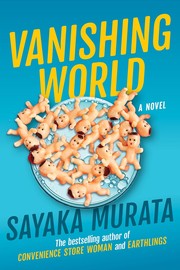
In a Japan where children are conceived by artificial insemination and sex within marriage is considered incest, a woman moves to an experimental city. The most fully built of her alternative societies — read last, since it assumes you already find her premises plausible.
Discussion
Keep reading
Paths that share books, cover the same subject, or open a related topic.