Retaining walls fail in a predictable way, and it is almost never the wall material. Water builds up behind a wall that has no drainage, hydrostatic pressure adds an enormous horizontal load the wall was never sized for, and the structure leans, cracks, or rotates forward. Frost heave and undersized base courses account for most of the rest. A beautifully laid wall with no drain rock and no filter fabric will fail; an ugly one with good drainage often will not.
That is why this reading order is unusual for a hands-on topic. Technique comes third, not first. You need to understand what the soil is doing behind the wall before you care what the face looks like, because every design decision — batter, base depth, drainage, geogrid, wall height — follows from soil behavior and water.
Before any of it, a safety and legal note stated plainly: most jurisdictions require a permit and an engineered design for walls above a threshold height, commonly around four feet, and lower if there is a surcharge such as a driveway, slope, or structure above the wall. A failed retaining wall can injure people and damage neighboring property. Books teach you the principles; they do not substitute for a licensed geotechnical or structural engineer, a soils report, or your local building department.
The practical overview
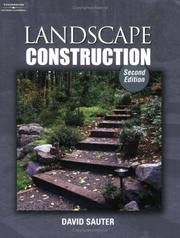
Start with Landscape Construction by David Sauter, a trade textbook that covers site work as a whole: grading, drainage, layout, paving, and retaining structures. Its value at position one is that it puts the wall in context — you learn how water moves across a site, how to set grades, and how a wall interacts with everything around it, rather than treating the wall as an isolated object.
What the soil is doing
Then Soils and Foundations for Architects and Engineers by Chester Duncan, which is the conceptual bridge. It introduces soil classification, bearing capacity, settlement, and lateral earth pressure at a level aimed at people who need to reason about soil without becoming geotechnical specialists. This is where active and passive earth pressure, the difference between granular backfill and clay, and the reason drainage is non-negotiable all become concrete.
If you take one idea from it, take this: the load on a retaining wall depends enormously on what you backfill with. Clay expands when wet, holds water, and can more than double the pressure a wall must resist compared with clean drainage stone.
Technique and materials
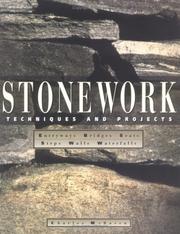
Now the hands-on books. Stonework by Charles McRaven covers traditional stone construction, including dry-laid walls, and it is a genuine craft book — how to read a stone, how to set a batter, how courses bond, and how to build without mortar so that water passes through rather than accumulating. Dry stone construction is the oldest solution to the drainage problem and is still appropriate for modest heights.
Landscaping with Stone by Pat Sagui is the design-oriented companion: material selection, walls in the context of paths and patios, and the aesthetic decisions that decide whether a wall reads as part of the site. It is lighter than McRaven on technique and better on planning.
The engineering reference
Finish with Principles of foundation engineering by Braja Das, the university textbook. It is calculus-based and aimed at civil engineering students, and it gives you the actual design theory: Rankine and Coulomb earth pressure, checks for overturning, sliding, and bearing capacity, global stability, and the design of reinforced-soil and cantilever walls.
Most homeowners will not work through it, and that is fine — its real use for a non-engineer is understanding what an engineer is checking and why a stamped design looks the way it does. If you are building anything tall, holding back a slope, or supporting a load above, this is the vocabulary of the conversation you should be having with a professional rather than a substitute for one.
For the mixing and forming side of the work, the concrete and cement work path is the natural companion. Follow the full reading path to take these in order.
Follow the full ordered path here: Best Books on Building Retaining Walls, in Order.