Concrete is unforgiving in a specific way: nearly every serious defect — cracking, scaling, low strength, surface dusting, rebar corrosion — is determined by choices made before and during placement, and none of them can be corrected afterwards. Too much water in the mix, inadequate cover over the steel, curing that stops too early, a slab poured on unprepared subgrade. The material then holds that mistake for its entire service life.
That is why the reading order here runs from materials science outward to the trade skills, rather than the reverse. Understand what the mix is doing chemically, then how structures are engineered, then the practical disciplines of forming, reinforcing and finishing.
The materials foundation
Start with Design and control of concrete mixtures from the Portland Cement Association, credited to Steven Kosmatka and colleagues. This is the standard industry primer and the best single book on the list: cement chemistry, aggregates, water-cement ratio, admixtures, air entrainment for freeze-thaw resistance, placement in hot and cold weather, curing, and the causes of common defects. Everything downstream assumes it.
The engineering reference
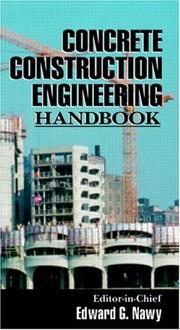
Then Concrete construction engineering handbook, edited by Edward Nawy — the comprehensive professional reference covering structural design, prestressed and precast systems, durability, repair and specialty concretes. It is a consultation volume, not a cover-to-cover read, and it is aimed at engineers. Skim its structure so you know what is in it, then use it as needed.
Forming and reinforcing
Formwork for Concrete by M. K. Hurd, published through the American Concrete Institute, is the definitive treatment of the temporary structure that shapes the permanent one. Formwork carries enormous loads during placement — lateral pressure from fresh concrete rises with pour rate and temperature — and formwork failure is one of the more dangerous events on a construction site. The design tables and load calculations here are the reason to own it.
Pair it with Placing reinforcing bars from the Concrete Reinforcing Steel Institute, the standard field guide to rebar: bar identification, bending, lap splices, spacing, tying, support chairs and cover requirements. Cover — the distance from steel to surface — is the single detail most often compromised in the field, and it is what determines whether the reinforcement corrodes in ten years or eighty.
Slabs and finished surfaces
Designing floor slabs on grade by Boyd Ringo and Robert Anderson covers the most common concrete element most people ever deal with: subgrade preparation, thickness, joint layout and spacing, curling, and flatness. Most slab complaints are joint-spacing and subgrade problems, and this book explains both properly.
Close with Concrete countertops by Fu-Tung Cheng, which is a different scale entirely — decorative work, colour, casting, sealing and polishing. It is the enjoyable end of the subject and a low-risk way to practise mixing, vibrating and finishing before anything structural.
Where books stop
Structural concrete is engineered work. Footings, foundations, retaining walls and suspended slabs are designed by licensed engineers and built to code, with inspection at defined hold points. These books make you a far more competent participant — able to read a mix design, check cover, question a pour rate — but they do not replace an engineer's stamp or a permit.
Start with a small flatwork project and a bag mix. Follow the full path for the stage-by-stage plan.
Follow the full ordered path here: Best Books on Concrete and Cement Work, in Order.