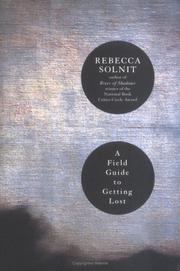
Start with A Field Guide to Getting Lost. It is 210 pages, nine essays, and it is the book that makes converts. More usefully, it teaches you how a Solnit paragraph moves — begin with something small, personal or apparently trivial, wander a long way from it, and end somewhere political without the join showing.
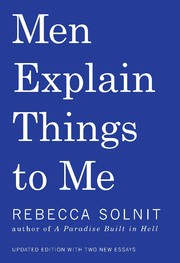
The obvious alternative is Men Explain Things To Me, because it is the famous one and it is shorter. Read it second, not first. The polemical register is the easiest part of her work to like and the least representative of it, and readers who arrive through the title essay often expect an arguer and find a wanderer instead. Meet the wanderer first and the polemics land harder.
The two entry points
A Field Guide to Getting Lost, then Men Explain Things To Me. Read the Field Guide one essay a sitting: each wanders far from where it started and the pleasure is in following the drift rather than arriving. Being lost is treated as a positive capacity in that book — a condition for discovery rather than a navigational failure — and her range of evidence is deliberately unacademic. Country songs, captivity narratives, the colour blue. Treating that as rigour rather than whimsy is the whole trick of reading her.
Men Explain Things To Me is 174 pages and much faster. Shorter sentences, a clear target, an argument that names a pattern.
Walking, then hope
Wanderlust, then Hope in the Dark. Wanderlust is 326 pages of cultural history and is denser than anything in the first stage; two or three chapters a week is honest. Its claim is that the pace of the body sets the pace of the mind, and that a culture which stops walking loses a kind of thought. The book turns political when it asks who gets to walk safely, a thread that reappears much later in the path.
Hope in the Dark is short and can be read in a few sittings, but read it after Wanderlust rather than before. It is an argument that assumes you already trust her, and it reads as thin if you meet it cold. Its central move is to define hope as a stance toward an uncertain future rather than a prediction about it — explicitly not optimism, and explicitly not comfort. Every political essay she has written since assumes this book.
The researched histories
River of Shadows, then A paradise built in hell. River of Shadows is the most conventionally structured book on the shelf, a real biography of Eadweard Muybridge with a chronology you can hold, and it moves faster than its page count suggests. Its historical claim is that the railroad, the photograph and the corporation arrived together as one story rather than three.
A paradise built in hell examines five disasters and finds that ordinary people behave with improvised generosity in catastrophes while elites panic. Read it after Hope in the Dark and you watch an argument acquire its proof, which is the single best-designed transition in this path.
The personal books
The faraway nearby, then Recollections of My Nonexistence. The first is formally her most ambitious book: nested stories, a chapter structure that runs outward and then back, and a single sentence threaded along the bottom of the pages. Do not fight the structure. The second is the straightest thing she has written and goes considerably faster, and it supplies the ground under Men Explain Things To Me — which is why the path separates them by three stages.
The late essays
Call them by their true names first, then Orwell's Roses. The collection is 177 pages of compressed American essays organised around the claim that a euphemism is a policy. Orwell's Roses is the slowest book here and wanders further than anything since the Field Guide, braiding the walking, hope and archival strands at once. It is a rewarding last book and a confusing first one.
Where to stop
There is no plot, so stopping is costless. If you read only three, read A Field Guide to Getting Lost, Hope in the Dark and A paradise built in hell — one for the method, one for the argument, one for the evidence. Whether the method compounds or merely repeats over forty years is the real question the full path lets you answer.
More essay and non-fiction paths are on Discover.
Follow the full ordered path here: Rebecca Solnit Reading Order: Where to Start.