Robotics is where electronics, programming, and mechanical engineering meet, which is exactly why it intimidates beginners — it feels like you need three degrees to start. You don't. You need a breadboard, a microcontroller, and a path that introduces each discipline just as you need it. Build one small robot and the whole field opens up, because you have felt how sensors, code, and motors actually connect.
Get into robotics: a reading path to your first robot
July 12, 2026 · 2 min read
Why order matters here
Jump straight to a university robotics textbook and you will drown in kinematics before you have ever blinked an LED. The path below starts with the electronics fundamentals, gets you building and coding on real hardware fast, then layers in the formal robotics theory and finally the software frameworks professionals use. Motivation comes from making things move early.
A staged reading path
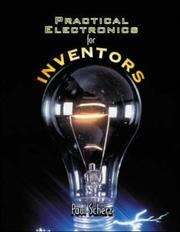
Start with the electronics you cannot skip. Practical Electronics for Inventors by Paul Scherz is the friendly, comprehensive reference that teaches you components, circuits, and how not to fry your parts — dip into it as you go rather than reading it straight through.
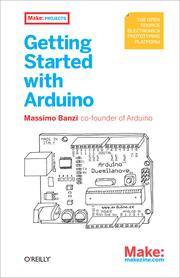
Then get building immediately. Getting Started with Arduino by Massimo Banzi, written by the platform's co-creator, takes you from zero to a working circuit in an evening. Follow it with the Arduino Cookbook by Michael Margolis, a recipe book of practical solutions — reading sensors, driving motors, talking to other devices — that becomes your go-to as projects get ambitious. This stage is where robotics stops being abstract.
Now build an actual robot. Robot Building for Beginners by David Cook walks you through constructing a working robot end to end, including the mechanical and soldering details the code-focused books gloss over. This is the project that ties electronics and programming together into something that rolls across the floor.
Finally, add the professional layer. Introduction to Robotics by John J. Craig is the classic academic text on the mathematics of motion — kinematics, coordinate frames, control — that separates hobby tinkering from engineering; take it on once you are hungry for the theory. Programming Robots with ROS by Morgan Quigley teaches the Robot Operating System, the framework that real research and industry robots run on, and is the bridge to serious work.
How to actually learn this
Buy the kit and build alongside the reading. Robotics is relentlessly hands-on: a chapter on motor control means nothing until a motor spins because of code you wrote. Expect things to not work — debugging a circuit or a sketch is the actual skill, and every failure teaches you more than a working example. Start with the smallest robot that moves, then add one capability at a time.
Make something move. Follow the full reading path, visit the robotics subject hub, or explore more science and making paths.
FAQ
- Do I need to know how to code before starting robotics?
- No. Getting Started with Arduino teaches enough programming as you go. You learn code and electronics together by building small projects.
- What is the best first robotics project?
- A simple wheeled robot, as walked through in Robot Building for Beginners. It ties together sensors, a microcontroller, and motors in one buildable machine.
Get the books
- 1Practical Electronics for InventorsAmazon ↗Paul Scherz
- 2Getting Started with ArduinoAmazon ↗Massimo Banzi
- 3Arduino CookbookAmazon ↗Michael Margolis
- 4Introduction to roboticsAmazon ↗John J. Craig
- 5Robot building for beginnersAmazon ↗David Cook
- 6Programming robots with ROSAmazon ↗Morgan Quigley
As an Amazon Associate we earn from qualifying purchases. Some book links are affiliate links; you pay the same price and we may earn a small commission.
Follow the full reading path

Get into robotics: build your first robot
Beginner6books79 hrs4 stages
@codesherpa♥ 0
Ready to learn something deeply?
Build a reading path — free