Python is famous for being welcoming: you can print "hello world" in a minute and automate a chore by the weekend. The trap is that the same friendliness lets you plateau. You end up writing Python that works but reads like a translation from another language — no comprehensions, no context managers, no sense of what the standard library already gives you for free.
That is why order matters here. You want a book that gets you shipping small programs, then one that teaches you to think like a programmer, then one that reveals what makes Python distinctive. Rushing to advanced material too early is discouraging; lingering on beginner tutorials too long is a plateau. This path is built to keep you moving.
Start writing real programs
Begin with Python crash course. It is the standard on-ramp because it balances syntax with three build-it projects, so you finish with working software rather than a pile of exercises. When you want more structured drills that push past the basics, Learn More Python 3 the Hard Way: The Next Step for New Python Programmers (Zed Shaw's Hard Way Series) forces the repetition that turns syntax into muscle memory.
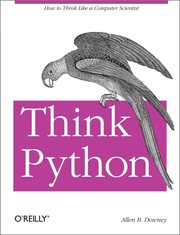
Alongside the syntax, read Think Python. Allen Downey teaches Python as a way to think about problems — decomposition, debugging, invariants — which is the skill that transfers to every language you touch afterward, including the JavaScript and SQL in the related paths.
Make Python actually useful
Motivation is fuel, and nothing motivates like deleting a boring task. Automate the Boring Stuff with Python is the book that keeps beginners going: renaming files, scraping pages, filling spreadsheets. It proves the language earns its keep, and it does so with code simple enough to modify yourself.
Learn to write it like a native
Now the leap from "works" to "idiomatic." Python Tricks: A Buffet of Awesome Python Features is a tour of the features that separate fluent code from beginner code — small, digestible, and immediately applicable. The Hitchhiker’s Guide To Python zooms out to conventions, project layout, packaging, and tooling: the unwritten rules of the community.
The capstone is Fluent Python. It is dense and worth it. Once you understand data models, iterators, generators, decorators, and the object protocols it dissects, you stop guessing about how Python behaves and start predicting it. Read it last, when you have enough code behind you to recognize the problems it solves.
Follow the full path in order and you will not just know Python's syntax — you will know why the good code looks the way it does. From here, the related JavaScript, coding-for-beginners, and SQL paths make you dangerous across the whole stack.
Follow the full reading path →
Ready to learn something deeply?
Build a reading path — free