Search "how to protect my privacy online" and you get two flavors of advice: trivial tips (use a password manager, done!) or full-tinfoil maximalism that no normal person can sustain. Both fail for the same reason: they hand you tactics without a model of what you are actually defending against.
Books fix that, but only in the right order. Read the policy critiques first and you get outraged with nothing to do about it. Read the extreme operational guides first and you burn out disappearing from databases you were never in. The sensible sequence is: practical defenses, then the system, then depth to match your actual threat model.
Stage 1: lock the doors
Start with Firewalls Don't Stop Dragons by Carey Parker. It is the rare security book written for non-technical readers that stays rigorous, walking you through concrete, prioritized steps ordered by payoff rather than paranoia. Do what it says and you are ahead of 95% of people.
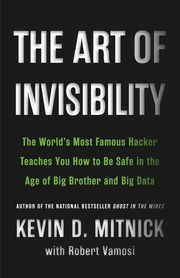
Then read The Art of Invisibility by Kevin Mitnick. A famous former hacker explains how people actually get tracked and deanonymized, which turns abstract advice into intuition. Some of its techniques are more than most people need, and it says so.
Stage 2: understand the system
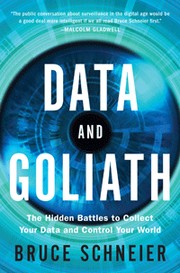
With defenses in place, zoom out. Data and Goliath by Bruce Schneier is the clearest map of mass surveillance ever written for a general reader, covering both corporate data collection and government programs, and what policy could do about each. Schneier is a security technologist, not a polemicist, and it shows.
Pair it with Permanent Record, Edward Snowden's memoir. Whatever you conclude about his choices, it is the inside account of how modern signals-intelligence collection actually works, told by someone who built parts of it. Read it as testimony to be weighed, not gospel.
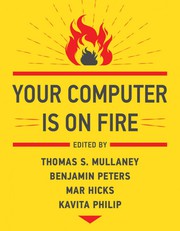
For a wider-angle critique of the infrastructure itself, Your Computer Is on Fire, edited by Thomas Mullaney, collects scholars arguing that the problems are structural, not bugs. You will not agree with every essay. That is fine; the goal is to see the arguments.
Stage 3: match your threat model
Most readers can stop after stage 2. If your situation is serious, say stalking, harassment, or a public profile, Extreme Privacy by Michael Bazzell is the operational manual: a working professional's playbook for genuinely disappearing from data brokers and public records. It is a reference to apply selectively, not a lifestyle to adopt wholesale.
Finally, Sandworm by Andy Greenberg shows the top of the threat pyramid: state-sponsored attackers taking down power grids. You are not their target, but understanding the ceiling of what is possible calibrates everything below it.
How to actually study this
Work through this path with your own accounts open. After each chapter of the stage 1 books, change one real setting, enable one real protection, delete one real account. Privacy knowledge that is not implemented decays into anxiety. Keep a simple threat-model note: who might realistically want your data, and what would it cost you? Revisit it after each book; you will find it gets calmer and more precise, not more frightening.
The full reading path sequences all nine books into stages with a study plan for each. For adjacent topics, browse the digital privacy hub or explore more paths on Discover.