Everyone believes misinformation is a problem for other people — less careful, more gullible people. That belief is itself the most exploitable bug in human cognition. Effective media literacy starts uncomfortably: your brain takes shortcuts, your intelligence doesn't protect you, and the systems feeding you information are optimized for engagement, not accuracy. This reading order is built on that foundation, and it deliberately includes authors who would argue with each other. Where they disagree — about how much platforms are to blame, about what regulation could fix — hold your conclusions loosely. The field is live.
Media Literacy Books, in Order: How to Spot Misinformation
July 11, 2026 · 2 min read
Why order matters here
Study the propaganda machine before studying your own mind and you'll come away sneering at other people's gullibility, which is the opposite of literacy. Bias first, machine second, tools third.
Stage 1: The problem includes you
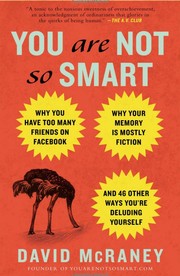
Start with You Are Not So Smart by David McRaney — a friendly tour of self-delusion: confirmation bias, the backfire effect, the stories we invent about our own reasoning. Then The Intelligence Trap by David Robson, which lands the crucial follow-up: smart, educated people fall for misinformation in special, motivated ways. These two books buy you the humility every later chapter requires.
Stage 2: The machine
Now the supply side. Merchants of Doubt by Naomi Oreskes documents the original playbook — how a handful of scientists manufactured uncertainty about tobacco and climate for decades; it's the template modern disinformation still follows. This Is Not Propaganda by Peter Pomerantsev takes you inside the contemporary global version, where the goal isn't convincing you of a lie but exhausting your sense that truth exists. Then the amplifiers: Hooked by Nir Eyal explains, from the designer's side, the habit loops that keep you scrolling, and Chaos Machine by Max Fisher traces how engagement-driven algorithms systematically boost outrage. Fisher's indictment of the platforms is forceful; some researchers think the algorithmic story is overweighted relative to plain human demand — treat that as an open question, not a settled verdict.
Stage 3: Structure and tools
The Misinformation Age by Cailin O'Connor and James Weatherall adds the deepest insight in the path: false beliefs spread through perfectly rational social trust — you can't check everything, so you believe people you trust, and that network structure can be gamed. Breaking the Social Media Prism by Chris Bail brings actual experiments, with a counterintuitive finding: stepping outside your echo chamber often makes polarization worse, because identity, not information, drives the fight. Finish with Calling Bullshit by Carl Bergstrom and Jevin West — the practical toolkit: misleading charts, garbage statistics, causation laundering, and quick heuristics for calling it without a PhD.
How to actually study this
Practice on your own side. Once a week, take a claim you want to be true, trace it to its primary source, and check what the underlying study or document actually says. Keep a small log of times you shared or believed something that turned out wrong — patterns will emerge, and they'll match stage one. The goal isn't cynicism about everything; it's calibrated trust.
The staged sequence with study plans is the full reading path. Adjacent reading lives at the subject hub, or browse all paths.
FAQ
- What is the best book on spotting misinformation?
- Calling Bullshit by Carl Bergstrom and Jevin West is the most practical toolkit, but it lands harder after reading about your own cognitive biases first.
- Does leaving your echo chamber reduce polarization?
- Not reliably. Chris Bail's experiments in Breaking the Social Media Prism found exposure to the other side often increases polarization, because identity drives the conflict more than information does.
- Are social media algorithms the main cause of misinformation?
- It's a live debate. Books like Chaos Machine argue algorithms are central; other researchers emphasize human demand for outrage. Read both positions and hold conclusions loosely.
Get the books
- 1You are not so smartAmazon ↗David McRaney
- 2The Intelligence TrapAmazon ↗David Robson
- 3This Is Not PropagandaAmazon ↗Peter Pomerantsev
- 4Merchants of DoubtAmazon ↗Naomi Oreskes
- 5HookedAmazon ↗Nir Eyal
- 6Chaos MachineAmazon ↗Max Fisher
As an Amazon Associate we earn from qualifying purchases. Some book links are affiliate links; you pay the same price and we may earn a small commission.
Follow the full reading path


Spot misinformation: media literacy now
Beginner9books67 hrs4 stages
Ready to learn something deeply?
Build a reading path — free