Protect your digital privacy: a practical path
This four-stage curriculum takes a complete beginner from "why privacy matters" all the way to hardened, technically confident personal security. Each stage builds on the last: first you develop the mental model and motivation, then you learn how surveillance and data brokerage actually work, then you adopt concrete defensive habits, and finally you go deeper into the technical and systemic layers for lasting, expert-level control.
Foundations — Why Privacy Matters
BeginnerUnderstand the stakes of personal digital privacy, build a threat-model mindset, and develop the vocabulary needed for everything that follows.
▸ Study plan for this stage
Pace: 5–6 weeks total: Weeks 1–3 cover "The Art of Invisibility" (~25–30 pages/day, including time to pause and reflect on each practical tip); Weeks 4–6 cover "Data and Goliath" (~20–25 pages/day, with slower reading for the policy-heavy chapters). Reserve the final 2–3 days of each book for review and e
- Threat modeling: identifying your personal adversaries, assets, and attack surfaces as introduced through Mitnick's real-world anecdotes in The Art of Invisibility
- The 'nothing to hide' fallacy: Schneier's systematic dismantling of the argument that privacy only matters if you have something to hide (Data and Goliath, Part I)
- Metadata vs. content: understanding why metadata (who you call, when, for how long) can be as revealing as message content itself — a theme central to both books
- Surveillance capitalism: how corporations collect, aggregate, and monetize personal data as a business model, detailed in Data and Goliath
- The aggregation problem: how individually harmless data points combine into a deeply invasive profile, explained by Schneier and illustrated by Mitnick's operational examples
- Digital footprints and persistence: Mitnick's core lesson that nearly every online action leaves a traceable, often permanent record
- The power asymmetry between individuals and data collectors (governments and corporations), and why it matters for democracy and autonomy — Schneier's central thesis in Data and Goliath
- Privacy as a social good, not just a personal preference: Schneier's argument that eroding individual privacy harms collective freedom
- After reading The Art of Invisibility, can you define a personal threat model? Who are your likely adversaries, what data assets do you most need to protect, and what are your highest-risk exposure points?
- Mitnick demonstrates that convenience and privacy are frequently in tension. Can you give three concrete examples from The Art of Invisibility where a common convenience (e.g., free Wi-Fi, loyalty cards, smartphone assistants) trades privacy for ease?
- Schneier argues in Data and Goliath that surveillance harms society even when individuals feel unaffected. What are his three strongest arguments for why mass surveillance is a systemic — not just personal — problem?
- Both authors address metadata. How do Mitnick's operational perspective and Schneier's policy perspective complement each other in explaining why metadata surveillance is dangerous?
- What is the 'aggregation problem' as Schneier defines it in Data and Goliath, and can you construct a hypothetical example using data types mentioned across both books?
- Having read both books, how would you explain the difference between privacy, security, and anonymity to someone new to the topic?
- Threat-model worksheet: Draw a simple three-column table (Adversary | Data Asset at Risk | Likely Attack Vector). Populate it with at least 8 rows using scenarios drawn directly from anecdotes in The Art of Invisibility — then rank them by personal relevance.
- Digital footprint audit: Before finishing Data and Goliath, spend 30 minutes Googling yourself, checking data-broker sites (e.g., Spokeo, WhitePages), and reviewing app permissions on your phone. Write a one-page reflection mapping what you find to Schneier's aggregation problem.
- Metadata experiment: Send a series of emails or texts to a willing friend for one week, then reconstruct a detailed narrative of your own life using only the metadata (timestamps, frequency, recipient patterns) — no message content. Compare your findings to Mitnick's and Schneier's claims.
- Vocabulary flashcards: Build a deck of at least 20 terms encountered across both books (e.g., threat model, zero-day, metadata, data broker, end-to-end encryption, anonymization, re-identification). Write the definition in your own words on the back of each card.
- 'Nothing to hide' rebuttal exercise: Write a 300-word response to the statement 'I don't care about privacy — I have nothing to hide,' drawing exclusively on arguments and evidence from Data and Goliath. Practice delivering it aloud in under 2 minutes.
- Side-by-side author comparison: Create a two-column notes page contrasting Mitnick's practitioner/individual-defense lens with Schneier's systemic/policy lens on the same topic (e.g., corporate data collection). Identify one point where they agree and one where their emphasis diverges.
Next up: Mastering the 'why' and the vocabulary from these two books gives you the conceptual scaffolding — threat models, adversary types, and data-flow awareness — needed to engage meaningfully with the technical 'how' of privacy tools and hardening techniques covered in the next stage.
Written by a legendary hacker turned security consultant, this accessible book opens with vivid real-world stories that immediately show what is at risk and why ordinary people need to care — perfect first exposure for a beginner.
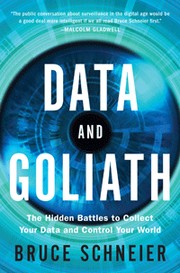
Schneier, one of the world's most respected security experts, explains the full surveillance ecosystem — governments, corporations, and data brokers — giving the reader a clear big-picture map before diving into tactics.
How Tracking & Data Brokerage Actually Work
BeginnerUnderstand the technical and business mechanics of online tracking, behavioral profiling, and the data-broker industry so you know exactly what you are defending against.
▸ Study plan for this stage
Pace: 6–8 weeks total: Weeks 1–3 cover "Your Computer Is on Fire" (~25–30 pages/day, reading essays selectively for tracking/infrastructure themes); Weeks 4–7 cover "Permanent Record" (~20–25 pages/day, a more narrative read); Week 8 is reserved for review, reflection, and completing exercises.
- Online behavioral tracking: how websites, advertisers, and platforms silently collect clickstream data, cookies, device fingerprints, and metadata to build user profiles — as illustrated by the systemic critiques in 'Your Computer Is on Fire'
- The myth of 'neutral' technology infrastructure: 'Your Computer Is on Fire' argues that digital systems embed political and economic choices, meaning tracking is a deliberate design decision, not an accident
- Data as an extractive resource: both books frame personal data as something harvested from users at scale, often without meaningful consent, to serve corporate or state interests
- The data-broker industry pipeline: how raw behavioral data is aggregated, enriched, bought, and sold between brokers, advertisers, insurers, and governments — the commercial layer Snowden's disclosures sit on top of
- Metadata surveillance: Snowden's detailed account in 'Permanent Record' of how the NSA's XKEYSCORE, PRISM, and upstream collection programs show that metadata (who you contact, when, from where) can be more revealing than content
- The convergence of corporate and state surveillance: 'Permanent Record' reveals how intelligence agencies leveraged the same commercial data pipelines and tech-company servers that power everyday tracking, blurring the line between private and government data collection
- Behavioral profiling and inference: how aggregated data points are used to infer sensitive attributes (health, politics, finances, relationships) far beyond what users knowingly shared
- The asymmetry of knowledge and power: both books emphasize that the entities doing the tracking know vastly more about individuals than individuals know about the trackers — the foundation of the privacy threat model
- According to 'Your Computer Is on Fire,' why is it wrong to treat digital infrastructure as politically or economically neutral, and how does that argument reframe who is responsible for pervasive tracking?
- How does Snowden describe the mechanics of metadata collection in 'Permanent Record,' and why does he argue metadata can be more invasive than reading the content of communications?
- What specific NSA programs does Snowden detail in 'Permanent Record,' and how did those programs depend on — or mirror — the commercial data-collection systems built by private companies?
- Drawing on 'Your Computer Is on Fire,' what structural or institutional forces allow the data-broker industry to operate largely out of public view, and what would it take to make those forces visible?
- After reading both books, how would you describe the full journey of a single data point — say, a search query — from the moment it is generated to its potential end-use by an advertiser or a government agency?
- Both books were written for general audiences yet make technical arguments. What are the limits of each book's technical depth, and what questions about tracking mechanics do they leave unanswered for a beginner?
- Cookie & tracker audit: Use a browser extension (e.g., Privacy Badger or uBlock Origin's logger) on five websites you visit daily. Document every third-party tracker found, then map each tracker back to a parent company or data broker. Reflect on how this connects to the systemic critique in 'Your Computer Is on Fire.'
- Metadata self-portrait: Request your own data archives from Google Takeout and any one social platform. Without reading message content, analyze only the metadata (timestamps, locations, contact frequency). Write a one-page profile of yourself using only that metadata, echoing Snowden's argument about its revelatory power.
- Data-broker lookup: Search for your own name on three data-broker sites (e.g., Spokeo, Whitepages, BeenVerified). Record what information is listed, where it likely originated, and what the opt-out process looks like. Estimate how many brokers may hold your data.
- Surveillance timeline: Create a chronological timeline that maps the key events Snowden describes in 'Permanent Record' (his career milestones, program discoveries) against the parallel growth of commercial tracking technologies (cookies invented 1994, Facebook launch 2004, etc.). Identify moments where the two tracks intersect.
- Concept mapping: Draw a diagram showing the flow of data from a user's browser through ad-tech intermediaries (DSPs, SSPs, DMPs, data brokers) to end buyers, then add a second layer showing where state surveillance can tap into that same flow, using Snowden's program descriptions as reference points.
- Reflection journal — 'Who benefits?': After finishing each book, write a one-page response to the question: 'Who benefits from the current tracking ecosystem, and who bears the costs?' Compare your two entries to see how your thinking evolved across the two very different authorial perspectives.
Next up: Having mapped the technical and business mechanics of how data is collected and traded, the reader is now ready to explore the legal frameworks, rights, and practical defensive tools designed to push back against those systems.

This essay collection demystifies the hidden infrastructures and power structures behind everyday technology, building the conceptual vocabulary needed to understand why data flows the way it does.
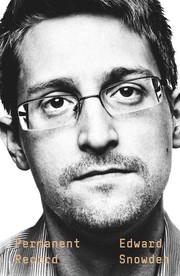
Snowden's firsthand account of mass surveillance programs makes abstract tracking concrete and personal, and powerfully motivates the practical steps in the next stage.
Practical Privacy & Security Habits
IntermediateAdopt a prioritized, actionable set of habits — covering browsers, email, messaging, passwords, and data-broker opt-outs — that meaningfully reduce your real-world exposure.
▸ Study plan for this stage
Pace: 8–10 weeks total: Weeks 1–4 on "Firewalls Don't Stop Dragons" (~25–30 pages/day, reading checklists and tool recommendations actively with a device nearby); Weeks 5–10 on "Extreme Privacy" (~20–25 pages/day, slower pace to accommodate hands-on implementation of Bazzell's step-by-step procedures as y
- Layered defense-in-depth: Parker's core argument that no single tool is sufficient — browsers, passwords, email, and network habits must be hardened together as a system
- Browser hygiene and tracker blocking: configuring privacy-respecting browsers (e.g., Firefox/Brave), extensions (uBlock Origin, Privacy Badger), and DNS settings to reduce passive data collection
- Password management fundamentals: using a dedicated password manager, generating unique high-entropy passwords for every account, and enabling TOTP-based two-factor authentication everywhere possible
- Email privacy: understanding metadata exposure, using aliases or compartmentalized addresses, and evaluating encrypted or privacy-focused email providers
- Encrypted and ephemeral messaging: distinguishing end-to-end encrypted apps (Signal) from less-private alternatives, and understanding forward secrecy and metadata risks
- Data-broker opt-out methodology: Bazzell's systematic process for identifying, requesting removal from, and monitoring people-search and data-broker sites
- Compartmentalization and identity separation: Bazzell's framework of creating distinct digital identities (devices, accounts, phone numbers, addresses) for different life contexts to limit cross-correlation
- OSINT-driven threat modeling: using Bazzell's open-source intelligence perspective to audit your own publicly visible footprint and prioritize which exposures to close first
- After working through Parker's checklists, which five browser or network settings changes produced the greatest reduction in your tracked surface area, and why does Parker prioritize them?
- How does Parker's password management guidance address both the creation and the recovery problem — what happens if you lose access to your password manager?
- What is Bazzell's recommended process for conducting a personal OSINT audit, and what categories of information does he instruct you to search for about yourself before taking opt-out action?
- How does Bazzell differentiate between a 'suppression' approach and a 'removal' approach to data brokers, and under what circumstances does he recommend each?
- What are the key distinctions Bazzell draws between compartmentalized phone numbers, email addresses, and physical addresses — and how do they work together to prevent identity linking?
- Taken together, how do Parker's foundational habits and Bazzell's advanced compartmentalization techniques complement each other, and where do their recommendations overlap or diverge?
- Parker checklist sprint: Work through the end-of-chapter checklists in 'Firewalls Don't Stop Dragons' one chapter at a time, checking off each item on a real device before moving to the next chapter — log every change you make and any friction you encounter.
- Browser hardening lab: Following Parker's guidance, set up a privacy-configured browser profile from scratch (chosen extensions, DNS-over-HTTPS, cookie policies) and then visit a site like coveryourtracks.eff.org before and after to measure the difference in your fingerprint.
- Password manager migration: Using Parker's recommendations as a guide, audit all your existing accounts, migrate credentials into a password manager, replace any reused or weak passwords with generated ones, and enable 2FA on your top 10 most sensitive accounts.
- Personal OSINT self-audit: Following Bazzell's methodology in 'Extreme Privacy,' search for your own name, phone number, home address, and email across the major people-search engines he identifies; document every result in a spreadsheet that will serve as your opt-out tracker.
- Data-broker opt-out campaign: Using Bazzell's step-by-step opt-out instructions, submit removal requests to at least 15 data brokers, log submission dates and confirmation numbers, and schedule a 30-day follow-up review to verify removals.
- Compartmentalization design exercise: Drawing on Bazzell's identity-separation framework, map out a personal compartmentalization plan — define at least three life contexts (e.g., professional, personal, sensitive accounts), assign a distinct email alias, phone number strategy, and browser profile to each, and implement at least one context fully.
Next up: Mastering these concrete habits and Bazzell's opt-out/compartmentalization techniques establishes a hardened personal baseline, which naturally raises the question of how your data flows through the broader systems — networks, devices, and legal frameworks — that sit beyond individual habit changes, setting the stage for a deeper exploration of technical privacy infrastructure and policy.

The most beginner-friendly step-by-step privacy guide available; it translates every concept from the earlier stages into concrete checklists for browsers, Wi-Fi, social media, and more — read it first in this stage to get quick wins.

Bazzell is a former FBI cybercrime investigator whose methodical workbook goes deeper on removing yourself from data brokers, securing devices, and compartmentalizing your digital identity — builds directly on Parker's foundations.
Advanced Control — Technical & Systemic Mastery
ExpertDevelop a durable, technically grounded privacy posture: understand cryptography, network-level defenses, and the policy landscape well enough to adapt as threats evolve.
▸ Study plan for this stage
Pace: 10–13 weeks total: "Sandworm" (~3 weeks, ~30 pages/day), "Countdown to Zero Day" (~3 weeks, ~30 pages/day), "Crypto" (~4 weeks, ~25 pages/day), plus 1–2 weeks for review, exercises, and reflection across all three books.
- Nation-state threat actors and Advanced Persistent Threats (APTs): Sandworm illustrates how state-sponsored groups conduct long-term, multi-vector campaigns against critical infrastructure, reframing personal and organizational threat modeling beyond opportunistic cybercrime.
- Supply-chain and infrastructure attacks: Both Sandworm and Countdown to Zero Day show how attackers compromise trusted software update pipelines, industrial control systems, and third-party vendors — expanding the attack surface far beyond the end user's direct control.
- Cyberweapons as geopolitical instruments: Countdown to Zero Day's deep dive into Stuxnet establishes that malware can be engineered as precision weapons, with real-world kinetic consequences, shaping how readers understand the stakes of digital security at a systemic level.
- Zero-day vulnerabilities and exploit chaining: Stuxnet's use of four simultaneous Windows zero-days demonstrates how layered, previously unknown flaws are discovered, weaponized, and eventually disclosed — and why patch discipline and attack-surface reduction matter.
- The origins and mechanics of public-key cryptography: Crypto traces the independent invention of asymmetric cryptography (Diffie-Hellman, RSA) and explains mathematically why exchanging secrets over an insecure channel became possible, forming the bedrock of all modern secure communication.
- The cypherpunk philosophy and the individual's right to cryptographic self-defense: Levy's narrative of activists, academics, and engineers fighting export controls frames encryption not merely as a tool but as a civil-liberties issue, grounding the reader's motivation for adopting strong crypto per
- Key management, trust hierarchies, and the human factor: Crypto surfaces how the hardest problems in cryptography are social — key distribution, identity verification, and trust — which directly informs practical choices like certificate pinning, PGP web-of-trust, and password-manager design.
- Policy, regulation, and the Crypto Wars: The battle over key escrow and export restrictions in Crypto, combined with the government-attribution debates in Sandworm and Countdown to Zero Day, reveals how law and policy shape (and sometimes undermine) the technical tools available for personal privacy
- After reading Sandworm, can you describe at least three distinct attack phases Sandworm used across multiple campaigns, and explain which phase represents the greatest risk to an individual or small organization — and why?
- Countdown to Zero Day details Stuxnet's use of four Windows zero-days simultaneously. What does this tell you about the economics of zero-day hoarding, and how should it change your approach to patch management and software minimization?
- How did the supply-chain compromise depicted in both Sandworm (M.E.Doc update mechanism) and Countdown to Zero Day (Siemens PLC software) challenge the assumption that installing software from a 'trusted' vendor is sufficient for security?
- Drawing on Crypto, explain in plain language why public-key cryptography solved the key-distribution problem that had made strong encryption impractical for ordinary people — and trace how that solution flows through to tools you use today (HTTPS, Signal, PGP).
- Levy's Crypto covers the U.S. government's push for key escrow (the Clipper Chip). How does that historical debate map onto current policy arguments about end-to-end encryption backdoors, and what technical arguments does the book equip you to make?
- Across all three books, what recurring theme emerges about the relationship between secrecy, transparency, and security — and how does that theme inform your personal decision about which privacy tools to trust?
- Threat-model audit using the Sandworm lens: After finishing Sandworm, write a one-page personal threat model. Identify your most critical 'infrastructure' (email, cloud storage, financial accounts), map plausible adversaries (not just nation-states — apply the same structured thinking), and list three supply-chain risks you had not previously considered.
- Zero-day and patch hygiene sprint: Inspired by Countdown to Zero Day's zero-day analysis, audit every device you own. Enable automatic OS and application updates everywhere, uninstall unused software to reduce attack surface, and document the exercise. Research one recent publicly disclosed zero-day (via CVE or Project Zero blog) and trace its lifecycle from discovery to patch.
- Build and use a PGP/GPG key pair: Drawing directly on the cryptographic principles explained in Crypto, generate a GPG key pair, upload your public key to a keyserver, exchange an encrypted and signed email with a friend or online community (e.g., keys.openpgp.org), and write a short reflection on where the 'human factor' (key verification) felt hardest.
- Cryptography concept mapping: Create a visual diagram tracing the lineage of ideas in Crypto — from symmetric ciphers → Diffie-Hellman key exchange → RSA → PGP → modern TLS. Annotate each node with one real-world tool or protocol that uses it today.
- Policy brief exercise: Using the Crypto Wars history from Levy and the attribution/policy debates in Sandworm, write a 500-word brief arguing either for or against a legislative proposal requiring backdoor access to encrypted communications. Force yourself to steelman the opposing view using evidence from the books.
- Network-level defense lab: Set up a Pi-hole or similar DNS-level ad/tracker blocker on your home network, enable DNS-over-HTTPS (DoH) or DNS-over-TLS (DoT), and review your router's firmware update status. Document what you blocked in the first 48 hours and connect this back to the network-intrusion concepts surfaced in Sandworm and Countdown to Zero Day.
Next up: By internalizing how nation-state attackers operate, how cryptographic systems are built and broken, and how policy shapes the tools available to individuals, the reader is now equipped to move from reactive learning into proactive, ongoing practice — continuously evaluating emerging threats, new privacy-preserving technologies, and evolving regulations with the critical, technically grounded eye

This investigative deep-dive into nation-state cyberattacks shows how infrastructure-level threats cascade down to individuals, sharpening your threat model at the highest level before you study technical defenses.

Zetter's authoritative account of Stuxnet explains how sophisticated exploits work at a technical level, giving you the intuition to understand vulnerability disclosures and patch urgency in your own life.
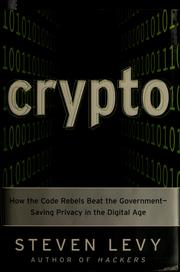
Levy's narrative history of public-key cryptography and the cypherpunk movement explains why the privacy tools you now use — Signal, PGP, HTTPS — exist and how they work conceptually, cementing long-term understanding.
Discussion
Keep reading
Paths that share books, cover the same subject, or open a related topic.