Powerlifting is deceptively simple: squat, bench, deadlift, add weight over time. The difficulty is that small technical errors, repeated under heavy load, are how people get hurt — and bad programming is how they stall for years. The right reading order teaches the lifts precisely first, then hands you the programming principles to keep progressing.
Read in sequence, these books take you from your first correctly-grooved squat to understanding periodization deeply enough to write your own program.
Learn the lifts and the basics of programming
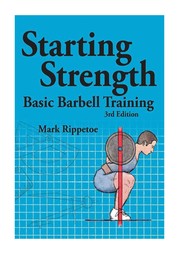
Start with Starting strength, the standard text on barbell technique — its coaching cues for the squat, press, and deadlift are the foundation everything else builds on. Follow immediately with Practical programming for strength training, the same author's guide to how novices, intermediates, and advanced lifters should progress differently, which stops you from clinging to beginner gains long after they've dried up.
Explore programming styles
With the basics grooved, sample different training philosophies. Squat Every Day explores high-frequency training and autoregulation — listening to daily readiness. The Juggernaut Method offers a structured wave-loading system that's popular for good reason, and Deadlift Dynamite zeroes in on pulling strength with a tension-and-technique focus. These aren't contradictions so much as tools; reading them together shows you the range of what works.
Go deep on the science
Finally, build the theory that lets you understand why any of it works. The Science and Practice of Strength Training is a rigorous classic on the principles underneath every program, and Scientific Principles of Strength Training translates modern sport science into practical programming for lifters. Supertraining is the dense, encyclopedic reference for when you want the deepest possible dive, and The Complete Guide to Powerlifting ties the sport's methods together from a competitor's perspective.
Follow the full path and you'll move from copying a program to genuinely understanding one — the difference between a lifter and a strong lifter.
Follow the full reading path →
Ready to learn something deeply?
Build a reading path — free