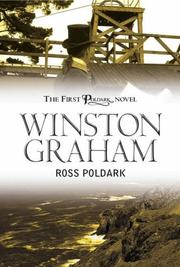
Start with Ross Poldark. Winston Graham wrote twelve Poldark novels across nearly sixty years, and publication order and internal chronology are the same sequence, so there is no order argument to settle. The first book is the first book.
The only real temptation to start elsewhere comes from the television adaptations, which have sent readers straight to whichever novel a given series was covering. Resist it. Ross Poldark opens with a man returning from the American war to a ruined Cornish estate and a fiancee who has married someone else, and that double loss is the engine of all twelve books. Every later reversal is measured against it.
One honest warning about the opening: the first sixty pages introduce a large Cornish cast all at once and it is the slowest stretch in the whole sequence. Push through rather than taking notes. The novel sorts the names out for you by the end of the first mining chapter.
The original four, written as a unit
Ross Poldark, Demelza, Jeremy Poldark, Warleggan. Graham wrote these in the 1940s and 50s as a complete block, then walked away from the series for twenty years. Read them consecutively with no gap: Demelza opens where Ross Poldark stops, and Jeremy Poldark opens on a trial the previous book set up.
The series changes shape inside this quartet. Demelza turns a single man's story into a marriage, and from that book on Demelza is at least as much the protagonist as Ross. The feud with the Warleggan family, which runs the length of the saga, is a class argument rather than a personal one: old landed gentry against new banking money, with the mines and the miners caught between them.
Books five to seven, after the twenty-year gap
The black moon, The four swans, The Angry Tide. Graham came back to Cornwall two decades later and the craft is visibly better here: longer scenes, more interiority, much less melodrama. The catch is that he reintroduces nobody. A decade has passed in the story and the first fifty pages of The black moon feel like meeting strangers you already know.
The four swans runs four women's stories in parallel and is the most explicit the series ever gets about marriage as a constraint. The Angry Tide is the most consequential of the twelve, and its losses determine the shape of everything after it.
Books eight to ten, the next generation
The stranger from the sea, The miller's dance, The loving cup. This is where most abandonments happen, and it is worth knowing why in advance. Another decade has passed, the children are adults, and Ross and Demelza have been demoted to the frame. That is design rather than drift. The subject changes from ambition to inheritance: not what Ross can build, but what his children do with it.
The final two
The Twisted Sword takes the family to Brussels and Waterloo, and delivers the blow the whole saga has been arranged around. Slow down badly in its last quarter. Bella Poldark was published twelve years later, when Graham was in his nineties, and is the longest and loosest book in the sequence. Read it as a coda rather than a climax and it works; read it expecting another The Twisted Sword and it will disappoint you.
Where it is fine to stop
Two places. Warleggan is the first, and it is a real ending because Graham intended it as one before the twenty-year silence. The second is The Angry Tide, which closes the story of Ross and Demelza as leads. Neither stopping point leaves you stranded mid-plot, which is unusual for a twelve-book saga and worth knowing before you commit to about 5,300 pages.
More long-form fiction paths are on Discover.
Follow the full ordered path here: Poldark Reading Order and Reading Guide.