Poldark Reading Order and Reading Guide
Winston Graham wrote the Poldark novels in two long bursts separated by twenty years, and publication order is the only order that works — the later books assume you have lived through the earlier ones. Start with the original quartet written in the 1940s and 50s, which is a complete story in itself and the natural place to stop if the series is not for you. The second quartet picks the cast up years later, the third moves the story onto Ross and Demelza's children, and the final two carry the family to the end.
The Original Quartet
BeginnerRead the four novels Graham wrote first, which tell a complete story of Ross Poldark's return to Cornwall and can be stopped at cleanly.
▸ Study plan for this stage
Pace: 6-8 weeks for roughly 1,500 pages (Ross Poldark 459, Demelza 440, Jeremy Poldark 270, Warleggan 350). Graham writes short chapters and moves fast, so 40-50 pages an evening is comfortable. The only slow patch is the first sixty pages of Ross Poldark, where a large Cornish cast arrives at once; push
- Publication order is the only order, and this quartet was written as a complete unit in the 1940s and 50s before Graham walked away for twenty years
- Ross returns from the American war to a ruined estate and a fiancee who has married elsewhere; that double loss is the engine of all twelve books
- The Poldark-Warleggan feud is a class argument, not a personal one: old landed gentry against new banking money, and Graham never lets you forget which side pays for the mines
- Demelza shifts the series from one man's story to a marriage, and from the second book on she is at least as much the protagonist as Ross
- Cornish copper and tin mining is the economic floor of the whole saga; when a mine floods or a price falls, the domestic plot moves
- Graham writes eighteenth-century poverty without sentiment, and the gap between what the gentry worry about and what the miners survive is deliberate
- Warleggan is a real stopping point, which is why this stage exists as a unit: the story resolves enough that a reader who is not enjoying it can leave satisfied
- What does Ross actually want when he comes home, and how much of the first novel is him refusing to admit the answer has changed?
- How does Demelza change the books structurally, not just emotionally, once she becomes a viewpoint character?
- What is the Warleggan family's real weapon against Ross, and why is it more effective than anything violent?
- Why does Jeremy Poldark put a trial at the centre, and what does the verdict cost Ross even though it goes his way?
- After Warleggan, do you want the other eight books, and what specifically would you be reading on for?
- Keep a one-line note per chapter of Ross Poldark naming who appeared. By the end of the book you will have a cast list you built yourself, which is faster than looking one up.
- After Demelza, write down what you think Ross and Demelza each want from the marriage. Check it against Warleggan; the gap between the two answers is the quartet's argument.
- Track the fortunes of one mine across all four books. It is the cleanest way to see how Graham ties money to plot.
- Stop deliberately at the end of Warleggan for a week before deciding to continue. The twenty-year gap in the writing is real, and giving yourself a smaller version of it makes the tonal change in the next stage legible rather than jarring.
Next up: You now know the marriage, the feud and the mines well enough that the second quartet can pick everyone up years later without recapping a thing, which is exactly what it does.
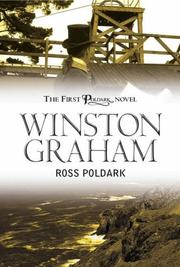
The beginning and the only sane starting point: Ross comes home from the American war to a ruined estate and a fiancee who has moved on. Everything the series does later is set up here.
The second novel shifts weight onto Demelza and turns the series from one man's story into a marriage. Read immediately after Ross Poldark, which ends mid-momentum.
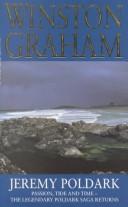
Picks up with Ross facing trial, and deepens the Poldark-Warleggan feud that drives the whole twelve-book run. The plot machinery of the rest of the series is assembled here.

The end of the original quartet and, for twenty years, the end of the series. It resolves enough that you can stop, which is exactly why it is the right place to check whether you want the other eight.
The Second Quartet
BeginnerRejoin the cast after Graham's twenty-year gap, when the children are growing and the feud has matured into something colder.
▸ Study plan for this stage
Pace: 6-7 weeks for around 1,300 pages (The Black Moon 406, The Four Swans 443, The Angry Tide 448). Slower reading than the first quartet despite similar length, because Graham is now running four or five plot lines at once instead of two. Expect the first fifty pages of The Black Moon to feel like meeti
- Graham came back to the series after two decades, and the craft is visibly better: longer scenes, more interiority, less melodrama
- The Black Moon reintroduces the cast without recapping, on the assumption you have just read the first quartet
- The feud has cooled from open hostility into something colder and more institutional, which is a deliberate change in how the antagonism works
- The Four Swans runs four women's stories in parallel, and is the book where the series' interest in marriage as a constraint on women is at its most explicit
- The Angry Tide is the most consequential book in the twelve, with losses that determine the shape of everything after it
- The children introduced here are not decoration; they are the leads of the next stage, so the domestic scenes are load-bearing
- Graham keeps national politics at the edge of the frame (war with France, parliamentary seats) and lets it press on Cornwall rather than narrating it directly
- What has twenty years of authorial distance changed about how Graham writes Ross, and is he a more or less sympathetic figure than in the first quartet?
- Why does The Four Swans give four women equal weight, and which of the four stories does the series carry forward?
- How has the Warleggan threat changed shape now that the money has won, and what does that do to the feud's dramatic usefulness?
- The Angry Tide's central loss reshapes several characters at once. Which of them does it change most, and why?
- Which of the children introduced in this quartet is Graham most obviously setting up, and on what evidence?
- Before starting The Black Moon, write two sentences on where each main character stood at the end of Warleggan. The novel will not do it for you.
- In The Four Swans, note which of the four women gets the most pages and which gets the fewest. Graham's proportions are an argument about whose constraints he thinks are worst.
- After The Angry Tide, list every character whose situation is materially different from where the stage began. That list is the setup for the next three books.
- Read the last thirty pages of The Angry Tide in one sitting with nothing after it that day. It is the series' hinge and it does not survive being read in fragments.
Next up: The Angry Tide clears the board of the generation that has carried seven books, which is what makes the ten-year jump at the start of the next stage possible.
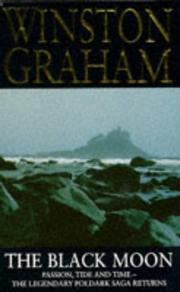
Graham's return to Cornwall after two decades away, and a noticeably more assured novel than the early ones. Start here for the second half; it reintroduces everyone without recapping.

Four women's parallel stories, and the book where the series' handling of marriage and constraint is at its sharpest. Depends on the relationships established in The Black Moon.
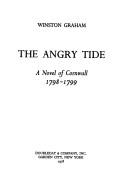
The most consequential book in the series, with losses that reshape the remaining novels. Reading it out of sequence would spoil the two books before it entirely.
The Next Generation
IntermediateFollow the handover to Jeremy, Clowance and Valentine, where the series becomes a study of inheritance rather than ambition.
▸ Study plan for this stage
Pace: 6-7 weeks for about 1,300 pages (The Stranger from the Sea 445, The Miller's Dance 394, The Loving Cup 460). Budget extra patience for the first hundred pages of The Stranger from the Sea, which is where most readers who abandon the series abandon it: a decade has passed, the children are adults, an
- The series changes subject here, from ambition to inheritance: the question stops being what Ross can build and becomes what his children do with it
- Jeremy, Clowance and Valentine carry the foreground, and each of them repeats a version of a parent's mistake in a different key
- Valentine's parentage is the long fuse the earlier books lit, and these three novels are where it starts to burn
- The Cornish mining economy returns to the centre in The Miller's Dance, now with steam and engineering rather than pure luck
- The Napoleonic wars press harder on the family than the French Revolution ever did, and the war is now a place characters actually go
- The Loving Cup is the quietest book in the twelve and the one whose emotional weight depends entirely on the two before it
- Ross and Demelza are still present and still the moral centre, but Graham has demoted them to the frame, and the demotion is the point
- What does the ten-year jump let Graham skip, and what does he lose by skipping it?
- How does each of the three children rhyme with a parent, and which of them is Graham most sympathetic to?
- Why does The Miller's Dance put the mining economy back at the centre just as the family's focus moves away from it?
- What is Valentine's function in the plot as opposed to his function in the theme?
- The Loving Cup is deliberately low-incident. What is Graham doing with the slack, and would the next book work without it?
- At the start of The Stranger from the Sea, write down the ages of the three children. Half the confusion in the opening chapters is arithmetic.
- Track Valentine across all three novels and note every scene where an adult's behaviour toward him is unexplained. Those are the seams the plot will open later.
- Compare the first chapter of Ross Poldark with the first chapter of The Stranger from the Sea. Thirty-five years of Graham's writing life sit between them and the difference in technique is easy to see side by side.
- Keep a running note of who owes money to whom. The late books run on debt the way the early ones ran on copper prices.
Next up: Three books of accumulated obligation, engagement and unspoken parentage now have to be paid off, and the final two novels exist to pay them.
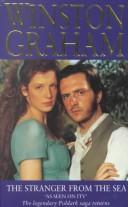
Jumps forward a decade and hands the foreground to the children. Some readers stall here because the leads change; know that going in and the shift reads as design rather than drift.
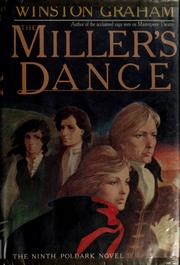
Consolidates the younger generation's plots and brings the Cornish mining economy back to the centre. Follows directly from the new cast introduced in The Stranger from the Sea.
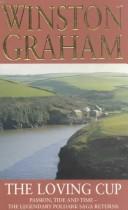
The quietest of the late novels and the one that pays off the Jeremy and Valentine threads. Its emotional weight depends entirely on the two books before it.
The Final Two
IntermediateFinish the saga, including the novel Graham published at the very end of his life.
▸ Study plan for this stage
Pace: 5-6 weeks for around 1,200 pages (The Twisted Sword 510, Bella Poldark 696). Read The Twisted Sword steadily but be ready to slow down badly in its last quarter, which delivers the series' hardest blow. Bella Poldark is the longest book in the sequence and the loosest; it was published when Graham w
- The Twisted Sword takes the family to Brussels and Waterloo, and is the only book where the wider war becomes the primary setting
- It is the payoff for eleven books of setup, and the loss it delivers is the one the whole series has been arranged around
- Bella Poldark was written twelve years later and closes the family's story with the youngest daughter at the centre, not Ross
- A coda is a legitimate final movement: the last book is not trying to top The Twisted Sword and should not be read as if it were
- Bella's ambitions as a singer take the series somewhere it has never been, out of Cornwall and into performance and public life
- Graham was writing the last book in his nineties, and the looser plotting and gentler resolutions are worth reading generously
- Twelve books end with the family intact but transformed, which is the argument the whole saga has been making about inheritance
- Why does Graham move the climax of the series abroad, and what does Waterloo let him do that Cornwall could not?
- Who is most changed by the end of The Twisted Sword, and how does the final book handle that change?
- What does Bella's storyline let Graham say about the family's trajectory that a Cornish plot could not?
- Is Bella Poldark a satisfying ending to twelve books, or a satisfying ending to one? Does the difference matter?
- Looking back across all twelve, what did the twenty-year gap in the writing actually do to the series?
- Before The Twisted Sword, reread the last chapter of The Loving Cup. It is the direct setup and the two books were written to sit together.
- After finishing, write 300 words on what the series turned out to be about. Most readers who answer honestly do not say the same thing they would have said after Warleggan.
- Compare Bella's ambitions with Demelza's position in the second novel. The distance between them is the saga's actual measure of what changed.
- Rank the twelve books. The exercise is worth it because it forces you to separate the books that are best from the books that were most necessary, and the Poldark series has a lot of the second kind.
Next up: This is the end of the sequence; from here the natural next step is other long-form British historical fiction, or a rereading of the first quartet with the whole arc in view.
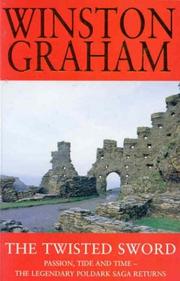
Takes the family to Brussels and Waterloo, and delivers the series' hardest blow. Read only after The Loving Cup; it is the payoff for eleven books of setup.

Written twelve years after The Twisted Sword and published when Graham was in his nineties, it closes the family's story with Bella at the centre. A coda, and the right last book.
Discussion
Keep reading
Paths that share books, cover the same subject, or open a related topic.