Perspective has an unfair reputation. Because it involves vanishing points and horizon lines, people assume it is math they are bad at, and they quit before it clicks. In truth it is the most learnable skill in drawing, provided you take it in order: understand the idea, learn the basic systems, then push into the complex constructions that let you draw anything from your head.
Rushed, perspective feels like a wall of rules. Sequenced properly, each book removes one specific confusion, and depth stops being intimidating.
See depth before you construct it
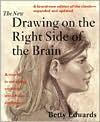
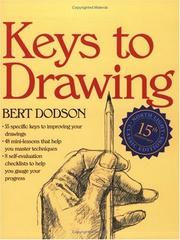
If drawing is still new, begin with Betty Edwards's The New Drawing on the Right Side of the Brain and Bert Dodson's Keys to drawing to build the observational base. Then get the core concept cleanly with Joseph D'Amelio's Perspective drawing handbook, a slim, brilliantly clear introduction that explains why the rules exist rather than just listing them.
Learn to construct with confidence
Now build real scenes. Scott Robertson's How to draw is the modern bible of constructive drawing, teaching you to place any object in space with control, a rigorous but transformative book. Marcos Mateu-Mestre's Framed Perspective Vol. 1 and Framed Perspective Vol. 2 translate perspective into storytelling and staging, showing how professionals use it to compose dramatic images, not just accurate boxes.
Apply it to real subjects
With the systems in hand, take perspective outdoors and into scenes. Koos Eissen's Sketching connects perspective to fast, confident industrial and product sketching. Stephanie Bower's The Urban Sketching Handbook: Understanding Perspective shows how to apply it on location, judging angles by eye when you cannot set up formal construction.
Push into imaginative scenes
Finally, use perspective to invent worlds. James Gurney's Imaginative Realism teaches how to build believable scenes that never existed, and his Color and light extends the same rigor into how light and atmosphere read across depth. Together they mark the point where perspective becomes a tool for imagination rather than a set of constraints.
Follow the full reading path to move from your first vanishing point to drawing complex, convincing spaces without reference.
Follow the full reading path →
Ready to learn something deeply?
Build a reading path — free