Most people who try to draw a face fail at the same step: they draw the eyes and nose they think they know instead of the shapes in front of them. Portrait drawing is really two skills stacked on top of each other, accurate seeing and structural understanding, and they have to be learned in that order. Jump to anatomy before you can see, and you will render a textbook head that looks like no one.
That is why the reading order matters here. You want to retrain your eyes first, then learn the head as a constructed form, then specialize into expression and finish.
Learn to see, then to draw
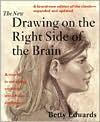
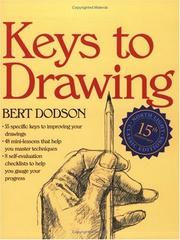
Start with Betty Edwards's The New Drawing on the Right Side of the Brain. Its whole purpose is to break the symbol-drawing habit and get you copying what is actually there. Pair it with Bert Dodson's Keys to drawing, a gentler, more general foundation in the perceptual and technical basics that carry over to every subject.
Build the head as a solid form
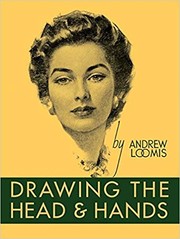
Now construct. Andrew Loomis's Drawing the head and hands is the classic method: the head as a ball-and-plane structure you can turn and tilt in space. It is the backbone of the whole path. Reinforce it with Wendon Blake's Portrait Drawing: A Step-by-Step Art Instruction Book and Jack Hamm's Drawing the head and figure, both of which give you repeatable, demonstrated approaches to assembling a convincing head.
Once the structure holds, add life. Gary Faigin's The artist's complete guide to facial expression is the definitive reference on how the muscles of the face create readable emotion, the difference between a mannequin and a person.
Refine light, rendering, and depth
A likeness lives in the values. Adrienne Drooker's Drawing in Light and Shadow focuses on modeling form with tone, and Arthur Guptill's Sketching and rendering in pencil remains a superb, timeless guide to pencil technique and finish.
For deeper structure, Sarah Simblet's Anatomy for the artist connects the surface you draw to the bone and muscle underneath, useful once construction feels natural. And if you want a genuinely three-dimensional understanding of the head, Peter Rubino's The portrait in clay teaches sculpture that will transform how you draw a face in two dimensions.
Read this way, portrait drawing becomes a stack of solvable problems rather than a mystery of talent. Follow the full reading path to work from your first accurate sketch to a portrait that actually resembles its subject.
Follow the full reading path →
Ready to learn something deeply?
Build a reading path — free