The most common way to fail at figure drawing is to buy the thickest anatomy atlas you can find and start memorizing muscles. Without the ability to capture a pose in a few flowing lines first, all that anatomy piles onto a stiff, lifeless scaffold. The figure has to move before it can have muscles.
So the reading order runs opposite to most people's instincts: seeing and gesture, then simple construction, then, and only then, the detailed anatomy. Each stage earns the next.
See the figure, feel the gesture
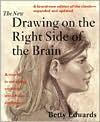
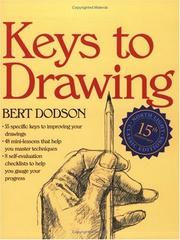
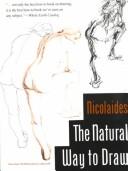
Start again with Betty Edwards's The New Drawing on the Right Side of the Brain and Bert Dodson's Keys to drawing if you are new to drawing at all; they train the eye that everything else depends on. Then go to the heart of figure work with Kimon Nicolaides's The natural way to draw, a rigorous, exercise-driven course built on gesture and contour that many artists consider the best training program ever written.
Construct the moving body
With gesture in hand, learn to build the figure. Mike Mattesi's FORCE: Dynamic Life Drawing teaches you to feel and draw the rhythmic energy running through a pose, so your figures push and pull instead of sitting still. Michael Hampton's Figure drawing then gives you a clean, modern system for simplifying the body into manipulable forms you can pose from imagination. Jack Hamm's Drawing the head and figure rounds out this stage with a practical, no-nonsense method for assembling the whole figure.
Add the anatomy, at last
Now the muscles will land on something living. Uldis Zarins's Anatomy For Sculptors, Understanding the Human Figure presents anatomy as simplified three-dimensional forms, far easier to apply than flat diagrams. Fritz Schider's An atlas of anatomy for artists is the deep classical reference, dense with plates and old-master studies. And George Bridgman's Bridgman's complete guide to drawing from life teaches anatomy as dynamic, wedged, interlocking masses, the way a draftsman actually uses it.
Follow this order and anatomy becomes the servant of gesture rather than its replacement. Work the full reading path to move from loose two-minute poses to fully constructed, anatomically believable figures.
Follow the full reading path →
Ready to learn something deeply?
Build a reading path — free