Most people picture the ranger job wrong. They imagine solitude and scenery, and the actual work turns out to be crowd management, interpretation, search and rescue, radio traffic, and a hiring process run by the federal government rather than by the park. That mismatch is the single biggest reason people wash out of the ambition early, so the reading order below starts with the reality and only gets to the application at the end.
The second thing to understand is that "park ranger" is not one job. Interpretive rangers teach; protection rangers are commissioned law enforcement; there are also resource-management, fee, and maintenance tracks, plus state and county park systems that hire on completely different terms than the National Park Service. Books can tell you what the work feels like and how the hiring machinery behaves, but they cannot substitute for a seasonal season on the ground, a law enforcement academy certificate, or whatever credential the specific track requires.
See the job before you chase it
Start with Ranger Confidential, Andrea Lankford's account of twelve years in Yosemite, Grand Canyon, and Denali. It is the honest counterweight to the recruitment brochure: low pay, seasonal insecurity, body recoveries, and the peculiar loyalty the work still produces. Read it first because it either confirms the pull or saves you five years.
Then read Death in Yellowstone, Lee Whittlesey's catalog of how visitors have died in one park since it opened. It reads as morbid trivia and functions as a curriculum. Nearly every fatality traces to a predictable pattern of visitor behavior, and learning those patterns is a large part of what protection and interpretive rangers actually do all day.
Learn interpretation, which is the core craft
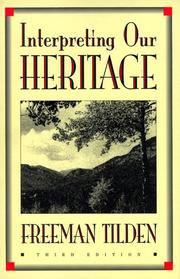
Interpretation is the professional skill that separates a ranger from a tour guide, and it has a real literature. Interpreting our heritage is Freeman Tilden's 1957 foundation, the source of the principles the National Park Service still trains against: interpretation is revelation based on information, not instruction, and it must relate to something in the visitor's own experience. It is short and worth reading slowly.
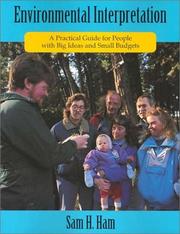
Follow with Environmental interpretation by Sam Ham, which is the practical modern companion. Where Tilden gives you philosophy, Ham gives you the thematic structure, program planning, and evaluation methods you would use to build an actual talk or guided walk on a small budget. If you only read one, read Tilden for the why and Ham for the how; they complement rather than overlap.
Get in the door
The path ends with the two most practical titles. Work your way around the world is not a ranger book, but seasonal, outdoor, room-and-board work is the standard on-ramp, and Susan Griffith's book is a useful map of how that world operates and how to survive its economics. Seasonal positions with concessioners, state parks, conservation corps, and trail crews are what fill the resume that federal hiring later reads.
Then Ten Steps to a Federal Job, Jobseeker's Guide by Kathryn Kraemer Troutman, which exists because USAJOBS is its own genre. Federal resumes run long, are scored against specific announcement language, and are screened by people looking for explicit evidence of stated qualifications rather than for a polished summary. Applicants with real field experience get filtered out constantly for writing a private-sector one-pager. Read this before you apply, not after your third rejection.
One caution worth stating plainly: nothing here promises a position or a salary. Federal seasonal hiring is competitive and cyclical, protection roles require a law enforcement academy credential with age limits, and pay at entry is modest. Read for orientation, then go get a season under your belt.
If the interpretive side is what pulls you, look at the park ranger career hub for adjacent outdoor and field-work paths. Follow the full reading path to take these in the order above.
Follow the full ordered path here: How to Become a Park Ranger: Books to Read, in Order.