For six hundred years a single empire straddled Europe, Asia, and Africa, ruled Mecca and Belgrade at once, and shaped everything from coffee houses to the borders of the modern Middle East. Yet most of us learn the Ottomans only as a footnote — the "sick man of Europe" or the losing side of a war. Read that way, the empire never makes sense.
The fix is order. The Ottoman story runs across centuries and languages, so a good path moves from a firm overview to the golden age, then to decline and the aftermath. Skip the foundation and every later book feels like arriving mid-argument.
Start with the shape of the whole thing
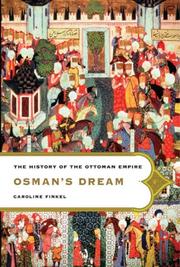
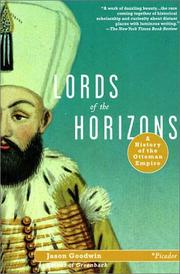
Begin with a single narrative that carries you from a frontier warband to a world power and back. Osman's Dream by Caroline Finkel is the modern one-volume history for exactly this — comprehensive, readable, and skeptical of old myths. Pair it, if you want a livelier companion, with Lords of the Horizons by Jason Goodwin, an atmospheric tour that trades some rigor for color and helps the world feel inhabited.
Understand the classical peak
Once you have the arc, go deep on the era that defined the empire. The Ottoman Empire: The Classical Age, 1300-1600 by Halil Inalcik is the foundational scholarly account of Ottoman institutions — land, law, the court — by the historian who essentially built the modern field. It is dense; read it after the overviews so the machinery has context.
To place the empire inside Europe rather than opposite it, The Ottoman Empire and Early Modern Europe by Daniel Goffman argues the Ottomans were a European power, deeply entangled in Renaissance diplomacy and trade — a useful corrective to the "clash of civilizations" reflex.
Trace the long decline and the modern aftermath
The empire's end reshaped our world, so give it real space. A History of the Ottoman Empire by Douglas Howard is a balanced full-span synthesis that carries you cleanly toward the modern period. Then The Fall of the Ottomans by Eugene Rogan tells the First World War from the Ottoman side — a perspective Western histories almost always omit.
For the wreckage and the borders drawn from it, A Peace to End All Peace by David Fromkin is the classic on how the postwar carve-up created today's Middle East. Finally, Midnight at the Pera Palace by Charles King watches an old order dissolve into a modern republic through the life of one Istanbul hotel — a human-scale ending to a vast story.
How to actually learn this
Ottoman history is contested terrain, so read it as one. This path deliberately mixes celebratory, institutional, and post-colonial voices, and you should hold your conclusions loosely — historians still argue about "decline," about the empire's tolerance, and about the causes of its fall. Keep a timeline as you read; the dynasty spans so long that dates anchor everything. And read the accounts of the empire's end against each other rather than trusting a single verdict.
Ready to go in order? Follow the full reading path, browse the subject hub, or explore more history paths.
Ready to learn something deeply?
Build a reading path — free