Ask when Rome fell and most people say 476. But the Roman Empire kept going for another thousand years from a new capital at Constantinople, calling itself Roman the whole time. We call it Byzantine; they would not have recognized the word. This is the great forgotten sequel to antiquity, and the reason it feels obscure is simply that few people read it in a sensible sequence.
Order matters here more than almost anywhere, because a millennium of emperors, schisms, and sieges is genuinely disorienting without a spine to hang it on. Start with narrative momentum, then add depth on the pivots — Justinian, the church, the Arab conquests, the final fall.
Get the sweep first
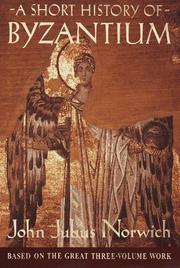
Begin with a book built to hook you. Lost to the West by Lars Brownworth is a brisk, story-driven survey that turns a thousand years into a page-turner and gives you the cast of characters. Follow it with A short history of Byzantium by John Julius Norwich — the elegant condensation of his famous trilogy, a notch more detailed while still a pleasure. Between them you will have the timeline, which is the thing everything else hangs from.
Add the thematic depth
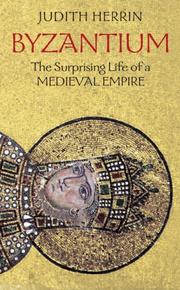
With the chronology in place, deepen it. Byzantium by Judith Herrin is the best single thematic introduction — organized around how the empire actually worked and felt, from icons to eunuchs to diplomacy. Because Orthodox Christianity was the empire's soul, The Orthodox Church by Timothy Ware explains the faith and the great schism from the inside, which unlocks much of what otherwise looks like palace intrigue.
The Byzantine world, edited by Paul Stephenson, is the step up to scholarship: a large multi-author companion with chapters by specialists on economy, art, provinces, and neighbours. It is a book to raid rather than read cover to cover, and it is the natural place to go when a narrative history leaves you wanting the argument behind a sentence.
The empire's neighbours and its reach
Two books widen the frame, and they are the ones most beginner lists omit. The Byzantine commonwealth by Dimitri Obolensky is the classic account of Byzantium's cultural and religious influence across the Slavic world — the reason Russian, Serbian, and Bulgarian Orthodoxy exist, and the reason Byzantine history is not only a Mediterranean story. Byzantium and the Early Islamic Conquests by Walter E. Kaegi examines the seventh-century catastrophe from the Byzantine side: how an empire that had just defeated Persia lost Syria, Egypt, and North Africa within a decade. Kaegi is a specialist writing for specialists, so read him after the surveys; the payoff is that the empire's later shape stops looking arbitrary.
For a vivid case study of how fragile even a superpower is, Justinian's Flea by William Rosen follows the sixth-century plague that gutted Justinian's dream of restoring Rome — history through the lens of a pandemic.
Read a primary source and the ending
Now you are ready for a voice from inside the palace. The secret history of Procopius is the scandalous, score-settling counter-memoir by Justinian's own court historian — bracing, biased, and unforgettable once you know the official story it inverts. Then close with The fall of Constantinople, 1453 by Steven Runciman, the classic account of the empire's last days and the siege that ended the Roman world for good.
How to actually learn this
Byzantine history is deeply entangled with religion and with modern national myths, so read it as contested ground and hold verdicts loosely — Procopius alone should teach you to distrust any single narrator, and Obolensky's commonwealth thesis has been argued over for decades. Keep a rough map of the shifting borders beside you; the empire expands and contracts so dramatically that geography is half the story. And resist the old habit of treating Byzantium as decadent or doomed. The better books here treat its thousand-year survival as the thing that needs explaining.
Read it in order: follow the full reading path, visit the subject hub, or continue into ancient Rome and the Ottoman Empire, which pick up on either side of it.