For a century the Mongols governed the largest contiguous land empire the world has ever seen, and for the seven centuries since they have been reduced to a cloud of galloping horsemen. The reality is stranger and more consequential: a nomadic confederation that reorganized trade across Eurasia, moved technologies and diseases between civilizations, and forced the settled world to notice it had neighbors.
It is a hard subject to self-teach because the sources pull in opposite directions — Persian, Chinese, Russian, and European chroniclers each saw a different empire, and each had reasons to exaggerate. This path is deliberately built from several vantage points, so read it as an argument to think with, not a verdict to memorize. Hold your conclusions loosely.
Why order matters here
Start with the wrong book and the Mongols are either a barbarian horde or a misunderstood utopia. Start in the right order and you build the map first, then the mechanics, then the aftershocks. Each stage should make the next one legible.
The path, stage by stage
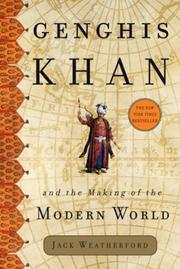
Begin with Genghis Khan and the Making of the Modern World by Jack Weatherford — a sweeping, readable case for the Mongols as accidental modernizers. It overstates that case, which is exactly why it makes a good opening: you will spend the rest of the path testing it.
Next, The Mongol Empire by John Man grounds the sweep in narrative and geography, walking the steppe and the campaigns with a reporter's eye. Then Khubilai Khan : his life and times by Morris Rossabi shifts from conquest to rule, showing what it took to actually govern China as an outsider dynasty.
Widen the lens with The Silk Roads by Peter Frankopan, which places the empire inside the long east-west exchange it briefly unified. With that context, The Mongol Conquests In World History by Timothy Michael May turns analytical — asking how the conquests changed institutions, armies, and trade far beyond the steppe.
For depth, The Mongols and the Islamic world by Peter Jackson is the specialist's account of how the empire met, fought, and was eventually absorbed by Islamic civilization. Finish with The Black Death by Dorsey Armstrong, tracing one of the Mongol era's grimmest legacies: the plague that rode the trade routes the empire had opened.
How to actually learn this
Read the survey books cover to cover; treat the specialist volumes as chapters you can enter where your curiosity is. Keep a running map and timeline — the Mongols split into rival khanates fast, and names repeat. After each book, write one paragraph on where it disagreed with the last. When historians contradict each other, that gap is the real lesson, not a problem to resolve.
Ready to go deeper? Follow the full reading path for the staged study plan, or explore the subject hub for related history. You can also browse more paths.
Ready to learn something deeply?
Build a reading path — free