Nanotechnology promises everything from disease-curing machines to gray-goo apocalypse, and the gap between what is imagined and what is buildable is enormous. That gap is exactly why the field is hard to self-teach: search for it online and you get equal parts breakthrough and breathless marketing. A reading path sorted by rigor lets you weigh the evidence rather than absorb the hype.
Treat this as a science subject. The visionary books are worth reading precisely so you can test their claims against the physics, not because they are gospel.
Why order matters here
Start with the equations and you drown; start with only the visions and you never learn what is physically allowed. The right order alternates: inspiration to show you why the field exists, then the physics to show you what constrains it, then a sober look at consequences.
The path, stage by stage
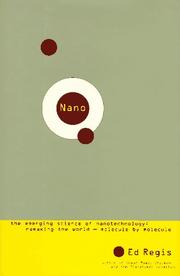
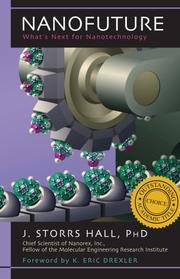
Begin with Nano: The Emerging Science of Nanotechnology by Ed Regis for the history and the personalities, and Engines of creation by K. Eric Drexler, the founding manifesto that launched the whole conversation — read it as a provocation, not a forecast. Nanofuture by J. Storrs Hall extends that visionary line while getting more technical about mechanisms.
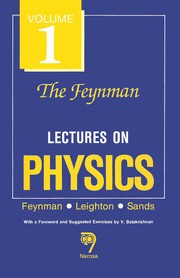
Now anchor yourself in real physics. The Feynman Lectures on Physics Vol 1 by Richard Phillips Feynman gives you the foundational intuition for how matter behaves, and Introduction to Nanotechnology by Poole, Charles P., Jr. is the proper textbook — the point where the field stops being speculation and starts being engineering.
For the working reality, Soft machines by Richard A. L. Jones is essential: a physicist's careful explanation of why the nanoworld is wet, jiggly, and nothing like a shrunken factory. The Dance of Molecules by Ted Sargent then surveys where the science is actually delivering, especially in medicine and materials.
Finish with Nanotechnology & Society by Fritz Allhoff, which asks the harder questions about risk, ethics, and governance once you understand what is genuinely on the table.
How to actually learn this
Read the visionary books fast and skeptically, marking every claim you would want to check. Slow down for Feynman, Poole, and Jones, which reward working through the reasoning rather than skimming. After each book, ask the discipline's core question: is this constrained by physics, by engineering, or only by imagination? That habit — separating what is impossible from what is merely unsolved — is the real skill.
When you are ready, follow the full reading path for the staged study plan, explore the subject hub, or browse related paths.
Ready to learn something deeply?
Build a reading path — free