MRI and CT technologists produce the cross-sectional images physicians rely on, and the role is credentialed — it requires accredited training, clinical experience, and passing a registry exam through the ARRT or equivalent. Books support that pathway; they do not replace the supervised, patient-facing training. Because imaging layers medical language, anatomy, and dense physics, a reading order keeps you from drowning in the physics before you have the anatomy to use it.
Start with terminology and anatomy, move to cross-sectional and modality-specific knowledge, then finish with registry review.
Build terminology and anatomy
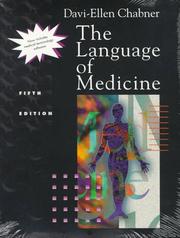
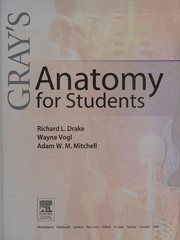
Begin with The Language of Medicine, which teaches the medical vocabulary every clinical role assumes. Then ground yourself in Gray's anatomy for students, an accessible modern anatomy text. Because imaging is inherently spatial, Cross-Sectional Anatomy for Imaging Professionals and Sectional Anatomy for Imaging Professionals train you to read the body in the slices that MRI and CT actually produce — the single most important skill for the work.
Learn the physics and modality practice
Imaging is applied physics. Radiologic Science for Technologists covers the foundational science of radiation and image production. From there, specialize: MRI in practice is a standard, readable introduction to how magnetic resonance imaging works and is performed, and CT Scanning: Principles and Practice does the same for computed tomography. These connect the physics to the protocols you will run at the console.
Prepare for the registry
The credential is the goal. CT Registry Review and MRI Registry Review are built to prepare you for the ARRT advanced certification exams, with practice questions and focused review. Computed tomography for technologists reinforces CT knowledge as both a learning and review resource. Save the registry books for after your clinical training, as your final consolidation.
Read in this order and imaging's steep physics becomes approachable. Follow the full path, then complete accredited training and certification to work in the field.
Follow the full reading path →
Ready to learn something deeply?
Build a reading path — free