Modernist literature is famous for being difficult, and the difficulty is the point: writers like Joyce, Woolf, and Eliot deliberately broke the inherited rules of storytelling to capture consciousness, fragmentation, and a world remade by war and industry. Open Ulysses on day one and you will conclude, wrongly, that it is willful nonsense. The revolt only makes sense once you know what it was revolting against and see the movement's easier books first.
So the order runs from context and accessible masterpieces to the demanding experiments — with the manifestos read alongside, so you understand the theory behind the technique.
Get your bearings
Start with two guides. The modern tradition edited by Richard Ellmann anthologizes the ideas and manifestos that fueled modernism, and Modernism: A Very Short Introduction by Christopher Butler explains what the movement was reacting to and reaching for. With these, the experiments read as purposeful rather than perverse.
Read the accessible masterpieces
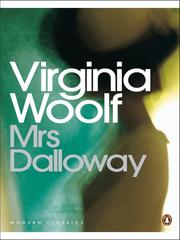
Now the novels and stories that reward you without exhausting you. Mrs. Dalloway by Virginia Woolf renders a single day through flowing interior consciousness — the perfect first stream-of-consciousness novel. The Great Gatsby by F. Scott Fitzgerald is modernism at its most seductive and readable, and In our time by Ernest Hemingway shows the pared-down style that changed prose forever. Then deepen with To the Lighthouse by Virginia Woolf, her supreme achievement, and A Portrait of the Artist as a Young Man by James Joyce, the on-ramp to his harder work.
Enter the deep end
With momentum built, take on the peaks. The Sound and the Fury by William Faulkner demands and rewards close attention across its shifting narrators. The Waste Land by T.S. Eliot is the movement's defining poem — read it beside his essay Tradition and the Individual Talent, which explains the theory of impersonality behind it. Then attempt Ulysses by James Joyce, the Everest of modernism, and pair it with Ellmann's biography James Joyce to illuminate the life and city behind the book.
Read in this arc, modernism stops being an endurance test and becomes what it was: the most exhilarating reinvention of literature in the last century. Follow the full reading path for the staged version, or browse the subject hub.
Ready to learn something deeply?
Build a reading path — free