Stand in front of a Rothko or a Warhol soup can and it is easy to feel like the joke is on you — that modern art is a con, or that you are missing some gene. You are not. What you are missing is the story: the century-long argument, one movement answering the last, that makes a blank white canvas a considered move rather than a shrug. Learn that story and the galleries open up.
Modern art especially demands reading order, because it is reactive. Abstract Expressionism only makes sense against what came before; Pop Art is a rebuttal to Abstract Expressionism. Read the movements out of sequence and you get a shrug; read them in order and you get an argument.
Learn to look before you learn the history
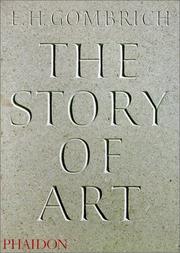
Start by retraining your eye. Ways of Seeing by John Berger is the perfect opener — short, radical, and permanently useful, it teaches you that seeing is never neutral. Then get the long backstory in a single sweep with The story of art by E. H. Gombrich, the most beloved art history ever written, which carries you up to the modern threshold so the breaks feel earned.
For a friendly, funny orientation aimed squarely at the I-don't-get-it feeling, What are you looking at? by Will Gompertz walks the whole modern-to-now arc with wit and zero condescension.
A scope note on one entry. The Art Museum from Phaidon is a vast, beautiful survey of world art arranged as an imaginary museum — everything from Mesopotamian seals to the present. It is a superb browsing object and a poor tool for this particular subject, since modern art occupies a small fraction of it and gets no argumentative through-line. Use it as a visual reference alongside Gombrich, not as one of the movement books.
Walk the movements in sequence
Now go movement by movement. Abstract expressionism by David Anfam explains how mid-century painting went fully abstract and why it mattered. Then Pop art by Lucy R. Lippard covers the deliberate reaction — the embrace of consumer imagery that Abstract Expressionism scorned. Seen in that order, the pendulum swing is unmistakable.
Lippard's other book on the path is the more demanding and the more important of the two. Six Years: The Dematerialization of the Art Object is her documentary chronicle of conceptual art from 1966 to 1972, assembled almost entirely from primary material — announcements, statements, interviews, bibliographies, in near-chronological order. It is not a narrative, and it is the single best answer to the question of how art stopped being an object at all. Read it after the Pop volume, when you have seen the object being made ordinary and are ready to watch it disappear.
To hear the artists in their own words, Theories of modern art by Herschel Browning Chipp gathers the manifestos and statements that drove each movement — invaluable once you know the players.
Reach the scholarly and the contemporary
Two books close the sequence, and they are genuine alternatives. After Modern Art 1945-2000 by David Hopkins is the shorter, more readable postwar survey — one authorial voice, a clear argument about the movement from modernism to postmodernism, and roughly a week of evenings. Art since 1900 by Hal Foster is the standard advanced text, organized by year and by four competing critical methods (psychoanalytic, social-historical, formalist, poststructuralist) with the four authors openly disagreeing in the roundtables. It is dense and it is the destination for anyone who wants real fluency in contemporary art. Read Hopkins first if the scholarly apparatus intimidates you; go straight to Foster if it does not.
How to actually learn this
Books can give you the map, but art is made to be seen — no reproduction conveys the scale of a Pollock or the surface of a Rothko, so treat gallery visits as core coursework, not a supplement. Read a movement, then go find it on a wall. And hold interpretations loosely: art criticism is argument, not fact, and the better books here disagree with each other on purpose. Keep asking what problem each artist thought they were solving.
Read it in order: follow the full reading path, visit the subject hub, or browse more art paths.