You spend almost your entire life inside architecture, yet most people can't name why one room feels alive and another feels dead. Learning to read buildings is one of the highest-leverage aesthetic skills there is: it upgrades every walk, every city, every space you occupy. It is hard to self-teach because the field spans engineering, art history, and philosophy, and the famous theory books assume you can already see what they are pointing at.
Architecture is a craft as much as a subject. Books will teach you to read and think about buildings, but they can't replace walking cities, sketching what you see, and — if you want to design — studio training. Treat reading as the lens, not the whole education.
Why order matters here
Open Le Corbusier's manifesto first and it reads as arrogant noise. Learn to spot a pointed arch and a load path first, and the manifestos suddenly land as arguments in a conversation you can follow. Vocabulary before theory.
The path, stage by stage
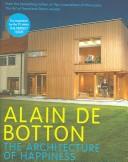
Start by learning to look. How to Read Buildings by Carol Davidson Cragoe is a pocket field guide to styles, elements, and periods — the fastest way to stop seeing "old building" and start seeing specifics. Pair it with The Architecture of Happiness by Alain De Botton, which asks the deeper question of why certain spaces move us, and hooks you emotionally.
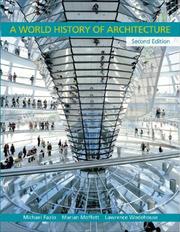
Next, get the sweep of history. A World History of Architecture by Michael Fazio and The story of architecture by Patrick Nuttgens both walk you from ancient to modern, giving you the timeline that every later book assumes.
Then understand how buildings actually stand. Why Buildings Stand Up by Mario George Salvadori explains structure — gravity, tension, compression — in plain language, so you finally grasp what the architecture is fighting against. Balance the engineering with feeling: The Eyes of the Skin by Juhani Pallasmaa argues that great architecture is experienced by the whole body, not just the eye.
Now the theory that shaped the modern skyline. Space, time and architecture by Sigfried Giedion is the classic account of how modernism was born; Towards a New Architecture by Le Corbusier is its fiery manifesto; and Complexity and contradiction in architecture by Robert Venturi is the influential pushback that reopened the door to ornament and ambiguity. Reading them in sequence lets you watch an argument evolve.
Finish with the book many designers call life-changing: The Timeless Way of Building by Christopher Alexander, a meditation on what makes places feel humane and alive.
How to actually study this
Carry the field guide and use it on real buildings — name three features every time you pass something interesting. Keep a sketchbook; drawing a facade teaches you more than photographing ten. After each theory book, write the author's central claim and then argue with it in a paragraph. And visit: a building in person contradicts and enriches everything a page can say.
Read the guides and histories cover to cover; sample the theory as your eye develops. See the full reading path for the staged study plan, and the subject hub for links to art history and design. Browse related crafts at /subjects.
Ready to learn something deeply?
Build a reading path — free