Most people who visit a museum feel a quiet failure: they walk past great paintings, read the little placard, nod, and move on, sensing there is something to see that they are missing. That instinct is right. Seeing a painting is a skill, and like any skill it can be taught. The reason self-teaching art history stalls is that people collect facts — this is Baroque, that is a Caravaggio — without ever learning the underlying act of looking.
So order the learning around that. First a spine of what happened and when, then the deeper skill of how to see, then the harder modern stuff. Get the sequence right and the museum changes.
Start with the one survey to rule them all
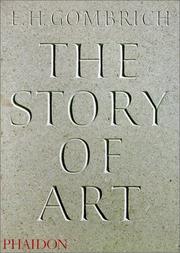
Begin with The story of art by E. H. Gombrich, the most beloved single-volume survey ever written. It is warm, clear, and tells art history as a connected story of problems artists solved rather than a list of masterpieces. It is the foundation, full stop. Everything after it slots into the framework it gives you.
Keep one reference alongside it. The Art Museum by Phaidon Editors is not a book you read but a book you look at — an enormous imaginary museum of good reproductions, arranged in rooms and galleries. Since the whole discipline depends on time spent in front of images, and most of us cannot get to the Prado on a Tuesday, having several thousand plates in the house is more useful than another volume of prose.
Learn to actually look
Now shift from what to how. Ways of Seeing by John Berger is a short, provocative book that rewires how you think about images, power, and what you are really looking at. Pair it with How to read a painting by Patrick de Rynck, which decodes the symbols, stories, and hidden meanings in famous works so you can read them like a language. And What great paintings say by Rose-Marie Hagen zooms into individual masterpieces to unpack the history and detail packed inside each frame. Together these three teach the seeing that Gombrich's survey assumes.
Hear from the artists and the critics
To understand art from the inside, read Lives of the Artists by Giorgio Vasari, the Renaissance biographies that shaped how we think about artistic genius in the first place. Then jump forward: The Shock of the new by Robert Hughes is a brilliant, opinionated guide to modern art that makes the twentieth century's upheavals feel exciting rather than baffling. Hughes is the perfect bridge from old masters to the modern work that intimidates people most.
Read Hughes against The painted word by Tom Wolfe, a short and very funny attack arguing that modern art became a servant of critical theory — that by the 1970s you could not see the picture without first reading the text. Wolfe is a polemicist rather than an art historian and he is unfair in places, which is exactly why he is worth reading immediately after a critic as sympathetic as Hughes. Two strong voices disagreeing is how you form a view of your own.
Two optional books, and what they are for
Art as Experience by John Dewey is philosophy rather than history: an argument that aesthetic experience is continuous with ordinary life, not a separate refined activity. It is dense and it is the theory underneath a lot of modern museum education. Take it if the why interests you more than the when.
Paintings in Proust by Eric Karpeles is a sideways pleasure rather than a step on the path. Karpeles reproduces every painting Proust mentions beside the passage that mentions it. It is a wonderful object and it teaches almost nothing about chronology or method, so treat it as a reward, not a stage.
How to actually study it
Art history rewards looking more than reading. For every chapter you read, spend time with the actual images — full-screen, or in person at a museum when you can — and try to describe what you see before you read the explanation. Keep a short visual journal: a few paintings that struck you and one sentence on why. And go slow in galleries; five paintings looked at closely beats fifty glanced at.
One honest caveat: art history is interpretive, and critics genuinely disagree about meaning and value. This path deliberately mixes the classic survey, radical critique, a modernist champion and his loudest opponent so you hear competing voices — treat their verdicts as arguments to weigh, not truths to absorb.
Ready to build the eye? Follow the full reading path, explore the subject hub, or browse related art and history paths.