Start with Life and Death are Wearing Me Out. A landlord executed in 1950 is sent back to his own village as a donkey, then an ox, then a pig, a dog and a monkey, watching half a century of land reform, collectivisation and reform-era China from progressively lower vantage points. It is long, around five hundred pages, but the conceit carries you and it is very funny, which is not the first word most people associate with Mo Yan.
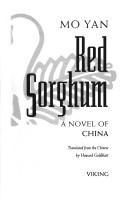
The obvious alternative is Red Sorghum, and it is the famous book — the source of Zhang Yimou's film and the novel that made his name. It is also fragmented across three generations with a shattered chronology, and it contains a flaying scene that has ended a good number of first readings. Take it second, once you know what the voice is doing. If you want a low-commitment test first, Change is a slim autobiographical novella and can be read in an evening.
Content, stated plainly
Mo Yan writes sustained physical violence, rural famine, official cruelty and bodily grotesquerie, and he does not modulate it for comfort. Executions are described at length. Hunger is described at length. This is not incidental to the work; the exaggeration is the technique, a folk-tale amplification applied to twentieth-century Chinese history. Readers who want that at a distance will not enjoy any of these books, and that is a straightforward matter of taste rather than squeamishness.
The Nobel is also worth stating as fact rather than argument. He won it in 2012, and the award was politically contested: Mo Yan is a Communist Party member and held office in the state writers' association, and several writers publicly objected on those grounds while others defended the work on literary terms. That dispute exists and is easy to read about; it does not need to be settled here to read the novels.
The village cycle
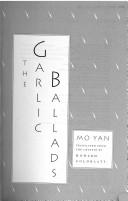
After the first two, read The Garlic Ballads, which is the most conventionally structured novel he wrote — farmers ruined by a collapsed garlic market and then by the officials who caused it. Then Big Breasts and Wide Hips, a century of Chinese history through one mother and her nine children, and his biggest canvas. A catalogue note: our record for this one resolved to a Chinese-language edition, so the book page looks odd; the English text to look for is Howard Goldblatt's translation, which is the standard one for nearly all of Mo Yan in English.
Sandalwood death = comes next and is the hardest to recommend without warning. It is structured around an elaborately prolonged execution during the Boxer Rebellion, written in a form borrowed from local opera, and it is as unpleasant as that description implies while also being the most formally ambitious thing in the list.
Satire and the later work
The Republic of Wine is the strangest: a detective investigates rumours that officials in a provincial city are eating children, and the novel keeps collapsing into letters between a writer named Mo Yan and an aspiring one. Read it as satire on corruption and appetite. Frog takes the one-child policy through the life of a village midwife turned enforcer, and is the most restrained of the novels. Pow! is a boy narrating a meat-obsessed childhood to a monk, at speed.
The short fiction is a good exit or entrance depending on temperament: Shifu, you'll do anything for a laugh and Explosions and other stories both work as samplers, and the first has the more approachable pieces.
Where to stop
Life and Death are Wearing Me Out, Red Sorghum and The Garlic Ballads give you the full method. Add Frog if you want the contemporary political material and The Republic of Wine if you want the experimental one. The complete ordered sequence sits on our reading path.
Follow the full ordered path here: Mo Yan Reading Order: Where to Start.
Ready to learn something deeply?
Build a reading path — free