Mo Yan Reading Order: Where to Start
Mo Yan turned his home township of Northeast Gaomi into a hundred-year stage for Chinese violence, hunger and farce — sorghum fields, famine, land reform, the one-child policy. Start with the novel that made him famous and the short memoir that explains where it came from, work through the big satirical novels of the 1990s, then the late masterworks that won him the Nobel, and finish with the short fiction.
Start Here
BeginnerGet the Gaomi township and Mo Yan's mix of brutality and lyricism in the two most accessible books.
▸ Study plan for this stage
Pace: 3 weeks for about 490 pages. Read Change (123pp) first in a single evening even though it is listed second — it is a short autobiographical sketch and it will orient you. Then Red Sorghum (368pp) over 2–3 weeks at 20–25 pages a day; its chronology jumps constantly and a fast read turns it into mush.
- An honest warning before you start, because it applies to the whole path: Mo Yan writes atrocity at length and in close physical detail. Red Sorghum contains an extended scene of a man being skinned alive, and later books include cannibalism, infanticide and forced late-term abortion. None of it is
- Northeast Gaomi Township is a real place — his home county in Shandong — turned into a private literary territory that every book on this path returns to. Learn its geography once and it pays off nine times
- Red Sorghum is narrated by a grandson piecing together his grandparents' bandit love affair and the Japanese invasion that ends it, so the whole book is family legend being retold rather than events being reported
- Its timeline is deliberately shattered: the same ambush is approached repeatedly from different years. Do not fight this, and do not try to straighten it out on a first read
- Mo Yan is a pen name meaning roughly do not speak. He left school around twelve during the Cultural Revolution, worked in the fields and a factory, and joined the army at twenty-one — the peasant material in these books is his own
- Change is the fastest possible route into that biography: an autobiographical account of his own path from village boy to army writer, built around a truck and a few classmates
- Almost all of the Mo Yan you can read in English is Howard Goldblatt's work. That is unusual — most major authors accumulate several translators — and it means the English voice is consistent across the entire path. Goldblatt has been open that his practice includes cutting and reshaping in agreemen
- Who is actually narrating Red Sorghum, and how does the grandson know things he cannot possibly know?
- What does the sorghum itself do in the novel — as crop, as cover, as liquor, and as image?
- The grandmother is treated as heroic. What exactly is she being admired for, and would the book admire a man for the same things?
- Where does the anti-Japanese war story stop being patriotic, and what does Mo Yan put in its place?
- After Change, which parts of Red Sorghum read as inherited family material and which as invention?
- Keep a family tree and a rough timeline for Red Sorghum from chapter one. The novel will not supply either and you will need both
- Mark each time the narrative jumps decades. Then look at where the jumps cluster — they are not evenly distributed
- After the skinning scene, stop and note your own reaction. You will want that baseline for stage three
- Read one page of Red Sorghum aloud. The prose is loud, piled-up and physical, and hearing it makes the folk-storyteller register obvious
- Watch or read about Zhang Yimou's 1987 film adaptation after finishing the novel — it made the book famous internationally and covers only a fraction of it
Next up: With the township and its founding legend in place, the next three novels move the same peasants out of myth and into direct collision with the modern Chinese state.
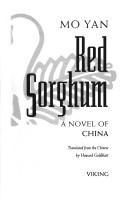
A grandson tells the story of his grandparents' bandit love affair and the Japanese invasion that ends it. The obvious entry point: the book that made his name, filmed by Zhang Yimou, and the founding document of the Gaomi world.

A short autobiographical account of his own life from village boy to army writer, told through the trucks and classmates he remembers. Read second and briefly — it hands you the biography that every novel here is built on.
The Satirical Novels
IntermediateSee Mo Yan turn from historical epic to savage comedy about the state, and meet his taste for the grotesque.
▸ Study plan for this stage
Pace: 9–10 weeks for roughly 1,190 pages. The Garlic Ballads (290pp) over 2–3 weeks, The Republic of Wine (368pp) over 3 weeks — it is the trickiest structure here — and Big Breasts and Wide Hips over 4 weeks at about 20 pages a day. Take a break between the second and third; The Republic of Wine is exhau
- The Garlic Ballads came directly out of a real event: farmers in a Shandong county were ordered to plant garlic, then ruined when the state refused to buy the glut, and they rioted. Mo Yan wrote the novel quickly in response, and it is the angriest thing he has published
- Its chapters open with ballads from a blind singer, which lets the novel state its grievance in a traditional folk voice while the prose stays in the bodies of the farmers
- The Republic of Wine is the formal experiment: an inspector investigates rumours that officials in a liquor-drowned province are eating children, and his story is interleaved with letters between a character called Mo Yan and an aspiring writer whose own stories are also printed
- It is where the satire stops being realistic. The cannibalism is the point of the metaphor and the novel will not tell you where the allegory ends — read it as a book about appetite, corruption and literature all at once
- Big Breasts and Wide Hips is the consolidation: a mother, eight daughters and one son carried through the entire twentieth century in Gaomi, with the son's fixation on the breast as the organising joke and indictment
- It was criticised in China on publication and is his most exposed book on the subject of what women were made to carry through that century, which is the serious argument under the provocative title
- The catalogue record for that title here is a Chinese-language edition; the English text to look for is Howard Goldblatt's translation
- Read in this order the three trace one movement: an angry realist novel, then the same anger routed through allegory, then a family epic that absorbs both modes
- In The Garlic Ballads, who is actually responsible for the ruin — is there a villain, or only an apparatus?
- What do the blind singer's ballads let Mo Yan say, and what happens to him for saying it?
- In The Republic of Wine, is anyone eating children? Track the evidence and note where the novel deliberately blurs the line between rumour, allegory and fact
- What is the nested Mo Yan character for? What does inserting himself into the correspondence allow that a straight narrator would not?
- In Big Breasts and Wide Hips, Shangguan Lu's daughters marry into every faction of the century. Is that a realist device or a schematic one, and does it work?
- Jintong is contemptible for a thousand pages. Why does Mo Yan make the only son of a great mother so useless?
- Read the ballads in The Garlic Ballads consecutively, separately from the prose. They form a compressed second version of the novel
- For The Republic of Wine, keep the three strands labelled — investigation, letters, embedded stories — and note the exact point at which they begin to contaminate each other
- Track the food and drink across all three books. Famine, liquor, garlic, milk and meat are Mo Yan's economic vocabulary, not just his imagery
- Keep a chart of the Shangguan daughters and which political faction each one ends up attached to. Without it the middle of the book is unreadable
- Write one paragraph on whether the cannibalism in The Republic of Wine is a joke, a metaphor, or an accusation. Any of the three is defensible and the reasoning is what matters
Next up: Having seen him do realism and allegory separately, you are ready for the late novels where he runs both at once and the form itself becomes an argument about history.
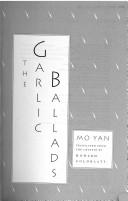
Farmers ordered to grow garlic are ruined when the government refuses to buy it, and they riot. His most directly angry novel and the one to read straight after Red Sorghum, since it moves the same peasants into the present.

An investigator looks into rumours that officials in a liquor-soaked province are eating children. The formal experiment — nested letters and stories — and the point where the satire stops being realistic.
![[Big Breasts and Wide Hips] (Chinese Edition)](https://covers.openlibrary.org/b/isbn/9789576740978-M.jpg)
A mother, eight daughters and a son through the entire twentieth century in Gaomi. The longest of the middle novels and the one that consolidates everything; it earns its length only if the earlier books have made the township familiar.
The Nobel Masterworks
IntermediateRead the late novels the Nobel committee singled out, where the form gets stranger and the history harder.
▸ Study plan for this stage
Pace: 13–15 weeks for around 1,700 pages, which is the longest stage on the path and should not be rushed. Life and Death Are Wearing Me Out (about 540pp) over 4–5 weeks, Sandalwood Death (409pp) over 4 weeks, Frog (about 390pp) over 3, Pow! (386pp) over 3. Read at 20–25 pages a day and leave gaps between
- Life and Death Are Wearing Me Out is the one to read first and the one most often called his best: a landlord executed in 1950 is reincarnated as a donkey, an ox, a pig, a dog and a monkey, and watches fifty years of Chinese land policy from below
- The reincarnation frame is a serious formal device, not a whimsy. Each animal has a different capacity for understanding, so the level of political comprehension available to the narrator changes with each rebirth
- The novel is written in the chapter-headed style of traditional Chinese fiction, and Mo Yan has said he drafted it by hand in a matter of weeks. That speed is audible and is part of the effect
- Sandalwood Death is the most demanding on the ear: an executioner, an opera singer turned rebel and a German railway during the Boxer Rebellion, written to the rhythms of local Maoqiang opera with sung passages built into the text
- It is also the most graphic. The title refers to a specific method of execution described at length, and this is the book most likely to defeat a reader who found Red Sorghum difficult
- Frog is the closest he comes to direct moral accounting: a village midwife who enforced the one-child policy for decades, narrated in letters to a Japanese writer and closing with a play. It won the Mao Dun Prize and is his most contemporary subject
- The Nobel citation in 2012 described hallucinatory realism merging folk tales, history and the contemporary, and these four books are what it was describing
- Mo Yan's Nobel was contested. He has held office in the state-backed Chinese Writers' Association, took part in a commemorative hand-copying of Mao's Yan'an talks on literature, and at his Nobel press conference defended some censorship as comparable to airport security. Other writers, including Ai
- In Life and Death Are Wearing Me Out, what can the donkey see that the ox cannot, and what does the dog understand that neither does?
- Lan Lian refuses to join the collective and farms alone for decades. Why does Mo Yan make the novel's moral centre a man who simply will not sign?
- In Sandalwood Death, whose performance is the execution — the executioner's, the victim's, or the state's?
- Why does the opera form suit this subject, and what would be lost if it were written in plain narrative?
- In Frog, does Gugu repent? Find the passages where the novel wants you to think she has and the ones that undercut it
- Frog ends with a play rather than prose. What does that shift let Mo Yan avoid saying in his own voice?
- Before Sandalwood Death, spend fifteen minutes on the Boxer Rebellion and the German concession in Shandong. The novel assumes the history entirely
- In Life and Death, keep a note of what year each animal life covers and which campaign it maps onto — land reform, the Great Leap, the Cultural Revolution, the reform era
- Read one sung passage of Sandalwood Death aloud. The book is unreadable as flat prose and immediately makes sense as performance
- While reading Frog, keep a tally of the births prevented and the births enabled. The novel counts, and so should you
- After all four, write one paragraph on whether Mo Yan is a critic of the Chinese state, a chronicler of it, or something the categories do not cover. Use scenes, not opinions
Next up: The novels have taken the Gaomi material to its widest; the stories show the same material at its sharpest and shortest.

A landowner executed in 1950 is reincarnated as a donkey, an ox, a pig, a dog and a monkey, watching fifty years of land policy from the ground. Widely considered his best book; the animal narration is easier to enjoy once the history is familiar.
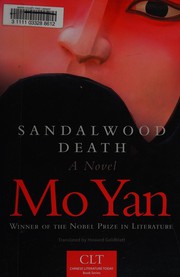
An executioner, a rebel opera singer and a German railway during the Boxer Rebellion, written to the rhythm of Maoqiang opera. The most demanding on the ear — read it after the animal-fable freedom of the previous book.

A village midwife who enforced the one-child policy for decades reckons with what she did. The most controversial and most contemporary novel, and the closest he comes to direct moral accounting.
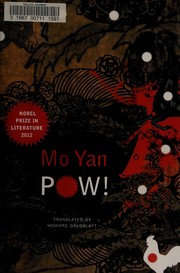
A boy obsessed with meat narrates his village's turn to industrial slaughter while begging a monk to ordain him. The wildest late novel; a good place to finish the fiction because it is pure voice.
The Short Fiction
IntermediateClose with the stories, where the same material is compressed into its sharpest form.
▸ Study plan for this stage
Pace: 4 weeks for about 430 pages, and this is the easiest stage on the path. Shifu, You'll Do Anything for a Laugh (220pp) over 2 weeks, two or three stories a sitting. Explosions and Other Stories (214pp) over 2 weeks — rougher work, so smaller doses.
- The stories are where Mo Yan's comic timing is most visible, because at twenty pages he cannot fill the space with historical sweep and has to land the joke
- The title story of Shifu is the one to lead with: a laid-off factory worker turns an abandoned bus into a rented love hotel and then cannot handle what he has set in motion. It was adapted into a Zhang Yimou film
- Layoffs, hustles and small dignities in the reform-era economy dominate this collection, which makes it the most contemporary Mo Yan on the path apart from Frog
- Explosions and Other Stories collects early work from the period around Red Sorghum, and its value is documentary: you can watch the Gaomi material being invented in real time, before it settles
- The early stories are rougher and more experimental than the novels. Read them as drafts of a sensibility rather than as finished pieces
- Reading the short fiction last inverts the usual advice, and the reason is specific to him: his stories reward you far more once you already know the township, the family names and the historical periods they compress
- What makes the Shifu story funny rather than bleak, given that the premise is unemployment?
- Which stories in Shifu could only have been written after the reform era began, and what is new in them?
- In the early stories, what is already fully formed, and what is he still fumbling?
- Compare a compressed atrocity in a short story with an extended one in a novel. Which is more effective, and does length help him or protect him?
- Having finished the path, is Mo Yan primarily a comic writer, a historical one, or a writer of the body? Defend one
- Read the Shifu title story and then the opening of Frog back to back. The tonal range between them is the whole case for him
- Pick two early stories from Explosions and match each to the later novel that absorbed its material
- Rank the eleven books on this path by how much violence they contain, then by how good you think they are. Note whether the two rankings correlate — for most readers they do not
- Write one paragraph you could hand to someone deciding whether to start Mo Yan, including the honest warning. If you cannot write the warning without moralising, rewrite it
Next up: That is Mo Yan whole — the legend, the satire, the late masterworks and the stories — and the obvious next step is Yu Hua, who writes the same century of Chinese violence in the opposite register: plain, short and quiet.
Eight stories, including the laid-off factory worker who rents out an abandoned bus as a love hotel. The best single collection and the clearest demonstration of his comic timing.
Early stories from the period around Red Sorghum. A completist close: rougher work, but you can see the Gaomi material being invented in real time.
Discussion
Keep reading
Paths that share books, cover the same subject, or open a related topic.