Meal prep has a Sunday-night failure mode: four hours of cooking, seven identical containers, and by Wednesday you're ordering takeout because the chicken got depressing. The fix is upstream — technique that makes food keep well, and a system that varies without extra work.
That is why the order here starts with cooking rather than with prep. Batch-cooking dishes you cannot season properly just produces seven servings of something mediocre. Learn to make food taste good first; the logistics are the easy half.
Stage 1: technique, because prep without cooking skill is just sad batching
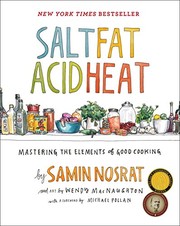
Our meal prep path starts with Samin Nosrat's Salt, Fat, Acid, Heat, which teaches the four variables that decide whether anything you cook tastes like anything. It is the single highest-leverage cookbook for a competent-but-uninspired cook, and it is why a reheated bowl on Thursday can be genuinely good rather than merely edible.
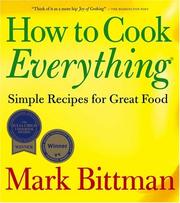
Mark Bittman's How to Cook Everything is the reference that answers every "can I substitute…?" and "how long does this actually take?" — a thousand recipes with variations, organised so you can cook from what is in the fridge instead of shopping for a recipe. Keep it on the counter.
Stage 2: the systems
Cook Once, Eat All Week by Cassy Joy Garcia is the smartest architecture in the genre: one shopping trip and one cooking session become three distinct dinners, with the components deliberately designed to be recombined rather than repeated. If you read only one prep-specific book, read this one.
The Easy 5-Ingredient Healthy Cookbook by Toby Amidor is the low-effort week's insurance policy — short ingredient lists, minimal technique, for the weeks when the ambitious plan is obviously not happening. The how not to die cookbook by Michael Greger is the nutrition-forward, heavily plant-based version; it comes with a strong point of view about diet and disease that not every nutrition researcher shares, so take the recipes as recipes and the claims as one well-argued position among several.
Stage 3: variety, so Thursday is not Monday again
Three books exist purely to keep prepped food interesting. Thug Kitchen is aggressively profane, entirely plant-based, and genuinely good at making vegetables the point rather than the side — worth knowing that the style is the whole style, and skip it if that is not for you. The Food Lab by J. Kenji Lopez-Alt is the science book: why searing does what it does, how eggs behave, what actually makes reheated food go wrong. It is enormous and best used as a reference for the specific technique you are frustrated by.
Six seasons by Joshua McFadden is the vegetable book that fixes the boredom problem at its root, organised by what is actually good right now instead of by dish. Cooking to the season is the least effortful way to make a repeating system stop tasting repetitive.
One honest note about the listing: a test-preparation title, HSPT Prep Book 2026-2027, also appears among this path's books. It is a high school placement exam guide that matched on the word "prep" and has nothing to do with cooking. Ignore it.
The habit: prep components, not meals
The single biggest upgrade: stop assembling finished meals and start banking components — a roasted vegetable, a grain, a sauce, a protein. Components remix all week (bowl, wrap, salad, pasta) so Thursday tastes nothing like Monday. Twenty minutes of assembly beats reheating a monolith.
Roughly 55 hours of reading that repays itself weekly for life. Follow the path, or build the underlying skills at the cooking fundamentals hub.