No subject on the shelf is as contested — or as commercially corrupted — as nutrition. Every diet has a bestselling book, they contradict each other flatly, and most cherry-pick the studies that flatter their thesis. So the goal of a nutrition reading path can't be to hand you the answer. It's to build the skeptic's eye that lets you read any nutrition book, including the persuasive wrong ones, and see what's actually holding it up.
One honesty rail before the list: these are books for understanding the science and the arguments, not a substitute for a dietitian or a doctor. If you have a medical condition, take medication, or are making a major dietary change, get individual advice.
Foundations: food and the big picture
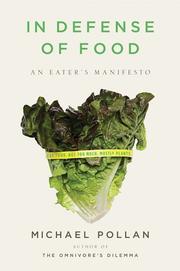
Start broad and sane, before going anywhere near the diet wars. Michael Pollan's In Defense of Food — eat food, not too much, mostly plants — is the calmest starting point in the genre, more about food culture than biochemistry. His earlier The Omnivore's Dilemma is the better book and the more demanding one: it traces four meals back to their origins through industrial corn, industrial organic, a Virginia grass farm, and a foraged meal, and it explains why the food supply looks the way it does before it tells you anything about what to eat. Read the short one first if you want the rules; read the long one if you want to understand the system that produced them.
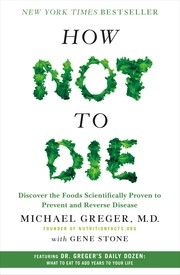
How Not to Die by Michael Greger surveys the disease research energetically — read it for the breadth, keep your skeptic's hat on for the certainty.
Core science: nutrients and the body
Nutrition: Concepts and Controversies is a real textbook — the sober ground truth about how nutrients actually work, which is exactly what the popular books skate over. This is the anchor of the path; everything contested gets measured against it. Read it alongside the argument books rather than before them, a chapter at a time, so you always have a baseline to check a claim against.
Intermediate: the evidence and its limits
Here the arguments come out, and they are worth reading as a set because they disagree.
Good calories, bad calories by Gary Taubes makes the case against the low-fat orthodoxy, in dense and heavily-footnoted form. The China Study by T. Colin Campbell argues almost the opposite — a whole-food, plant-based diet on the strength of a large observational study in rural China plus animal work on casein. It has been influential and it has been sharply criticised, mainly on the grounds that it draws causal conclusions from correlational data. Reading Taubes and Campbell back to back is one of the most instructive exercises available in this subject: two confident, well-argued books, pointing in opposite directions, each leaning hard on the kind of evidence the other dismisses.
The Diet Myth by Tim Spector brings in the microbiome and explains why individual responses vary so much — the best answer to why both of the previous books can have adherents who genuinely improved. And Eat, Drink, and Be Healthy by Walter Willett is the Harvard nutrition epidemiologist's version of the mainstream position, and the closest thing on this path to a considered consensus view from someone who spent a career generating the data.
Advanced: the frontier
Close with Lifespan by David Sinclair on the biology of aging — genuinely cutting-edge and genuinely oversold in places, which makes it the perfect final test of the skeptic's eye the path has been building.
Grade the evidence, not the prose
The meta-skill this path teaches: for every claim, ask what kind of evidence backs it — a randomized trial, an observational correlation, or a mouse study extrapolated to humans. Once you can spot the difference, the whole genre reorganizes itself into well-supported, plausible, and someone's selling something. Pair it with a bit of biology and the mechanisms stop being mysterious.
About 90 hours, and you'll never be at the mercy of a diet headline again. Follow the path or browse the nutrition hub.