Meal-prep a healthy week
This curriculum takes a complete beginner from basic kitchen confidence all the way to efficient, nutritious weekly batch-cooking. Each stage builds on the last: first you learn to cook well, then you learn to cook smart, then you optimize for nutrition and variety — so by the end you can plan, prep, and store a full week of genuinely delicious food with ease.
Kitchen Foundations
BeginnerBuild core cooking skills, knife confidence, and an understanding of how heat, flavor, and basic techniques work — the essential vocabulary for everything that follows.
▸ Study plan for this stage
Pace: 6–8 weeks total: Weeks 1–3 on "Salt, Fat, Acid, Heat" (~30–40 pages/day, reading each of the four elements chapters deeply before moving on); Weeks 4–8 on "How to Cook Everything" (~25–35 pages/day, reading thematically by technique chapter rather than cover-to-cover — prioritize Basics, Vegetables,
- The four elements of good cooking — Salt, Fat, Acid, Heat — and how each one independently and collectively controls flavor, texture, and balance (Nosrat, Parts I–IV)
- Salt as a process, not just a seasoning: when to salt, how salting in advance (dry-brining) changes texture and moisture retention (Nosrat, 'Salt' chapter)
- Fat as flavor carrier and texture builder: the difference between cooking fats (butter, olive oil, lard) and finishing fats, and how emulsification works (Nosrat, 'Fat' chapter)
- Acid as a balancing tool: how vinegar, citrus, and fermented ingredients brighten and sharpen dishes, and when to add acid (Nosrat, 'Acid' chapter)
- Heat and its sources: the difference between dry heat (roasting, searing, grilling) and moist heat (braising, steaming, poaching), and how heat drives the Maillard reaction vs. caramelization (Nosrat, 'Heat' chapter; Bittman, 'Cooking Basics')
- Knife skills and kitchen setup: how to hold and move a chef's knife, the difference between chop, dice, mince, and julienne, and how uniform cuts affect even cooking (Bittman, 'The Basics' and technique introductions throughout)
- Reading a recipe as a framework, not a script: understanding ratios, substitutions, and the 'why' behind each step so techniques transfer across dishes (Bittman, recipe headnotes and variations throughout)
- Building a foundational flavor base: aromatics (onion, garlic, celery, carrot), how to sweat vs. sauté them, and how they underpin soups, grains, and braises (Bittman, Soups and Grains chapters)
- According to Nosrat, what are the four elements of good cooking, and why does she argue that mastering these four things matters more than memorizing recipes?
- What is the functional difference between salting food early (e.g., dry-brining a chicken overnight) versus salting just before serving, and what does each approach achieve?
- How does fat carry and amplify flavor, and what is the practical difference between using fat as a cooking medium versus using it as a finishing element?
- When should you add acid to a dish, and how can you use a small amount of lemon juice or vinegar to 'rescue' a dish that tastes flat or too rich?
- Using Bittman's framework, what distinguishes dry-heat cooking methods from moist-heat methods, and which proteins or vegetables are best suited to each?
- After working through Bittman's knife and technique sections, can you describe the correct grip and motion for a rocking chop, and explain why uniform knife cuts matter for meal prep specifically?
- **The Four-Elements Tasting Lab (Nosrat-inspired):** Cook a plain pot of rice or a simple chicken breast four times, adjusting one element each time — add more salt, swap the fat, finish with acid, or change the heat source. Taste side by side and write one sentence describing what each change did to the dish.
- **Knife Skills Drill (Bittman 'Basics'):** Buy one onion, one carrot, and one celery stalk. Practice the three cuts Bittman describes — rough chop, medium dice, and fine mince — on each vegetable. Time yourself, then repeat until your dice is visually uniform. Use the scraps to make a simple vegetable broth.
- **Salt-Timing Experiment (Nosrat, 'Salt' chapter):** Season two chicken thighs identically, but salt one 30 minutes before cooking and one right before it hits the pan. Roast both at the same temperature and compare juiciness, skin crispness, and seasoning depth.
- **Fat Swap Cook-Off (Nosrat, 'Fat' chapter):** Make Bittman's basic sautéed vegetables twice — once with butter and once with olive oil. Note differences in flavor, smoke point behavior, and how each fat coats the vegetables. Try finishing one batch with a drizzle of a different fat (e.g., toasted sesame oil) and observe the effect.
- **Acid Rescue Practice (Nosrat, 'Acid' chapter):** Make a simple soup or stew from Bittman's Soups chapter. Before serving, taste it and deliberately add acid in small increments (a squeeze of lemon, a splash of wine vinegar). Document at what point the dish 'woke up' and what happened if you added too much.
- **Weekly Mise en Place Session (Bittman framework):** Once a week, spend 45 minutes prepping ingredients for the coming days using Bittman's technique introductions as a guide: wash and chop vegetables, cook a pot of grains, and hard-boil eggs. Reflect on how uniform prep speeds up cooking and reduces weeknight friction — the direct payoff of knife and heat skills.
Next up: Mastering Nosrat's four elements and Bittman's foundational techniques gives you the conceptual language and physical confidence to move from isolated skills into structured weekly systems — making the next stage, focused on actual meal prep planning and batch cooking, feel like a natural application of everything already internalized rather than a new subject entirely.
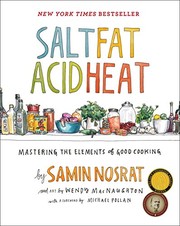
Teaches the four fundamental elements of good cooking intuitively, giving beginners a mental framework for why food tastes good — critical before learning to cook in bulk.
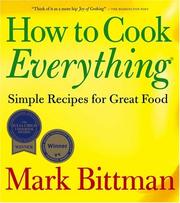
A comprehensive, no-fuss reference that covers essential techniques and a wide range of ingredients; reading this alongside Nosrat turns concepts into concrete, repeatable skills.
Meal Prep Fundamentals
BeginnerUnderstand the core logic of batch cooking: weekly planning, efficient shopping, smart storage, and building meals from prepped components.
▸ Study plan for this stage
Pace: 2–3 weeks, ~20–25 pages/day; read introductory and foundational chapters first, then work through recipe sections thematically (proteins, grains, vegetables) rather than cover-to-cover in one sitting
- The 5-ingredient constraint as a gateway to simplicity — fewer ingredients force smarter, more versatile choices that are ideal for batch cooking
- Weekly meal planning logic: identifying which meals to prep ahead vs. cook fresh, and mapping a full week from a single shopping trip
- Efficient grocery shopping: building a tight, non-redundant shopping list where ingredients cross multiple recipes (ingredient overlap strategy)
- Batch cooking core components separately — proteins, grains, and vegetables — rather than assembling complete dishes, to maximize mix-and-match flexibility
- Smart storage fundamentals: proper containers, refrigerator vs. freezer timelines, and labeling systems to prevent waste and ensure food safety
- Building balanced meals from prepped components: understanding macronutrient balance (protein + complex carb + vegetable) as a repeatable template
- Time-blocking a prep session: how to sequence cooking tasks (what goes in the oven first, what can be chopped while something simmers) to finish efficiently
- Reducing decision fatigue: how a small, well-chosen ingredient pantry and a repeatable weekly rhythm lower the mental cost of eating healthily
- After one week of using Amidor's 5-ingredient approach, which 5–8 'anchor ingredients' appeared across the most recipes, and why does that overlap matter for efficient shopping?
- What is the difference between prepping full meals in advance versus prepping individual components, and which approach does the book's structure implicitly encourage?
- How does Amidor's cookbook suggest you handle protein variety across the week without buying an overwhelming number of different items?
- What storage guidelines (container type, duration, fridge vs. freezer) apply to the most common prepped components — cooked grains, roasted vegetables, and cooked proteins?
- How would you sequence a 2-hour Sunday prep session using three recipes from the book so that oven time, stovetop time, and passive time (cooling, marinating) overlap rather than stack?
- What makes a 5-ingredient recipe 'scalable' for batch cooking, and which recipes in the book are best suited to doubling or tripling?
- **Ingredient Overlap Audit:** Choose any 7 recipes from the book that appeal to you. List every ingredient. Highlight duplicates. Rewrite a single unified shopping list — notice how few items you actually need for a full week of varied meals.
- **Component Batch Cook #1:** Pick one protein recipe, one grain recipe, and one vegetable recipe from the book. Cook all three in a single 90-minute session. Store them separately, then assemble three different 'bowls' over the next three days by mixing and matching components.
- **Prep Session Sequencing:** Before cooking, write out a step-by-step time-blocked plan for your prep session (e.g., 'min 0–10: preheat oven and chop vegetables; min 10–30: roast vegetables while cooking grain on stovetop…'). Compare your plan to what actually happened and note where you lost time.
- **Storage Labeling Practice:** After your batch cook, label every container with the item name, date prepared, and use-by date based on standard food safety guidelines. At the end of the week, review what got eaten, what was wasted, and why.
- **Weekly Meal Map:** Using the book's recipes, fill in a simple 7-day grid (breakfast, lunch, dinner) that can be entirely sourced from one shopping trip and one prep session. Identify which meals are 'assembled from components' vs. 'cooked fresh' and aim for at least 60% of meals to come from prepped components.
- **Recipe Scaling Exercise:** Select one recipe from the book and rewrite it scaled to 4 servings. Calculate the adjusted ingredient quantities, estimate the cost per serving, and note any technique changes needed (e.g., larger pan, longer roasting time) when cooking in bulk.
Next up: Mastering the 5-ingredient simplicity framework and component-based batch cooking in this stage gives the reader a reliable weekly rhythm and a low-complexity foundation, which prepares them to confidently expand into more diverse cuisines, advanced flavor-building techniques, and larger-scale prep strategies in the next stage.

Simple, short-ingredient recipes build confidence in executing meals quickly and cleanly, reinforcing the prep-ahead mindset without overwhelming a new cook.
Cooking for the Week
IntermediateMaster the 'cook once, eat all week' method — learning to batch proteins, grains, and vegetables into modular components that combine into varied, satisfying meals.
▸ Study plan for this stage
Pace: 4–5 weeks, ~20–25 pages/day; read each weekly meal plan chapter in full before attempting any cooking, then revisit the ingredient prep and assembly sections during your actual cook session
- The 'cook once, eat all week' framework: batch-cooking modular proteins, grains, and vegetables as interchangeable building blocks rather than fixed recipes
- The three-component system: understanding how Garcia structures each weekly plan around one protein, one grain/starch, and one or two vegetables that rotate across multiple meals
- Strategic grocery shopping: buying ingredients that pull double or triple duty across the week's meals to minimize waste and cost
- Batch-cooking techniques for proteins — roasting, slow-cooking, and pan-searing large quantities that stay versatile and reheat well
- Grain and starch preparation at scale: cooking large batches of rice, quinoa, sweet potatoes, or cauliflower rice that serve as neutral, flexible bases
- Vegetable prep and storage: blanching, roasting, or raw-prepping vegetables in ways that preserve texture and flavor across several days
- Flavor pivoting: using sauces, spices, and toppings to make the same base components taste distinct from meal to meal
- Meal assembly logic: how to mix and match components into bowls, wraps, salads, soups, and sheet-pan meals without the week feeling repetitive
- Given a single protein (e.g., shredded chicken), a grain (e.g., brown rice), and one vegetable (e.g., roasted broccoli), how would you use Garcia's framework to build at least three distinct meals from those components?
- What criteria does Garcia use to select which proteins, grains, and vegetables anchor a given week's plan, and how does ingredient overlap reduce waste?
- How does Garcia recommend storing each category of batch-cooked component (protein, grain, vegetable) to maximize freshness and food safety across a 5–7 day window?
- What role do sauces, dressings, and spice profiles play in the modular system, and how can you swap them to prevent flavor fatigue?
- How would you adapt one of Garcia's weekly plans if a key ingredient is unavailable or if you need to accommodate a dietary restriction (e.g., dairy-free, nut-free)?
- What is the recommended sequence for a single cook session — which components should be started first, and why — to complete a full week's prep in the shortest time?
- Complete one full weekly plan from 'Cook Once, Eat All Week' exactly as written — shop, prep, and cook on a single day, then eat from those components for the entire week, journaling how each meal felt in terms of variety and satisfaction.
- Design your own modular week from scratch using Garcia's three-component structure: choose one protein, one grain, and two vegetables, then map out five distinct meals on paper before cooking anything, identifying which sauces or toppings will differentiate each meal.
- Time your cook session with a stopwatch, following Garcia's suggested prep sequence. Note where you lost time or felt disorganized, then restructure the order for your next session and compare total times.
- Conduct a 'fridge audit' midweek: photograph your stored components, assess freshness and quantity, and practice improvising a meal from whatever remains — no recipe allowed — to build intuitive assembly skills.
- Swap one anchor ingredient in a Garcia weekly plan (e.g., replace the suggested protein with a plant-based alternative) and document every downstream change needed: cooking method adjustments, storage changes, and flavor pairing shifts.
- Create a personal 'component library' — a one-page reference chart listing your 5 favorite proteins, 4 grains, and 6 vegetables from the book, each with its ideal batch-cook method, storage time, and two sauce pairings — to use as a quick-reference during future planning.
Next up: Mastering Garcia's modular component system builds the batch-cooking confidence and pantry intuition needed to tackle more advanced topics — such as nutritional balancing, cuisine-specific flavor systems, or scaling meal prep for families and special diets — that a next stage would introduce.

Directly teaches the component-based prep system: batch a protein, a grain, and a vegetable, then mix and match — the core skill of efficient weekly meal prep.
Focuses on practical, realistic weekly prep plans with clear timelines and storage guidance, bridging the gap between knowing how to cook and actually executing a full week.
Nutrition-Aware Cooking
IntermediateUnderstand the nutritional principles behind healthy eating so that prepped meals are not just convenient but genuinely nourishing and well-balanced.
▸ Study plan for this stage
Pace: 6–8 weeks total: Weeks 1–4 on "How Not to Die Cookbook" (~20–25 pages/day, including pausing to read ingredient notes and nutritional callouts); Weeks 5–8 on "Thug Kitchen" (~15–20 pages/day, cooking alongside the book and testing at least 2 recipes per week).
- Greger's Daily Dozen framework — the 12 food categories (beans, berries, other fruits, cruciferous vegetables, greens, other vegetables, flaxseeds, nuts, spices, whole grains, beverages, exercise) and why each earns its place nutritionally
- Whole-food, plant-based (WFPB) eating as a system, not just a diet — understanding how minimally processed ingredients retain micronutrients, fiber, and phytonutrients lost in refined foods
- Nutrient density vs. caloric density — learning to evaluate a meal by how much nourishment it delivers per calorie, a lens applied throughout Greger's recipes
- Anti-inflammatory and disease-preventive eating — recognizing specific ingredients (turmeric, leafy greens, legumes, berries) that Greger links to reduced chronic-disease risk and understanding the evidence behind those claims
- Flavor-first plant-based cooking from Thug Kitchen — how bold seasoning, acid balance, umami layering, and texture contrast make nutritious food genuinely crave-worthy rather than a compromise
- Protein completeness and variety without meat — how Thug Kitchen's heavy use of legumes, tofu, tempeh, nuts, and whole grains together covers the full amino-acid spectrum across a day's meals
- Batch-cooking logic embedded in recipes — identifying which Thug Kitchen recipes scale well, store well, and form modular components (grains, beans, sauces) that can be mixed and matched during a prep session
- Label literacy and ingredient substitution — using Greger's nutritional commentary to make smarter swaps (e.g., whole-grain pasta vs. refined, tahini vs. butter) when adapting any recipe
- What are Greger's Daily Dozen categories, and can you explain the primary nutritional rationale for including each one in a daily eating pattern?
- How does 'How Not to Die Cookbook' define nutrient density, and how does that principle visibly shape the way its recipes are constructed (ingredients chosen, portions suggested)?
- After reading Thug Kitchen, how would you explain to a skeptic that a fully plant-based meal can be both satisfying and nutritionally complete — specifically addressing protein, fat, and micronutrient concerns?
- Choose any three recipes from Thug Kitchen and map their main ingredients onto Greger's Daily Dozen. Which categories are well-represented? Which are missing, and how would you fill the gap?
- What cooking techniques appear repeatedly across both books to preserve nutritional value (e.g., minimal water cooking, raw additions, short roasting times), and why do those techniques matter?
- How do the two books complement each other — where does Greger provide the 'why' and Thug Kitchen provide the 'how', and can you give two specific examples of this dynamic?
- Daily Dozen audit: For one full week, use Greger's Daily Dozen checklist as a daily scorecard. Log every meal and tally which categories you hit. Identify your consistent gaps and plan the following week's prep to close them.
- Recipe nutritional mapping: Pick 5 recipes from Thug Kitchen and build a simple table listing each recipe's main ingredients, which Daily Dozen category each belongs to, and one nutrient each ingredient is notably high in. Use this as a template for all future recipe selection.
- Side-by-side cook: Choose one recipe from 'How Not to Die Cookbook' and one thematically similar recipe from Thug Kitchen (e.g., both bean-based, both grain bowls). Cook both in the same weekend session, compare flavor, saturation, and how well each would hold up as meal-prepped leftovers.
- Swap challenge: Take one of your current go-to non-plant-based meals and rebuild it using only techniques and ingredients endorsed across both books. Document every substitution and the nutritional reasoning behind it (e.g., swapping sour cream → cashew cream for healthy fats + no saturated fat).
- Modular prep session: Using Thug Kitchen as your recipe source and Greger's Daily Dozen as your checklist, plan and execute a single 2-hour Sunday prep session that produces at least 4 Daily Dozen categories in batch-cookable form (e.g., a pot of lentils, roasted cruciferous veg, a whole grain, a berry-based sauce or snack).
- Teach-back journaling: After finishing each book, write a one-page 'cheat sheet' as if explaining the book's core nutritional philosophy to a friend who has never heard of it. Combine both cheat sheets into a single reference card you'll keep in your kitchen during future prep sessions.
Next up: Mastering the nutritional 'why' behind ingredients and the plant-based cooking 'how' from these two books gives you the evaluative framework to move confidently into advanced meal prep strategy — where the focus shifts from what to cook to how to systematically plan, batch, store, and rotate nourishing meals across a full week.

Grounds meal planning in evidence-based nutritional science, helping the reader make intentional ingredient choices that maximize health — not just convenience.

Makes plant-forward, nutrient-dense cooking fun and approachable, adding variety and flavor to a prep rotation that could otherwise become repetitive.
Advanced Efficiency & Flavor
ExpertElevate prepped food from merely functional to genuinely exciting — mastering flavor-building, global techniques, and the kind of cooking that makes you look forward to every meal.
▸ Study plan for this stage
Pace: 10–12 weeks total: ~6 weeks on "The Food Lab" (~40–50 pages/day, focusing on chapters relevant to meal prep science) + ~4–6 weeks on "Six Seasons" (~25–30 pages/day, reading each seasonal chapter slowly and cooking alongside it)
- The science of the Maillard reaction and caramelization — understanding WHY browning transforms flavor, so you can engineer it deliberately into prepped proteins and vegetables (The Food Lab)
- Carry-over cooking, resting, and temperature precision — using López-Alt's data-driven approach to nail textures that hold up across multiple days of storage (The Food Lab)
- Emulsification and sauce architecture — building vinaigrettes, pan sauces, and creamy dressings that stay stable and coat food beautifully even after refrigeration (The Food Lab)
- Salting strategy and osmosis — understanding when and how much to salt at each stage so prepped components are seasoned through, not just on the surface (The Food Lab)
- Seasonal produce as the structural backbone of a meal-prep week — McFadden's philosophy of letting one peak-season ingredient anchor multiple dishes across a week (Six Seasons)
- Layered texture and contrast — McFadden's consistent use of raw, roasted, pickled, and charred treatments of the same vegetable to prevent palate fatigue across repeated meals (Six Seasons)
- Global flavor frameworks (acid, fat, heat, umami) — drawing on both books to build a personal 'flavor toolkit' that can transform simple prepped components into globally inspired meals
- Iterative recipe thinking — treating each prepped batch not as a fixed recipe but as a base to riff on, combining López-Alt's precision with McFadden's improvisational vegetable-forward creativity
- After reading The Food Lab, can you explain in plain language why resting a seared protein before storing it improves its texture when reheated days later?
- How does López-Alt's explanation of emulsification change the way you would build and store a week's worth of dressings and sauces?
- McFadden organizes Six Seasons around produce at its peak — how would you use his seasonal framework to plan a two-week meal-prep rotation that avoids repetition?
- Both books treat salt differently: how does The Food Lab's scientific salting timeline compare to McFadden's more intuitive, layered seasoning approach, and how do you reconcile them in practice?
- Pick any single vegetable from Six Seasons and describe at least three distinct preparations McFadden suggests — how would you deploy all three across a single week of prepped meals?
- How do the flavor-building techniques in these two books (browning science from The Food Lab; acid, char, and raw contrast from Six Seasons) work together to make meal-prepped food genuinely exciting rather than merely convenient?
- 'One protein, three ways' lab (The Food Lab): Choose one protein (e.g., chicken thighs). Using López-Alt's guidance on searing temperatures and resting, cook a batch three different ways — oven-roasted, stovetop seared, and reverse-seared. Taste and document texture and flavor differences after immediate eating AND after 48 hours refrigerated and reheated.
- 'Sauce stability test' (The Food Lab): Make three emulsified sauces from The Food Lab (e.g., a vinaigrette, a mayo-based dressing, a pan sauce). Store each for 3 days and evaluate which holds, which breaks, and what you'd do differently — then rebuild the broken ones.
- 'One vegetable, one season' deep dive (Six Seasons): Pick a vegetable currently in season near you. Find every recipe or preparation McFadden offers for it in Six Seasons. Cook at least three of them in a single weekend prep session and eat them across the week, journaling how your experience of the vegetable changes each day.
- 'Flavor contrast' plate challenge (Six Seasons): Design a single meal-prep bowl using McFadden's principle of textural and flavor contrast — it must include at least one raw element, one roasted element, one pickled or acidic element, and one rich/fatty element, all from the same seasonal chapter.
- 'Science meets season' integration cook: Plan and execute a full week of meal prep that explicitly combines both books — use The Food Lab's techniques (precise temperatures, proper browning, stable emulsions) to prepare components, and use Six Seasons' seasonal flavor pairings and contrast philosophy to compose the actual meals.
- Flavor journal: After every meal eaten from your prepped containers this stage, write 2–3 sentences — what worked, what was flat, and one specific technique from either book you'd apply next time. Review the journal at the end of the stage to identify your personal flavor patterns and blind spots.
Next up: Mastering the science of flavor and the art of seasonal, contrast-driven cooking in this stage gives the reader a confident, flexible foundation — making the natural next step an exploration of advanced meal-planning systems, dietary customization, or scaling these techniques for feeding families and groups efficiently.

Deep-dives into the science of why cooking techniques work, enabling the reader to troubleshoot and optimize any recipe — essential for cooking large batches that still taste great.

Teaches vegetable-forward, seasonally organized cooking with bold flavors, giving an advanced meal-prepper the creative range to keep a weekly rotation fresh and genuinely delicious all year.
Discussion
Keep reading
Paths that share books, cover the same subject, or open a related topic.