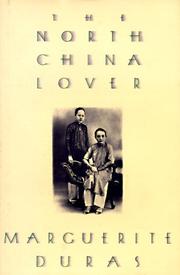
Start with The North China Lover. A note on which book that is: the famous one is The Lover, the 1984 novel that won the Prix Goncourt and made Duras internationally famous. The North China Lover is her own 1991 rewriting of the same material, written partly in response to the film adaptation, and it is the record our catalogue carries. Either works as an entry point, and the difference between them is itself the best possible introduction to how she worked.
The material is autobiographical and should be stated plainly: it centres on a relationship in French colonial Indochina between a fifteen-year-old French girl and an adult Chinese man, drawn from Duras's own adolescence. The book neither condemns nor celebrates it. It treats the relationship as the fact around which poverty, colonial hierarchy and a destructive family are arranged, and a reader who wants a moral verdict from the narration will not get one.
Read The War second. These are her wartime notebooks, chiefly the account of waiting for her husband to return from Dachau, and it is the most direct and least stylised thing she wrote. Taking it early is deliberate: you see the raw material and the unmediated voice before the later books show you what she does when she stylises.
What you are getting into
Very short sentences, broken chronology, unnamed characters, and a narrator who contradicts herself and does not correct the contradiction. Translation is a real variable too — her English translators, Barbara Bray above all, had to reproduce a deliberately flat, repetitive, ungrammatical French, and different translators solve it differently.
The other thing to know is that Duras returns to the same material across a whole career. The books are drafts of one another, which is exactly why reading order matters more for her than for most novelists.
The early novels
The sea wall, from 1950, tells the Indochina childhood straight: a mother ruined by buying land the sea reclaims, and the children who cannot escape her. Reading it after the late version shows you precisely what she later stripped out — motive, explanation, chronology, and most of the dialogue's connective tissue. It is a conventional realist novel with a social argument about colonial land fraud, and it is the best evidence that her later obscurity was a choice rather than an incapacity.
Moderato cantabile is the break: a hundred pages of two people in a cafe circling a murder neither of them witnessed, drinking, and saying almost nothing to the point. This is where she abandons conventional narration for good, and the technique everything later depends on is established here — an event that has already happened, described obliquely by people who were not there.
The India cycle
The ravishing of Lol Stein is the novel Jacques Lacan wrote about and the one most often called her masterpiece. It turns on a woman watching her fiance leave her at a ball and never recovering, and its narrator is a character reconstructing Lol's inner life from outside it who admits he is inventing. That is why it is difficult: you cannot locate a reliable account of any event, and the novel is about the impossibility of locating one. It needs Moderato cantabile as groundwork.
The Vice-Consul is the direct companion, sharing Anne-Marie Stretter and the Calcutta setting. The two are halves of one thing — characters cross between them, and the ball is the fixed point of both. This is the deep end; readers who bounce off these two are not failing to understand them so much as declining the terms.
The film texts
Duras published her film writing as books in their own right, and reading them as literature is what she intended. Hiroshima mon amour is the screenplay for Alain Resnais's 1959 film and should be read as a prose poem rather than a shooting script — it works without ever having seen the film. India song is her own film, drawn from the same material as The Vice-Consul, with the voices detached entirely from the bodies on screen. That detachment is the culmination of everything the India cycle was reaching for, and it assumes the characters rather than introducing them.
The late, short books
The Malady of Death is about thirty pages, addressed in the second person, and is the most extreme thing she published. Its address makes the reader complicit in a way none of the novels do, and it works only because the earlier books have trained you to fill in what she leaves out. Blue eyes, black hair reworks the same situation at greater length and is the last major fiction she published.
Where to stop
Stop with Blue eyes, black hair. What follows in her bibliography is fragments and dictated late work, and this is the last thing that stands as a book. By this point the pattern is visible across the whole career: The sea wall to The North China Lover, The Vice-Consul to India song, The Malady of Death to Blue eyes, black hair. She wrote the same handful of scenes for forty years, and the books get shorter and barer until almost nothing is left.
More twentieth-century literature paths on Discover.
Follow the full ordered path here: Marguerite Duras Reading Order: Where to Start.