Marguerite Duras Reading Order: Where to Start
Duras wrote novels, films and plays that keep circling the same handful of obsessions — colonial Indochina, a mother, a lover, a woman going mad at a ball — and she rewrote the same material for decades, so her books talk to each other in a way that makes order genuinely useful. Start with the late, short, famous one, go back to the early realist novels, then read the India cycle as a unit, and finish with the screenplays and the very late fragments.
Start here
IntermediateRead the two books that made her famous outside France, and get used to her method: short sentences, broken chronology, a narrator who contradicts herself.
▸ Study plan for this stage
Pace: Two weeks for the two, around 235 and 185 pages. Both read quickly in clock terms and slowly in effect — Duras's pages are half white space and her chapters are often a page long, so a hundred pages an evening is possible and usually a mistake. Read fifty pages a sitting and stop when the repetition
- Duras is translated from French, and the translation is a real variable: her English translators — Barbara Bray above all — had to reproduce a deliberately flat, repetitive, ungrammatical French, and different translators solve it differently
- Her method is the first thing to get used to: very short sentences, broken chronology, unnamed characters, and a narrator who contradicts herself and does not correct the contradiction
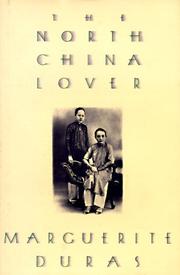
- The North China Lover is Duras's own rewriting of the material of The Lover, the 1984 novel that won the Prix Goncourt and made her internationally famous; she wrote this version in 1991, partly in response to the film adaptation
- The material is autobiographical and should be stated plainly: it centres on a relationship in French colonial Indochina between a fifteen-year-old French girl and an adult Chinese man, drawn from Duras's own adolescence
- The book neither condemns nor celebrates the relationship; it treats it as the fact around which poverty, colonial hierarchy and a destructive family are arranged, and readers who want a moral verdict from the narration will not get one
- Duras returns to this same material across a whole career, which is why the reading order matters more for her than for most novelists — the books are drafts of one another
- The War is her wartime notebooks, chiefly the account of waiting for her husband to return from Dachau, and it is the most direct and least stylised thing she wrote
- Reading it second is deliberate: it shows you the raw material and the unmediated voice before the later stages show you what she does when she stylises
- How does Duras use repetition? Find a phrase that recurs and track what changes each time it appears.
- The North China Lover is a rewriting of earlier material. What does a writer gain by publishing a second version of her own book?
- The narration refuses to judge the central relationship. What is it doing instead, and what does the refusal cost the reader?
- How does colonial Indochina function in the book — as setting, as cause, or as the subject?
- The War is far plainer than the fiction. What does that plainness prove about the style of the other books?
- Read the first ten pages twice: once at your normal pace and once aloud. Duras is closer to poetry than to prose fiction and the second reading is the accurate one.
- Note who is named and who is not. The withholding of names is systematic and is doing the work that characterisation does elsewhere.
- Check your translator's name on the copyright page and note it. If you read more than one Duras in different translations, the difference will be audible.
- After The War, write a paragraph on what she chose not to stylise. That list is the beginning of understanding her aesthetics.
Next up: You have the late voice and the raw voice; the early novels show the conventional novelist she was before she chose either.
The Goncourt winner and the correct entry point — barely a hundred pages, and it contains in miniature every obsession the rest of the work expands. If you read one Duras, this is it.

Her wartime notebooks, chiefly the account of waiting for her husband to return from Dachau. The most direct and least stylised thing she wrote, which makes it the best second book.
The early novels
IntermediateSee the conventional novelist she was before she dismantled the form, and read the first version of the story The Lover retells.
▸ Study plan for this stage
Pace: Two to three weeks. The Sea Wall is around 290 pages and reads like a normal mid-century novel — three or four evenings at a normal pace. Moderato Cantabile is 120 pages and should take you as long, because it is the hinge of her whole career and rewards being read twice in the same week.
- The Sea Wall is the 1950 novel that tells the Indochina childhood straight — a mother ruined by buying land the sea reclaims, and the children who cannot escape her
- Reading it after the late version shows you exactly what Duras later stripped out: motive, explanation, chronology, and most of the dialogue's connective tissue
- It is a conventional realist novel with a social argument about colonial administration and land fraud, and it is the best evidence that her later obscurity was a choice rather than an incapacity
- Moderato Cantabile is the break: a hundred pages of two people in a café circling a murder neither of them witnessed, drinking, and saying almost nothing to the point
- This is where she abandons conventional narration for good — the plot is a pretext, the dialogue is evasive, and the emotional content is entirely in what is not said
- The technique that everything after this depends on is established here: an event that has already happened, described obliquely by people who were not there
- Duras is often grouped with the nouveau roman writers of the 1950s, and Moderato Cantabile is why; she rejected the label but shared the refusal of psychology and plot
- Read in this order the two books are a before-and-after of the same writer, eight years apart, and no other pairing in her work is so instructive
- What does The Sea Wall explain that the late version leaves unexplained? Make a list of at least five things.
- Which version of the Indochina material is the better book, and which is the more characteristic Duras?
- In Moderato Cantabile, what actually happens? Write the plot in three sentences and note how little there is.
- The two characters in the café talk about a murder they did not see. What are they really discussing?
- Where is the emotion located in Moderato Cantabile, if not in statement or in action?
- Read The Sea Wall and then reread twenty pages of The North China Lover. The comparison is the single most useful exercise in this path.
- Read Moderato Cantabile twice in one week. It is short enough to make this trivial and dense enough to require it.
- Count the wine glasses in Moderato Cantabile. The novel's structure is measured by them, and noticing that is how her rhythm works.
- Write one page of dialogue in which two people discuss something without naming it. Failing at this is the fastest way to see what she is doing.
Next up: With the break made, the India cycle takes the new method and builds two novels that barely function as separate books.
The 1950 novel that tells the Indochina childhood straight, thirty-four years before The Lover tells it in fragments. Reading them in this order shows you exactly what she later stripped out.
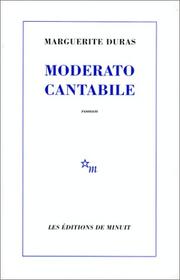
The break: a hundred pages of two people in a café circling a murder, and the book where she abandons conventional narration for good. The hinge of the whole career.
The India cycle
IntermediateRead the two novels that share characters, incidents and a single scene of collapse, and understand why she kept rewriting them.
▸ Study plan for this stage
Pace: Three weeks for two short novels of about 180 and 170 pages. Do not be misled by the length: these are the hardest books in the path and thirty pages an evening is a reasonable maximum. Read them close together — they share characters and a single scene of collapse — and expect to reread passages ra
- The Ravishing of Lol Stein is the novel Jacques Lacan wrote about and the one most often called her masterpiece; it turns on a woman watching her fiancé leave her at a ball and never recovering
- The narration is deliberately unreliable in a specific way: the narrator is a character who is reconstructing Lol's inner life from outside it and admits he is inventing
- That device is why the book is difficult — you cannot locate a reliable account of any event, and the novel is about the impossibility of locating one
- It needs Moderato Cantabile as groundwork; a reader arriving from a conventional novel has no way to read it
- The Vice-Consul is the direct companion, sharing Anne-Marie Stretter and the Calcutta setting, and running a second narrative of a destitute Cambodian woman alongside the colonial diplomatic one
- The two books are halves of one thing: characters cross between them, the ball at S. Thala is the fixed point of both, and Duras kept rewriting the material for another decade
- The colonial material here is Duras's own — she was born in French Indochina — and the novels treat European colonial society as a closed, sickened world observed from inside it
- This is the deep end of her work; readers who bounce off these two are not failing to understand them so much as declining the terms
- Who is narrating The Ravishing of Lol Stein, and at what point do you realise he is inventing?
- What happens at the ball? Reconstruct it from the text and note how much of your version the novel actually supports.
- How do the two narratives of The Vice-Consul relate — as contrast, as parallel, or as the same story twice?
- Anne-Marie Stretter appears in both books. Is she the same character, and does Duras want her to be?
- What does Duras gain by returning to one scene across multiple books rather than writing it once?
- Where does the colonial setting stop being background and become the subject?
- Before starting, write down the scene at the ball as the earlier books' method would render it. Then read Duras's version.
- Keep a list of names across both novels and mark where they cross. The overlaps are the argument for reading them as one work.
- Reread the first chapter of Lol Stein after finishing it. The narrator's disclosure changes every sentence of it.
- Note every passage where the narrator says he does not know something. Collected, they are the book's real structure.
Next up: The India material is now in your head, which is the only condition under which her films read as anything but fragments.

The novel Lacan wrote about and the one most often called her masterpiece. Difficult, and it needs the groundwork of Moderato Cantabile before it makes sense.
The direct companion to Lol Stein, sharing Anne-Marie Stretter and the Calcutta setting. The two books are halves of one thing and should be read together.
The screenplays
IntermediateRead the film texts as literature, which is how Duras published them, and see her writing at its most spare.
▸ Study plan for this stage
Pace: Two weeks for two texts of about 140 and 150 pages. These read fast — they are largely voices and spare stage directions — but read them as literature rather than as scripts, which means slowly and preferably aloud. India Song in particular needs the India cycle fresh in mind, so do not leave a long
- Duras published her film texts as books in their own right, and reading them as literature is what she intended rather than a workaround
- Hiroshima mon amour is the screenplay for Alain Resnais's 1959 film and is the piece that made her internationally known — a French woman and a Japanese man in Hiroshima, and two incommensurable griefs laid against each other
- It should be read as a prose poem, not as a shooting script: the famous opening exchange about what was and was not seen at Hiroshima is a poem with speakers attached
- The film's reputation can get in the way; the text has its own rhythm and works without ever having seen it
- India Song is Duras's own film, drawn from the same material as The Vice-Consul, with the voices detached entirely from the bodies on screen — nobody speaks their own lines
- That detachment is the culmination of everything the India cycle was reaching for: memory narrated by people who were not present, now formally separated from the images
- It only works if you have already read the India cycle, because the text assumes the characters and the ball rather than introducing them
- Together these two show her writing at its most spare, and they are the bridge between the novels and the very late fragments
- In Hiroshima mon amour, what is the argument of the opening exchange about seeing and not seeing? State it plainly.
- How are the woman's memories of Nevers set against Hiroshima, and does the text claim they are comparable?
- In India Song, why are the voices separated from the bodies? What does the separation permit?
- How much of India Song would be comprehensible to a reader who had not read The Vice-Consul? Be specific.
- What survives of a Duras text when it is stripped to voices and directions — and what does that tell you about her novels?
- Read the opening two pages of Hiroshima mon amour aloud, alternating the two voices. The structure is a call and response and it is inaudible on the page.
- Read India Song immediately after rereading the last chapter of The Vice-Consul.
- Mark every stage direction that could not be filmed. There are many, and they are where the literature is.
- Write a paragraph on whether these are plays, poems or novels. There is no settled answer, and arguing it is the point.
Next up: The forms have been pared down to voices; the last stage takes away nearly everything that remains.

The Resnais screenplay, published as a text in its own right and the piece that made her internationally known. Read it as a prose poem, not a shooting script.
Her own film, drawn from the same material as The Vice-Consul, with voices detached entirely from bodies. It only works if you have already read the India cycle.
The late, short books
IntermediateFinish with the very late work, where the books get shorter and barer until almost nothing is left.
▸ Study plan for this stage
Pace: One to two weeks for about 65 and 120 pages. The Malady of Death takes thirty minutes to read and considerably longer to have read; give it an evening and do not follow it immediately with anything. Blue Eyes, Black Hair reworks the same situation at greater length and is best read a week later, so
- The Malady of Death is around thirty pages of text, addressed in the second person, and is the most extreme thing she published — a set of instructions to a man who has paid a woman to be looked at
- Its second-person address makes the reader complicit in a way none of the novels do, and the effect is deliberate and uncomfortable
- It works only because her earlier books have trained you to fill in what she leaves out; read cold it looks like a fragment rather than a distillation
- Blue Eyes, Black Hair reworks the same situation at slightly greater length and is the last major fiction she published — a late demonstration that her habit of rewriting herself never stopped
- The pattern is now visible across the whole career: The Sea Wall to The North China Lover, The Vice-Consul to India Song, The Malady of Death to Blue Eyes, Black Hair — she wrote the same handful of scenes for forty years
- Sexuality in the late books is impersonal, contractual and mostly unhappy, and the writing is neither erotic nor moralising about it
- The books get shorter and barer until almost nothing is left, which is a real arc rather than a decline into slightness
- Stopping here is right: what follows in her bibliography is fragments and dictated late work, and Blue Eyes, Black Hair is the last thing that stands as a book
- Who is the you in The Malady of Death, and what does the second person do that a third person could not?
- What is the malady, on the book's own terms?
- What does Blue Eyes, Black Hair add to the same situation, and is the addition an improvement?
- Duras rewrote her own books repeatedly. Is that a compulsion, a method, or an argument about writing?
- Having read the whole path, what are the handful of scenes she keeps returning to? Name them.
- Read The Malady of Death in one sitting and then do nothing else for an hour. It is designed to be sat with rather than finished.
- Read Blue Eyes, Black Hair a week later and list what has been added. The list is short and revealing.
- Make a chart of the rewritings across the whole path — which book redoes which. It is the clearest map of her career available.
- Write down which Duras you would hand to a first-time reader now. It will probably not be the book this path started with, and knowing why is the measure of what you have learned.
Next up: You have followed one writer rewriting the same few scenes for forty years, from realist novel to thirty-page address, and seen what each stripping-away bought.
Thirty pages, addressed to a second person, and the most extreme thing she published. Best read once her earlier work has taught you how to fill in what she leaves out.
A late novel that reworks The Malady of Death at slightly greater length, and the last major fiction she published. The right place to stop.
Discussion
Keep reading
Paths that share books, cover the same subject, or open a related topic.