World War I is the war that made the modern world and the one people understand least. Its causes are a tangle of alliances and miscalculation; its experience was industrial slaughter with almost no strategic movement; its ending planted the seeds of the next war. Approached at random it collapses into a fog of dates. Read in the right order — origins, then experience, then consequences — it becomes the most important story of the twentieth century.
This path deliberately puts strong narrative accounts first, before the denser analytical histories, so you have a spine to hang the arguments on.
How it began
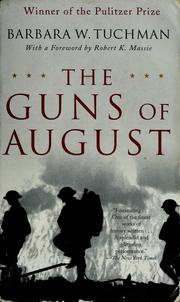
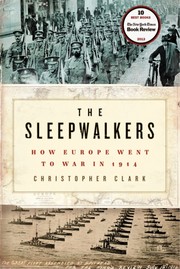
Start with The Guns of August by Barbara Tuchman, the classic, propulsive narrative of the war's first month and how a continent sleepwalked into catastrophe. Then read The Sleepwalkers by Christopher Clark, the modern reappraisal of how Europe got there — a book that resists easy blame and shows the war as a shared failure, worth weighing against Tuchman's more pointed account.
For the full sweep, A World Undone by G. J. Meyer is an accessible one-volume history of the entire war, ideal for keeping the chronology straight.
What it was like
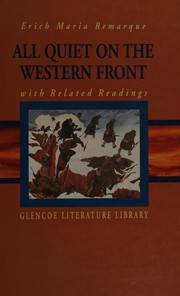
Now go into the trenches. All Quiet on the Western Front by Erich Maria Remarque is the novel that defined the war's futility from the German soldier's side, while Storm of Steel by Ernst Jünger records the same war from a soldier who found meaning and even exhilaration in it — two irreconcilable truths that together tell you more than either alone. Then read The Great War and Modern Memory by Paul Fussell on how the trenches reshaped language, irony, and memory itself.
What it cost
Finish with consequences. To End All Wars by Adam Hochschild follows the war's resisters and its moral wreckage. Paris 1919 by Margaret MacMillan shows the peace conference drawing the map of the century to come, and The Economic Consequences of the Peace by John Maynard Keynes is the contemporary warning — written in 1919 — that the settlement would fail. Reading them in sequence, you watch the Second World War being set up in real time.
How to actually study this
Keep a timeline and a map; WWI's geography (Western Front, Eastern Front, Gallipoli) is easy to blur. When two books disagree about causes — and Tuchman, Clark, and Keynes do — treat that as the point, not a problem: this is contested history, and learning it means holding several accounts at once.
Follow the full reading path to read them in order, visit the World War I hub, or browse more history linking the Great War to the revolutions before and the war after.
Ready to learn something deeply?
Build a reading path — free