The American Revolution is one of the most mythologized events in history, which makes it oddly hard to learn. Everyone arrives with a fourth-grade cartoon of it, and the serious scholarship is dense enough that most people bounce off before they replace the cartoon. The trick is sequence: this path deliberately front-loads strong narrative history so you have a vivid story in your head before you tackle the ideas and the arguments.
Where to start with the American Revolution: a reading path
July 12, 2026 · 2 min read
Start with the story
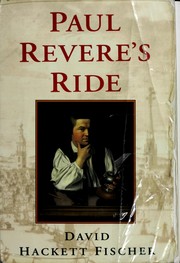
Begin with Liberty! The American Revolution by Thomas J. Fleming, a sweeping, readable narrative that gives you the whole arc — causes, war, founding — in one confident sweep. Then read Paul Revere's Ride by David Hackett Fischer, which takes a single legendary night and reconstructs it so carefully that you learn how the war actually began and how history separates fact from myth.
Live inside it through a person
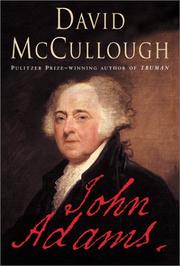
John Adams by David McCullough is the great character door into the era. Following one prickly, principled founder from resistance through diplomacy to the presidency gives you the Revolution as lived experience, not a set of dates. It is long and worth every page. For the war's turning point, Washington's Crossing, again by Fischer, shows how a nearly-lost cause was rescued in the winter of 1776.
Now the ideas
With the narrative in place, go to the intellectual machinery. The Ideological Origins of the American Revolution by Bernard Bailyn traces what the revolutionaries actually believed and feared — the pamphlets and paranoia about power that drove them. Then The Federalist Papers by Alexander Hamilton and his co-authors is the primary source: the founders arguing, in real time, for the constitution they built. Read it in excerpts, in order, after Bailyn has given you the vocabulary.
Keep the contradictions in view
Finish by complicating the story honestly. The Hemingses of Monticello by Annette Gordon-Reed, from the digest, follows an enslaved family across the founding and refuses to let liberty be a tidy word. Pair it with A People's History of the United States by Howard Zinn for the bottom-up, dissenting angle. A revolution about freedom that preserved slavery is not a footnote — it is central, and a real education holds both truths.
How to actually read this
- Read the narrative books fast and for pleasure; read Bailyn and the Federalist slowly, with a pen.
- Keep a one-page timeline from the Stamp Act to the Constitution and hang every book on it.
- After each book, ask whose viewpoint it centers — general, founder, enslaved person, ordinary soldier — and what the next book adds.
For the full staged sequence with study plans, follow the full reading path or start at the American Revolution subject hub. If the founding's arguments pull you forward, the French Revolution path is the natural next step.
FAQ
- What is the best book to start with on the American Revolution?
- Liberty! The American Revolution by Thomas J. Fleming is an ideal first read — a single readable narrative of the whole event before you move on to the ideas and primary sources.
- Which book covers the founding's relationship to slavery?
- The Hemingses of Monticello by Annette Gordon-Reed and A People's History of the United States by Howard Zinn both keep the contradictions of liberty and slavery in full view.
Get the books
- 1Liberty! the American RevolutionAmazon ↗Thomas J. Fleming
- 2Paul Revere's RideAmazon ↗David Hackett Fischer
- 3John AdamsAmazon ↗David McCullough
- 4The ideological origins of the American RevolutionAmazon ↗Bernard Bailyn
- 5The radicalism of the American RevolutionAmazon ↗Gordon S. Wood
- 6Washington's crossingAmazon ↗David Hackett Fischer
As an Amazon Associate we earn from qualifying purchases. Some book links are affiliate links; you pay the same price and we may earn a small commission.
Follow the full reading path

The American Revolution: a reading path
Beginner10books130 hrs4 stages
Ready to learn something deeply?
Build a reading path — free