Every button, error message, and empty state in a product is writing, and most of it is bad — vague, robotic, or accidentally cruel at the worst moment. UX writing is the craft of making those words clear, humane, and useful. It is genuinely hard to self-teach because it sits between three disciplines: writing, design, and psychology. Read the wrong stack and you learn to write clever copy that fails inside a real interface.
Books will get you a long way here, but UX writing is ultimately a practice discipline. You learn it by shipping words into real products, watching people use them, and revising. Treat this path as the foundation, then go write in context.
Why order matters here
The order moves from general to specific. First you learn to write clearly at all, then how words behave inside interfaces, then how they fit a larger content strategy and the psychology of the people reading them under stress. Skip the fundamentals and your microcopy is polished but purposeless.
The path, stage by stage
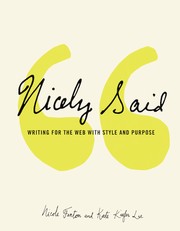
Start with On Writing Well by William Zinsser — the timeless case for clarity and cutting, which underlies everything else. Then get product-specific with Nicely Said by Nicole Fenton and Kate Kiefer Lee, a warm, practical guide to writing for the web with the right voice.
Now go tactical. Microcopy by Kinneret Yifrah is the field's deep manual on the tiny texts that make or break a flow, and Writing Is Designing by Michael J. Metts reframes the writer as a designer working in the same material as the rest of the team. Letting Go of the Words by Janice (Ginny) Redish teaches the ruthless economy real users need.
Then zoom out to strategy. Strategic Writing for UX by Torrey Podmajersky gives you a system for scaling voice across a whole product, and The Elements of Content Strategy by Erin Kissane places your words inside the larger content lifecycle. Finally, understand the user's mind and behavior with The Psychology of Everyday Things by Donald A. Norman and Don't Make Me Think by Steve Krug — two classics on why usable design (and usable words) feel effortless.
How to actually learn this
Read with a real product open. After each book, rewrite one flow you use every day — an error, an onboarding screen, a confirmation — applying what you just learned, and note what changed. Build a swipe file of great and terrible interface copy. Most important, get your words in front of users; nothing teaches UX writing like watching someone misread a message you were sure was clear.
Ready to build the skill? Follow the full reading path for the staged study plan, visit the subject hub, or explore more subjects.
Ready to learn something deeply?
Build a reading path — free