The Cold War ran forty-five years, touched every continent, and came within a hair of ending civilization at least twice. Most people know it as disconnected set pieces: Berlin, Cuba, spies, Star Wars. Read in the right order, the set pieces resolve into a single story, and that story explains an uncomfortable amount of the present, from NATO's borders to Russian grievance.
Order matters because the episode books are far better once you have the spine. Read the Cuban missile crisis cold and it is a thriller; read it after the overviews and you understand why both leaders were trapped.
Stage 1: build the spine
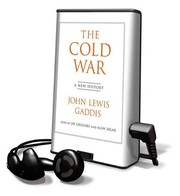
Start with The Cold War by Robert J. McMahon, a very short introduction that gives you the whole arc in an afternoon: origins, escalation, détente, collapse. Then deepen it with The Cold War: A New History by John Lewis Gaddis, the dean of the field writing a compact synthesis with post-Soviet archives in hand. For how American strategy actually evolved, his Strategies of containment traces every administration's version of containment from Kennan onward; it is the most demanding book on this path and the most rewarding for policy-minded readers. Round out the era's texture with The wise men: Six friends and the world they made by Walter Isaacson, a group portrait of the establishment figures who built the postwar order.
Stage 2: the edge of the abyss
One minute to midnight by Michael Dobbs is the definitive hour-by-hour reconstruction of the Cuban missile crisis, and it will permanently cure you of thinking the crisis was safely managed; luck did real work. Pair it with Command and Control by Eric Schlosser, a horrifying and meticulously reported history of nuclear weapons accidents and the fragile systems meant to prevent them.
Stage 3: the secret war
The spy and the traitor by Ben Macintyre tells the story of Oleg Gordievsky, the KGB colonel who spied for Britain, and it reads like a novel while illuminating how intelligence actually shaped superpower decisions. Then Ghost Wars by Steve Coll covers the CIA in Afghanistan from the Soviet invasion to 2001, the proxy war whose consequences outlived the conflict that spawned it.
Stage 4: the ending that did not end
The dead hand by David E. Hoffman, a Pulitzer winner, covers the arms race's terrifying final years, including the Soviet semi-automated retaliation system, and the scramble to secure the arsenal afterward. Finish with Not One Inch by Mary Elise Sarotte, the archival account of NATO expansion negotiations in the 1990s; it is essential, contested terrain for understanding Russia and Ukraine today, and Sarotte is scrupulous about what the documents do and do not show.
How to actually study this
Keep a timeline as you read; the same years look completely different from Washington, Moscow, and Kabul, and laying the books against one timeline is where the insight lives. After each book, write one paragraph: what did each side believe the other intended, and where were they wrong?
The staged path with study plans is at the full reading path. Related history lives on the subject hub, or browse all paths.
Ready to learn something deeply?
Build a reading path — free